
Soon stocks will run out
Dont miss this opportunity while supplies last.


Soon stocks will run out
Dont miss this opportunity while supplies last.
What Is Egusi and How Is It Used in Cooking
If you're new to West African cooking, think of egusi as a bit like pumpkin seeds, but with a much richer, nuttier profile and a secret superpower: it’s an incredible thickener for soups and stews. At its heart, egusi is the star ingredient in the iconic soup of the same name, a dish cherished all over the continent.
What Is Egusi and Why Is It So Popular?
So, what exactly is it? Egusi refers to the protein-packed seeds from a specific family of melons and gourds, most often Citrullus lanatus and Cucumeropsis mannii. While the fruit itself is usually too bitter to eat, the seeds inside are culinary gold.
Once harvested, the seeds are dried and shelled. You can use them whole, but they're most famous when ground into a coarse, flour-like meal. This ground egusi is the magic behind the texture of countless West African dishes. When you stir it into a stew, it thickens the broth beautifully, creating a creamy yet satisfyingly grainy consistency and a deep, nutty flavour that’s truly one-of-a-kind.
To get you started, here’s a quick overview of what makes egusi so special.
Egusi at a Glance
| Attribute | Description |
|---|---|
| Origin | Seeds from specific melons and gourds native to Africa. |
| Common Form | Most often sold dried and shelled, then ground into a coarse meal. |
| Primary Use | A natural thickener and flavour enhancer for soups and stews. |
| Flavour Profile | Rich, nutty, and slightly savoury. |
| Texture in Food | Creates a creamy, slightly grainy consistency. |
This versatile seed is a staple for a reason, bringing a unique character to every dish it touches.
A Taste of Home in the UK
Egusi's popularity has travelled far beyond West Africa, finding a strong and growing community here in the UK. This is largely thanks to the African diaspora looking for the authentic flavours they grew up with. With over 1.2 million people of Nigerian origin living in the UK according to the 2021 Census, the demand for essential ingredients like egusi has never been higher.
This isn't just a feeling; the numbers back it up. We saw a 28% increase in African grocery sales in 2026, showing just how important these cultural staples are. You can dive deeper into the UK’s agricultural market data on the official government publishing service.
Egusi is so much more than just a seed. It’s a cultural cornerstone, connecting communities to their heritage through the simple act of sharing a meal. Its ability to turn a simple broth into a hearty, nourishing feast makes it a must-have in kitchens from Lagos to London.
Whether you're just starting your journey into West African food or you're a seasoned pro, getting to know egusi is the first step. This powerhouse seed is your key to:
- Thickening Soups: It’s essential for creating the signature texture of classic egusi soup.
- Boosting Nutrition: It adds a significant amount of protein and healthy fats to any meal.
- Adding Flavour: It provides a unique, rich, and nutty taste you can't get from anything else.
Understanding the Different Types of Egusi Seeds
When you hear someone talk about egusi, it's easy to think it's just one type of seed. But it's actually more of a family name for the protein-rich seeds from several different gourd-like plants. Think of it like the difference between a Gala and a Granny Smith apple—both are apples, but they bring their own unique character to the table.
The two main varieties you’ll come across in West African cooking are from Citrullus lanatus (part of the watermelon family) and Cucumeropsis mannii (the white-seed melon). While you can use them interchangeably in a pinch, knowing the subtle differences in their size, colour, and oil content can really change your final dish.
The choice of egusi seed can subtly change a soup's final texture and depth of flavour. Some varieties create a lighter, fluffier result, while others yield a richer, denser consistency, making the selection an important step for any cook.
Key Egusi Varieties
So, how do you pick the right one for your pot? Here’s a quick guide to what you'll find.
- Citrullus lanatus: These seeds are usually a bit larger and darker. They’re known for a really robust, nutty flavour that’s a favourite in Nigerian cooking. If you want a soup with a wonderfully rich and thick texture, this is your go-to.
- Cucumeropsis mannii: You’ll spot these by their smaller size and paler, more uniform colour. Their flavour is much milder, which makes them incredibly versatile for all sorts of stews where you want the egusi to blend in more.
This infographic gives a great visual breakdown of what egusi is, from the plant it comes from to its role in the kitchen.
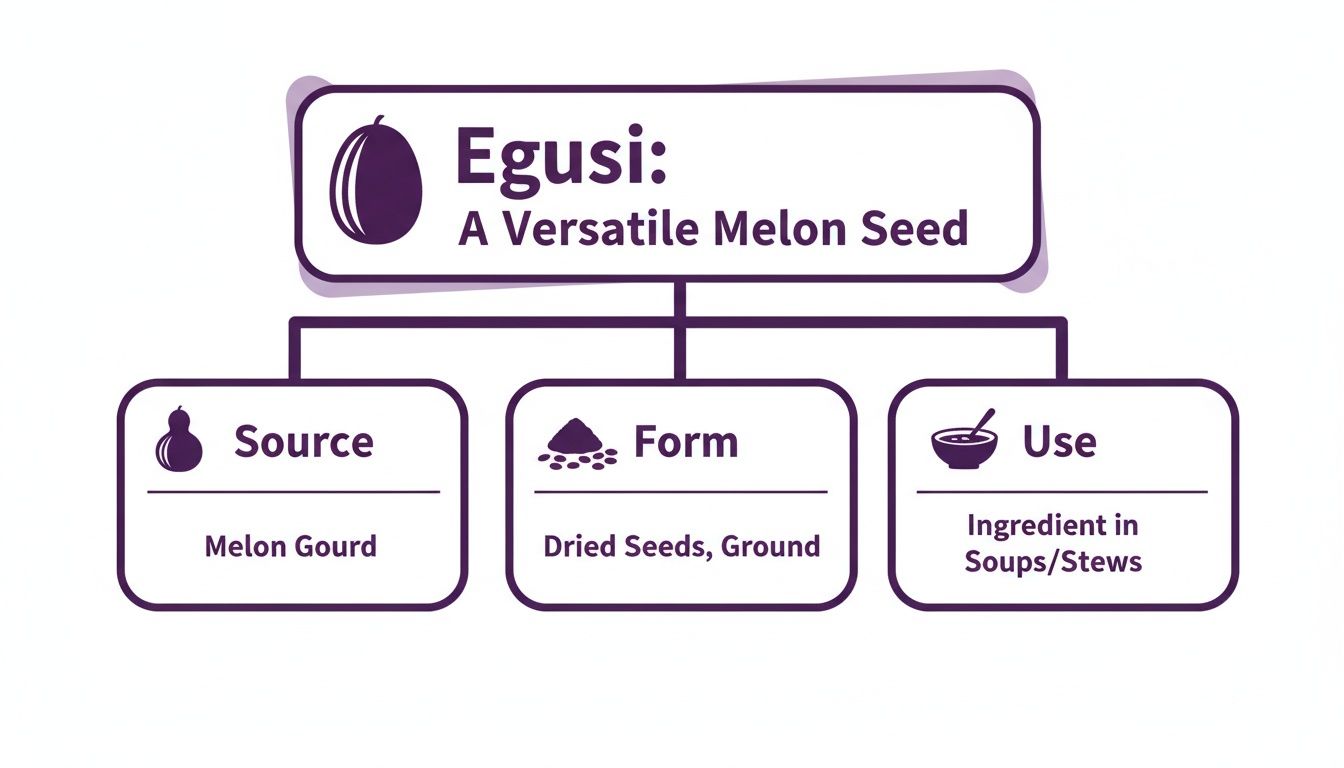
As you can see, this humble seed starts in a gourd and becomes the heart of so many iconic dishes. Getting to know the different types will help you shop smarter at stores like My Africa Shop and nail that perfect texture and flavour every single time.
How to Use Egusi in Traditional West African Cooking
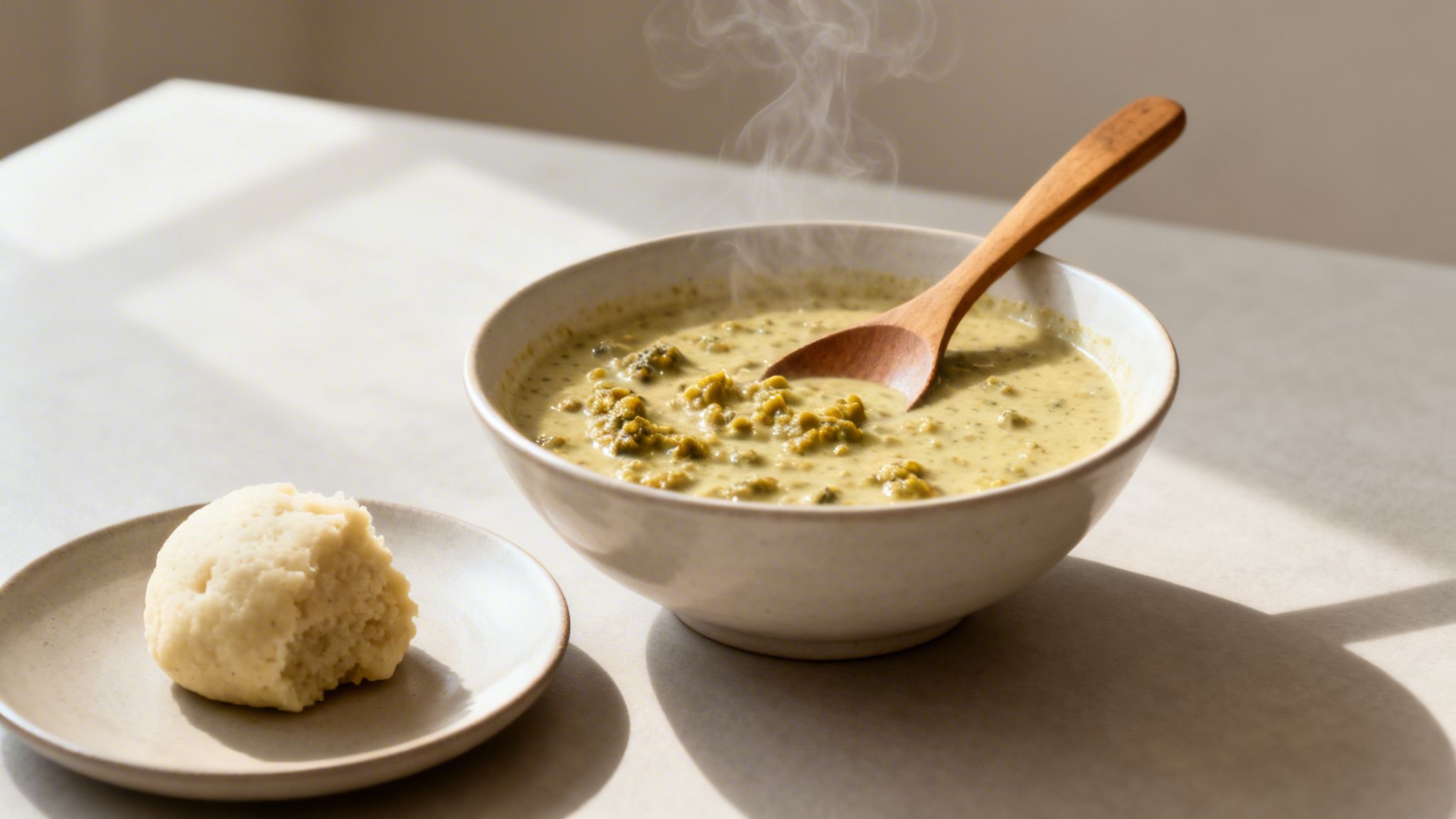
In any West African kitchen, egusi seeds are true culinary workhorses. Their most famous job is as the star thickener and flavour base for the legendary Egusi Soup. The best way to think of ground egusi is as a natural, protein-rich roux that turns a simple broth into a hearty, satisfying meal with its own unique creamy, slightly nutty texture.
The way Egusi Soup is made varies wonderfully from region to region, and even from one family to the next. Some cooks swear by frying the ground egusi in palm oil to form little curds, while others prefer to make a paste with water and add it straight to the simmering pot. It’s this versatility that makes the dish so well-loved.
The Iconic Egusi Soup
Egusi soup is a cornerstone of West African food, almost always served with a "swallow" like pounded yam, eba (garri), or fufu. A classic pot of the soup will usually have:
- A Rich Base: This is often a flavour-packed stock made with meat or fish.
- Leafy Greens: Spinach, bitter leaf, or ugu (pumpkin leaves) are popular choices, adding colour and nutrients.
- Aromatic Spices: Crayfish, dried fish, and different peppers bring layers of depth and complexity. For that authentic taste, you can’t go wrong with traditional pepper soup spices.
- Protein: It’s common to find a mix of meats like beef, shaki (tripe), and goat.
This popularity is driving a huge market here in the UK. The African food sector is booming, with sales of West African grains and seeds projected to hit £450 million in 2026—that’s a 22% jump from the previous year. Here at My Africa Shop, egusi is a top seller, and we dispatch the equivalent of 30 tonnes every quarter to households and restaurants alike. You can read more about Nigeria's growing melon production on FreshPlaza.
Beyond the Soup Pot
But the culinary journey of egusi doesn't stop at soup.
Egusi's talents extend far beyond thickening. The same nutty flavour and binding properties that perfect a soup can be used to create savoury patties, add richness to stews, and even fortify other dishes.
Some other traditional and creative ways to use it include:
- Egusi Patties (Iyan Ewa): Ground egusi is mixed with spices and onions, then steamed or fried into delicious, protein-packed cakes.
- Egusi Oil: The seeds can also be pressed to get a pale, flavourful oil that's great for cooking.
- Snacking: When roasted and salted, whole egusi seeds make for a wonderfully nutritious and crunchy snack.
The Impressive Health Benefits of Eating Egusi
Sure, egusi gives soups that rich, creamy texture we all love, but there’s so much more to it. These little seeds are a proper nutritional powerhouse, making them a brilliant addition to your diet. Don't just think of them as a soup thickener; think of them as West Africa's original super seed.
One of the best things about egusi is its incredible protein content. It's made up of around 30-35% protein, making it a fantastic plant-based source for anyone, whether you're vegetarian, vegan, or just trying to eat less meat.
A Source of Healthy Fats and Minerals
Egusi is also famous for its healthy fats. The seeds are about 50% fat, but it’s the good kind—mostly unsaturated fats, including omega-6 fatty acids, which are vital for brain function and overall health. If you want to dive deeper into the numbers, you can find more nutritional details on sites like Specialty Produce.
But the goodness doesn't stop there. Egusi is also loaded with essential minerals that keep your body running smoothly.
Egusi is more than just a soup thickener; it's a mineral-rich ingredient that helps nourish the body from the inside out. Each spoonful contributes vital nutrients like magnesium for muscle function and phosphorus for strong bones.
Here’s a quick look at the key minerals you'll get:
- Magnesium: Essential for over 300 different processes in the body, including muscle and nerve function.
- Phosphorus: Crucial for building strong bones and teeth.
- Zinc: Helps support a healthy immune system and assists with healing.
- Iron: Vital for making haemoglobin, the part of your blood that carries oxygen.
This impressive nutrient lineup is exactly why egusi has been such a treasured ingredient in West African cooking for generations.
How to Prepare and Store Egusi for the Best Flavour
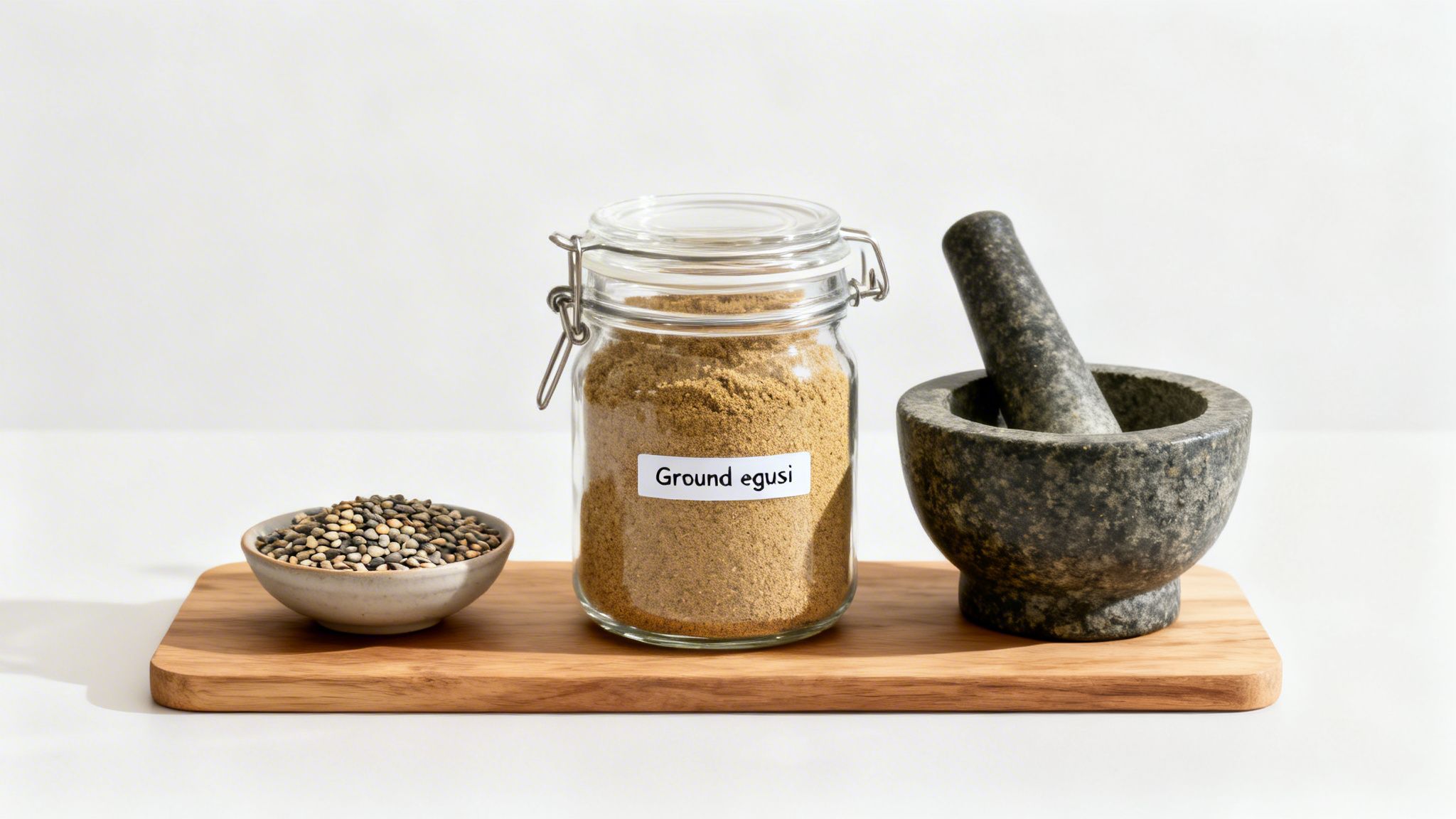
Getting that incredible, nutty flavour from your egusi all comes down to how you prepare it. Whether you start with whole seeds or a ready-made powder, a little bit of prep work makes all the difference before it hits the pot.
If you’ve got whole seeds, grinding them yourself will give you the freshest possible taste. A good blender, a coffee grinder, or even a traditional mortar and pestle will do the job perfectly. You're aiming for a coarse, flour-like texture. For anyone short on time, our pre-ground egusi gives you that authentic flavour without the extra work. You can find our high-quality ground egusi at https://myafricanshop.co.uk/product/nigerian-ground-egusi.
Frying vs Boiling Method
Once it’s ground, you have two main ways to cook egusi. The method you pick really changes the final texture of your soup, so it’s worth knowing the difference.
- Frying Method: This is how you get those lovely, spongy lumps in your soup. Mix your ground egusi with just a little water to make a thick paste. Then, drop small spoonfuls into hot palm oil and fry them until they form light curds. After that, you just add your soup stock and other ingredients.
- Boiling Method: If you prefer a smoother, creamier soup, this is the way to go. Mix the ground egusi with water to make a much thinner paste. Stir this paste directly into your simmering stock, and it will dissolve to thicken the entire soup beautifully.
The choice between frying and boiling is all about personal taste. The frying method gives you distinct, flavour-packed morsels of egusi, while the boiling method creates a rich, seamless consistency throughout the whole dish.
Storing Egusi for Freshness
Egusi has a high oil content, which means it can go off if you don’t store it properly. To keep its flavour at its best, you should always keep ground egusi in an airtight container.
Pop it in a cool, dark place like your pantry. If you’ve bought it in bulk or want it to last for several months, the freezer is your best friend. This simple step guarantees that every egusi soup you make will be as delicious as the last.
A Simple Guide to Buying Egusi in the UK
Getting your hands on good quality egusi in the UK has become much simpler, whether you're cooking for your family or running a busy catering business. For home cooking, what you want is ground egusi with a consistent, pale-cream colour and a lovely fresh, nutty smell. If it smells stale or looks off-colour, steer clear—that's a sign the natural oils have gone bad.
If you’re a caterer or restaurant owner, buying in bulk is the way to go. It makes perfect sense financially and guarantees you won't run out mid-service. Keeping that supply consistent is absolutely crucial for serving up the authentic egusi soup your customers know and love.
Don’t forget, the quality of your egusi seeds makes all the difference in the final dish. Freshly ground seeds create a much richer flavour and a creamier, more satisfying texture that takes your soup to the next level.
Building Your Shopping List
A truly fantastic egusi soup needs more than just the seeds. To get that authentic flavour, you’ll want to grab a few other key ingredients while you're shopping.
Here are the essential partners to pop in your basket:
- Palm Oil: This gives the soup its traditional rich, red colour and unmistakable flavour.
- Dried Crayfish: When ground, this adds a deep, savoury umami kick you just can't replace.
- Stockfish or Dried Fish: These bring a wonderful complexity and savoury depth to the background.
A quick shopping list makes sure you have everything you need to get it right. When you’re ready to stock up, you can find fresh whole egusi seeds right here to guarantee the best possible flavour for your soup.
Your Egusi Questions, Answered
Even after getting the basics down, you might still have a few questions swirling around about egusi. Let's tackle some of the most common ones so you can head into the kitchen with total confidence.
What Does Egusi Actually Taste Like?
By itself, ground egusi has a fairly mild, nutty character. Think of a flavour somewhere between a sunflower seed and a pumpkin seed, but with a savoury edge. The real magic happens when you cook it. It soaks up all the delicious flavours from the broth, lending an incredible richness and body to the soup.
Is Egusi the Same as Pumpkin Seeds?
No, though it's easy to see why people get them confused! They are related, but egusi seeds come from specific varieties of melons and gourds, not pumpkins. Egusi seeds are typically softer and have a much higher oil content, which is the secret to their amazing thickening power in soups.
While they might look similar, egusi and pumpkin seeds play very different roles in the kitchen. Egusi is treasured for its unique ability to create a thick, creamy texture in stews—a quality you just don't get from standard pumpkin seeds.
Do I Need to Cook Egusi?
Yes, you always cook egusi before eating it. Raw, ground egusi isn't easy for your body to digest, and frankly, it doesn't have the pleasant texture or flavour you’re after. Cooking, either by frying it first or boiling it in your stew, is what unlocks that signature nutty taste and activates its thickening properties.
How Much Egusi Do I Need for a Pot of Soup?
A good starting point is about 150–200 grams of ground egusi for a standard family-sized pot of soup, which should serve around 4–6 people. Of course, you can always add a bit more or less depending on just how thick you like your soup to be.
Ready to whip up your own authentic West African dishes? My Africa Shop has all the top-quality ingredients you're looking for, from freshly ground egusi to rich palm oil and flavourful crayfish. Come and explore our full range of products today at https://myafricanshop.co.uk.