
Soon stocks will run out
Dont miss this opportunity while supplies last.


Soon stocks will run out
Dont miss this opportunity while supplies last.




The Surprising Health Benefits of Plantain a UK Guide
You know that plantain you love to fry, boil, or roast? It’s more than just a delicious staple on our plates. The simple truth is that plantain is absolutely packed with fibre, essential vitamins, and key minerals, making it one of the best things you can add to a balanced diet.
Why Plantain Is a Nutritional Powerhouse
It’s easy to mix plantain up with its sweeter cousin, the banana, but honestly, plantain is in a league of its own. It's not just a comforting part of African and Caribbean cooking; it's a versatile food that genuinely looks after your body from the inside out.
Think of it less as a simple side dish and more like a natural multivitamin that comes disguised as your favourite food.
The real magic of plantain is how it changes as it ripens. When it’s green and unripe, it's loaded with resistant starch. This is a fantastic type of fibre that feeds the good bacteria in your gut, helping your digestion run smoothly and keeping you feeling full for longer.
As it ripens and turns yellow, its profile shifts. It becomes richer in natural sugars and antioxidants, giving you a healthier way to sweeten dishes while still getting a solid dose of vitamins.
Plantain's Core Contributions to Health
From strengthening your body's defences to looking after your heart, adding plantain to your meals is a smart move for your health. And the best part? It's readily available right here in the UK, especially from trusted African grocery suppliers, making it an affordable and accessible choice for your family’s well-being.
Here’s what it brings to the table:
- Heart Health Support: Plantain is rich in potassium, which helps balance out the sodium in your diet. This is a big deal for keeping your blood pressure in a healthy range.
- Improved Digestion: All that fibre, especially in green plantain, keeps you regular and helps your gut microbiome thrive.
- Blood Sugar Management: Its complex carbohydrates and resistant starch are digested slowly, which means you won't get those sharp blood sugar spikes that come from more processed foods.
- Rich in Micronutrients: It’s a great source of vitamin C, vitamin A, and vitamin B6, which are crucial for your immune system, good vision, and keeping your metabolism working properly.
To make it even clearer, let’s quickly break down how this humble staple can make a real difference to your health.
Plantain's Top Health Benefits at a Glance
Here is a quick summary of the primary health advantages offered by incorporating plantain into your diet.
| Health Benefit | How Plantain Helps | Key Nutrient |
|---|---|---|
| Cardiovascular Wellness | Helps regulate blood pressure and fluid balance in the body. | Potassium |
| Digestive Regularity | Promotes smooth digestion and feeds beneficial gut bacteria. | Fibre & Resistant Starch |
| Blood Sugar Stability | Slows down sugar absorption, preventing sharp spikes and crashes. | Complex Carbohydrates |
| Immune System Support | Bolsters the body's natural defences against common illnesses. | Vitamin C & Vitamin A |
As you can see, whether you like it green or ripe, plantain is working hard to keep you healthy with every single bite.
Ripe vs Unripe Plantain: What You Need to Know
Walk through any UK market, and you’ll spot plantains in all their glory—from bright green and firm to a sunny yellow, and even some that are almost black. It's easy to assume they're all just the same fruit at different stages. While that's true, their nutritional makeup changes dramatically, and knowing the difference is the key to getting the health benefits you're after.
Think of an unripe, green plantain as a 'slow-release energy battery.' It’s starchy, firm, and not at all sweet. Its real power lies in its huge amount of resistant starch, making it a champion for sustained energy.
A ripe, yellow plantain, on the other hand, is more like a 'quick-charge energy pack.' As it ripens, those complex starches break down into simple sugars. This makes it softer, sweeter, and a breeze to digest, while also boosting its antioxidant content.
This map shows how plantain, whether green or yellow, branches out to support some of the most important areas of your health.
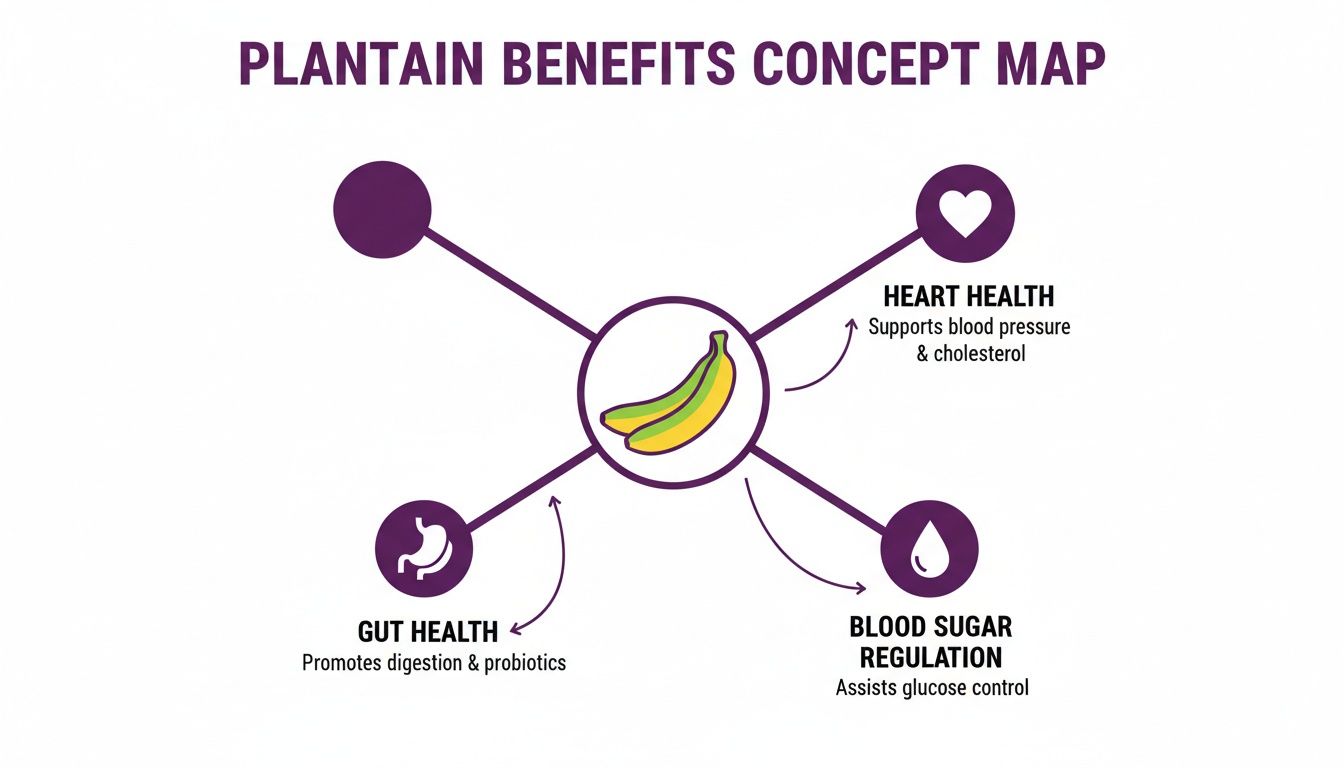
As you can see, the nutrients packed inside plantain are central to looking after your gut, keeping your blood sugar in check, and supporting a healthy heart.
The Power of Green (Unripe) Plantain
The star player in green plantain is its resistant starch. Just like the name says, this type of starch "resists" being broken down in your small intestine. Instead, it makes its way to your large intestine, where it becomes a prebiotic.
A prebiotic is basically 'food' for the good bacteria living in your gut. Keeping your gut microbiome well-fed is the foundation for great digestion, a robust immune system, and even a better mood.
This whole process gives you two massive wins:
- Keeps You Feeling Full: Because resistant starch digests so slowly, you feel satisfied for much longer. This makes green plantain a brilliant partner for weight management, helping to knock those snack cravings on the head.
- Better Blood Sugar Control: That slow breakdown of complex carbs means you avoid the sharp blood sugar spikes you get from sugary foods and refined carbs. It’s a really smart choice for anyone managing diabetes or just trying to keep their energy levels steady.
To get the most out of its resistant starch, boiling or baking green plantain is the way to go. It’s perfect for bulking up stews and other savoury dishes.
The Goodness of Ripe (Yellow) Plantain
When a plantain turns yellow with black spots, its nutritional game changes. The starch converts into simple sugars like fructose and sucrose, which is why ripe plantain is so wonderfully sweet and fries up into a golden, caramelised treat.
While you lose some of the resistant starch, other benefits step into the spotlight.
Ripe plantain packs a bigger punch when it comes to antioxidants, especially vitamin C and carotenoids (which your body turns into vitamin A). These compounds act like bodyguards for your cells, protecting them from the damage caused by free radicals that are linked to ageing and disease.
Thanks to its natural sweetness, ripe plantain is also a fantastic, healthier swap for processed sugar in your recipes. You can mash it into porridge or baked goods for flavour, moisture, and nutrients without touching the white stuff. It’s a clever way to satisfy your sweet tooth while still getting a good dose of plantain’s benefits.
So, the choice is all yours and depends on your goals. For blood sugar management and gut health, go green. For a natural energy lift and an antioxidant boost, reach for the yellow ones. And to make sure you’ve always got some ready to go, check out our handy guide on how to store plantains to keep them at their best.
How Plantain Supports a Healthy Heart
We all love plantain for its comforting flavour and versatility, but did you know it’s also secretly looking out for your heart? It’s true. For many of us in the UK’s Black African and Caribbean communities, heart health is a major priority. The brilliant news is that adding this familiar, budget-friendly staple to your meals is a powerful and tasty way to protect it.
Let's break down exactly how plantain does its magic for your heart, looking at the key nutrients that are working hard behind the scenes.
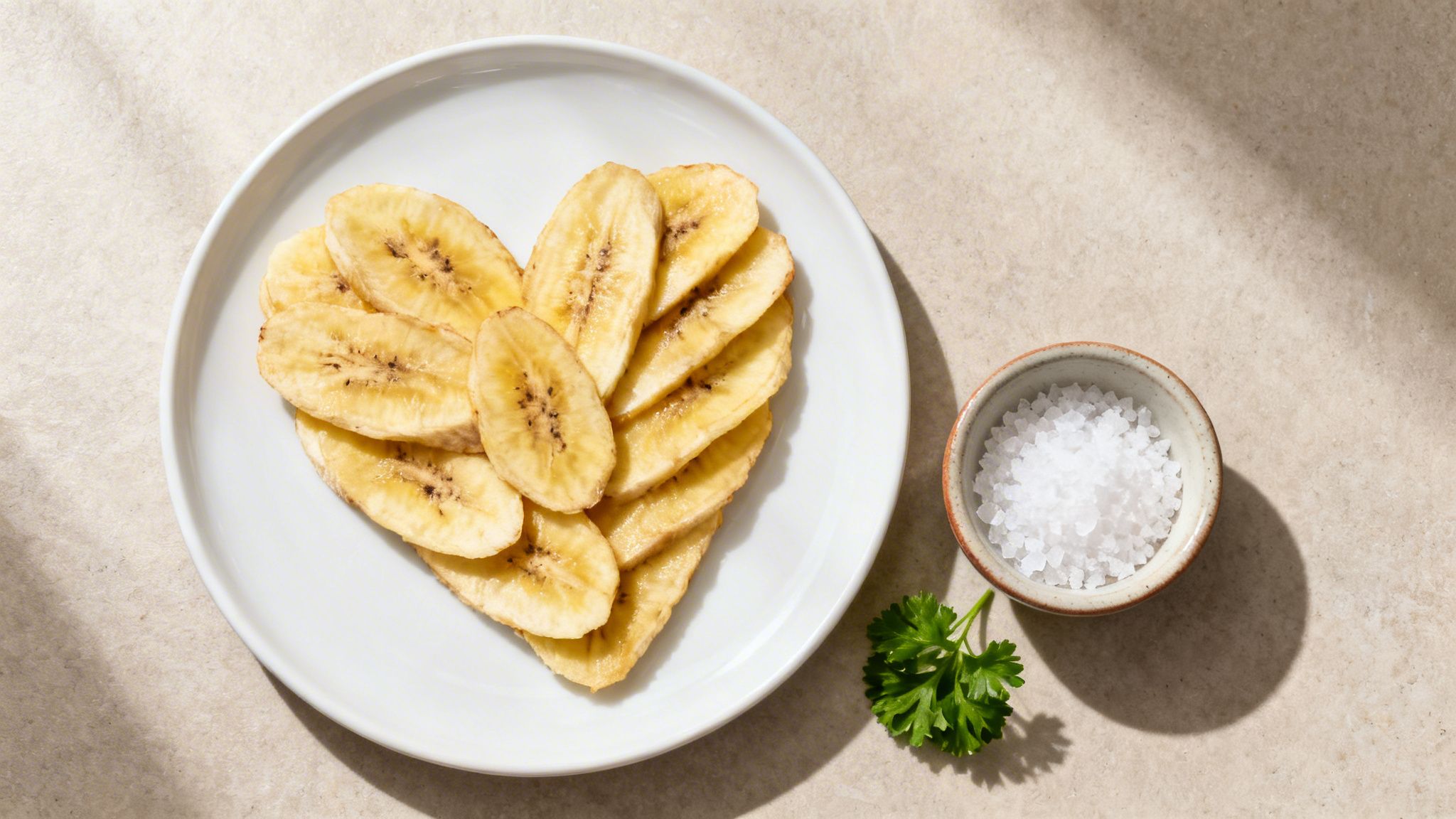
This humble food helps your heart in three main ways: by managing blood pressure, tackling cholesterol, and dealing with another lesser-known risk.
The Potassium Powerhouse for Blood Pressure
Think of potassium and sodium (salt) like two sides of a scale. When you have too much salt, your body holds onto water, which increases the volume of blood and puts pressure on your artery walls. Potassium steps in to help your body flush out that excess sodium and encourages your blood vessels to relax. It’s a beautiful balancing act.
Just one medium-sized plantain gives you a fantastic potassium boost. This is especially helpful here in the UK, where many of our diets can be high in processed foods loaded with sodium. Making plantain a regular part of your meals is a delicious strategy for keeping your blood pressure in a healthier range.
This is hugely important given that heart disease and strokes disproportionately affect Black African and Caribbean people in the UK. Plantain, a cultural favourite, offers serious heart protection, mainly thanks to its potassium. A medium plantain has around 663 mg of it—that's about 14% of the UK's recommended daily amount! This is a massive win when you consider that high blood pressure affects over 30% of adults in the country. You can dive deeper into plantain’s nutritional profile in this detailed health overview.
Fibre: The Cholesterol Sponge
Another huge win for your heart is plantain’s impressive fibre content. The soluble fibre in plantain acts a bit like a natural sponge as it travels through your digestive system.
This clever "sponge" has one main job: to soak up the cholesterol from your food and the bile acids your body makes from cholesterol.
By grabbing onto these substances, the fibre stops them from being absorbed into your bloodstream. Instead, it guides them straight out of your body, helping to lower your levels of LDL or "bad" cholesterol.
Over time, this simple action helps stop fatty stuff from building up in your arteries (a condition called atherosclerosis), which is a major cause of heart attacks and strokes. A single serving of plantain can give you over 10% of your daily fibre target, making it a super easy way to work towards clearer arteries.
Vitamin B6 and a Hidden Heart Risk
Finally, plantain provides a more subtle heart benefit with its supply of vitamin B6. It might not be as famous as potassium or fibre, but vitamin B6 is vital for keeping levels of an amino acid called homocysteine in check.
When homocysteine levels in the blood get too high, it’s seen as a direct risk factor for heart disease. It’s thought to damage the lining of your arteries, making it easier for clots to form and for cholesterol to build up.
Vitamin B6 works with other B vitamins to break homocysteine down and turn it into other useful things your body needs. By getting enough vitamin B6—and plantain is a great source—you’re helping to keep your homocysteine levels in a safe and healthy zone.
Bringing these three powerful elements together, plantain proves it's so much more than a delicious side dish. It’s a true heart-smart food that works in multiple ways to protect your most important organ.
Boosting Your Digestion and Gut Wellness
If your gut feels a bit off, it can throw your whole day out of whack. A happy digestive system is key to feeling your best, and plantain is a fantastic, natural way to keep things running smoothly.
Think of the fibre in plantain as the clean-up crew for your gut. It helps prevent that sluggish, backed-up feeling by keeping you regular. But that’s just the start of what plantain can do for your digestive health. It goes much deeper than just basic fibre.
Fuelling Your Gut with Prebiotic Power
The real magic happens with unripe, green plantain. It’s packed with something called resistant starch, which is a game-changer for your gut. This special carb doesn't get digested in your small intestine. Instead, it makes its way down to your colon, becoming premium fuel for the good bacteria living there.
When these friendly bacteria munch on resistant starch, they produce powerful compounds known as short-chain fatty acids (SCFAs). One of the most important of these is butyrate.
Butyrate is basically a superfood for your gut lining. It’s the main energy source for your colon cells, helping to strengthen your gut barrier, calm inflammation, and keep everything in top condition.
So, by eating green plantain, you're not just feeding yourself—you're feeding the tiny helpers that support your immune system, improve nutrient absorption, and can even lift your mood. It’s not just food; it’s a prebiotic powerhouse.
Soothing Your Digestive System Naturally
On top of the fibre and prebiotics, plantain has a gentle, soothing effect on the digestive tract. While the leaves have been used in traditional remedies for ages, the fruit itself offers some serious comfort.
Plantain is known to help calm inflammation in the stomach and bowels, making it a great choice if you have a sensitive stomach or deal with issues like gastritis.
- Magnesium for Muscle Relaxation: Plantain has a decent amount of magnesium, a mineral that helps relax muscles all over your body, including those in the gut wall. This can help ease cramping and discomfort.
- Astringent Properties: If you’re dealing with an upset stomach or diarrhoea, plantain’s gentle astringent quality can help firm things up and restore calm.
- Allantoin for Healing: Plantain contains allantoin, a compound known to support cell repair. This can be a big help for healing any irritated or damaged areas in your digestive tract.
This soothing action, paired with its incredible fibre content, makes plantain an excellent food for daily digestive comfort and long-term gut health.
A Powerful Ally for UK Gut Health
Gut issues are a big deal here in the UK. Research shows that up to 40% of adults suffer from digestive problems. Plantain offers a simple, natural solution. A single serving packs over 3 grams of fibre, giving you a solid 10% of the UK's recommended 30g daily target to keep you regular.
For those of us in the African diaspora, whose gut microbiomes can be affected by Western diets, the prebiotic fibres in plantain are even more vital for nourishing a diverse and healthy gut. To learn more about how every part of the plantain is being used, check out this fascinating sustainable food systems research.
A Smart Choice for Blood Sugar and Weight Management
If you're in the UK trying to get a handle on your blood sugar or manage your weight, the options at the supermarket can feel endless. But what if one of the best tools was a familiar staple, loved in so many of our communities? Unripe green plantain is more than just a versatile food; it's a powerful and natural way to tackle these common health concerns.
Think of your metabolism like a fire. Things like white bread or sugary snacks are like paper – they burn up fast, giving you a quick, sharp spike in energy (and blood sugar) followed by a crash. Green plantain, on the other hand, is like putting a slow-burning log on that fire.
Its magic lies in its high level of resistant starch. This is a type of complex carbohydrate that your body digests very, very slowly. This gradual process stops those sudden spikes in blood glucose and gives you steady, sustained energy. This makes it an incredibly smart choice for anyone managing, or hoping to prevent, type 2 diabetes.
Taming Hunger and Supporting Weight Goals
That slow digestion does more than just keep your blood sugar stable—it also has a huge impact on your appetite. As the resistant starch in green plantain works its way through your system, it helps release hormones that tell your brain you're full and satisfied. This feeling of fullness, called satiety, is a total game-changer for weight management.
When you feel fuller for longer, you’re much less likely to reach for unhealthy snacks between meals. It’s a simple way to cut down your overall calorie intake without feeling like you're starving or depriving yourself. Adding some boiled or baked green plantain to your meals is an effective strategy to support your weight loss goals.
This is especially important within the UK's African diaspora communities. Statistics show obesity rates have risen, with 65% of Black African adults and 72% of Black Caribbean adults now classified as overweight or obese. This has led to diabetes being two to three times more common in these groups. Unripe plantain is a powerful ally here, as dietary models show its complex carbs can help cut snacking by up to 20%. You can learn more about plantain's impressive nutritional benefits on Healthline.com.
More Than Just Starch: A Team of Nutrients
While resistant starch is the star player for blood sugar and weight control, it doesn't work alone. Plantain brings a whole team of other helpful nutrients that boost its effects.
The combination of fibre, complex carbs, and key minerals in plantain creates a synergistic effect, working together to enhance metabolic health and support your body’s natural ability to regulate itself.
This well-rounded nutritional profile makes it a much better option than many other starchy foods. Here’s what else it brings to the table:
- Dietary Fibre: On top of the resistant starch, plantain has other fibres that add bulk to your meals and help with digestion. A single cup gives you about 3 grams of fibre, which helps keep you regular—another key part of healthy weight management.
- Essential Potassium: Plantain is loaded with potassium, a mineral that does more than just support heart health. Studies show that getting enough potassium can help improve your body's sensitivity to insulin. With metabolic syndrome affecting around 25% of high-risk UK groups, potassium-rich foods are a smart addition to your diet.
- Important Vitamins: It's also a good source of vitamin B6, which is involved in over 100 different processes in the body, including how we metabolise proteins, fats, and carbohydrates. This helps make sure your body is turning food into energy efficiently, instead of storing it as fat.
By choosing unripe plantain, you’re not just picking a low-sugar carb. You’re eating a nutrient-packed food that actively helps your metabolic health from several different angles. It’s a smart, affordable, and delicious way to take control of your well-being.
How to Prepare Plantain for Maximum Health Benefits
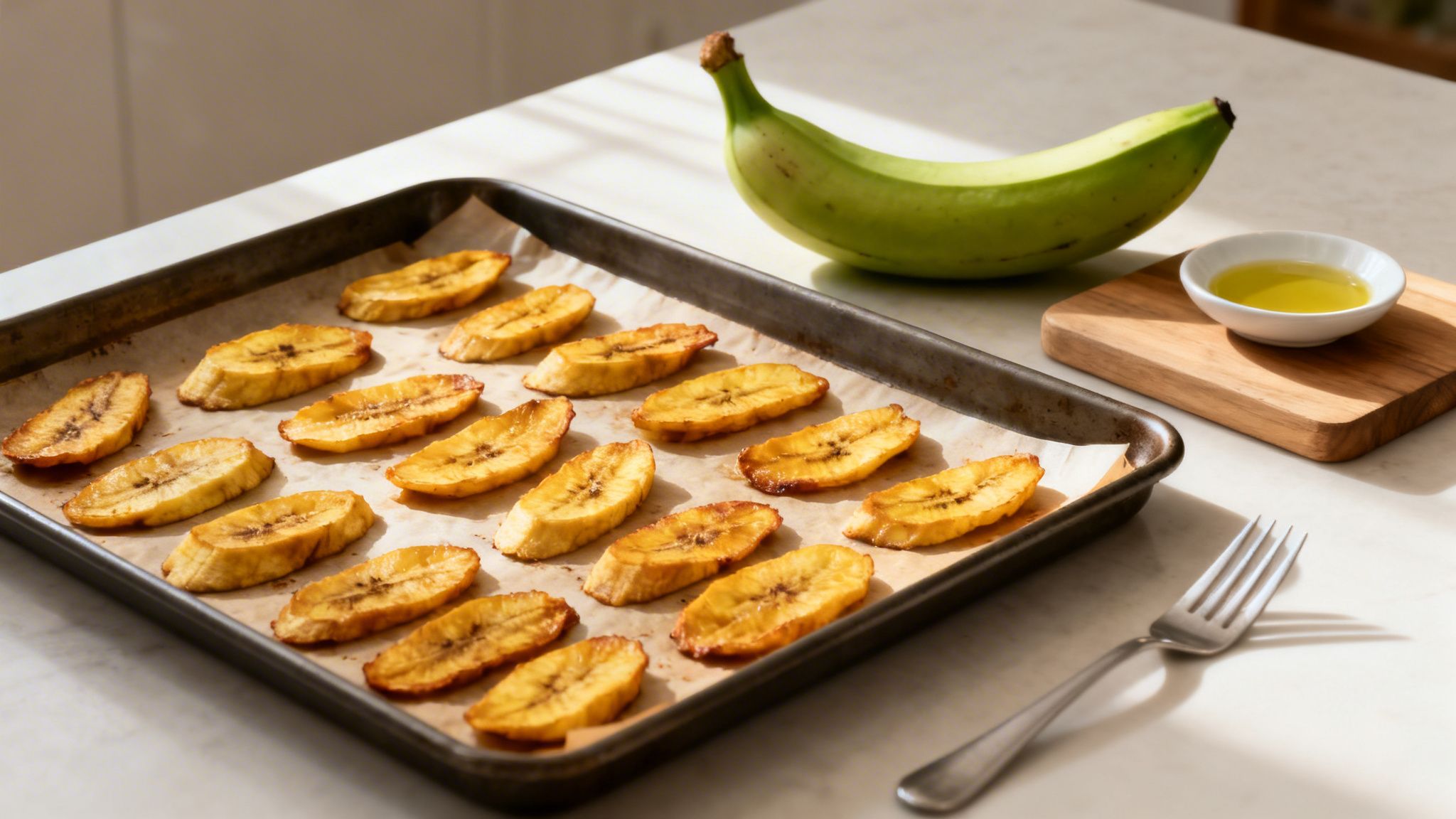
Knowing all the good things plantain can do for your body is the first step. The next, just as crucial, is making sure you cook it in a way that actually keeps all that goodness in.
Let’s be honest, we all love crispy, fried dodo. But deep-frying, while delicious, soaks the plantain in oil, sending the calorie and fat content through the roof. This can easily undo many of the heart health and weight management benefits we’re trying to achieve. The goal is to sidestep methods that use loads of fat and intense heat, which can wipe out those delicate vitamins.
Choosing Smarter Cooking Methods
To really get the most from your plantain, we need to think about cooking methods that rely on less oil and gentler heat. These techniques lock in the vitamins, minerals, and precious fibre, making sure every bite counts.
Here are some of the healthiest ways to prepare plantain:
Boiling: This is one of the absolute best methods, especially for unripe green plantain. It softens the starchy flesh without adding a drop of extra fat, making it a perfect, filling base for a pottage or a simple side for your stews. Best of all, it keeps all that valuable resistant starch intact.
Baking or Roasting: A fantastic alternative to frying that still gives you a satisfying result. Just slice your plantain, toss it in a tiny bit of oil (coconut or olive oil works wonders) with your favourite spices, and bake until golden. With ripe plantain, this brings out a beautiful, natural caramelised flavour without the grease.
Air-Frying: If you absolutely need that crispy texture, an air fryer is your secret weapon. It blasts the plantain with hot, circulating air, giving you an amazing crunch with up to 80% less oil than traditional deep-frying.
These methods mean you’re getting the full nutritional package—all the fibre, potassium, and vitamins—without any unhealthy extras.
Simple and Healthy Recipe Ideas
Putting this into practice is easier than you think. You can weave these healthier cooking styles right into your weekly meals, creating dishes that are both comforting and incredibly good for you.
The real secret is to let the plantain’s natural flavour do the talking. When you bake or boil it, you enhance its subtle sweetness or earthy notes instead of drowning them in oil. This allows its powerful nutritional profile to really support your health goals.
Why not try one of these simple ideas for your next meal?
Crispy Baked Plantain Slices: Slice a ripe or semi-ripe plantain, give it a light dusting of salt and paprika, and bake at 200°C (180°C fan) until it’s golden and crisp. They’re a perfect snack or side dish. For a step-by-step guide, check out this simple and delicious recipe for making your own plantain chips.
Comforting Plantain Pottage: Dice up some green plantain and boil it with onions, peppers, a small amount of palm oil for flavour, and your choice of fish or meat. You get a hearty, fibre-packed one-pot meal that’s brilliant for your gut.
Boiled Plantain with Garden Egg Stew: A true classic pairing that’s also incredibly healthy. Simply boil unripe plantain until it’s tender and serve it with a rich, vegetable-loaded stew. It’s a fantastic meal for keeping your blood sugar levels stable.
Frequently Asked Questions About Plantain
Still have a few questions? No problem. Here are the answers to some of the most common things people ask about plantain, building on everything we’ve covered so far.
Is Plantain High in Calories?
Yes, but that’s not the whole picture. A medium-sized plantain has about 220 calories, mostly from complex carbohydrates.
But these aren't the 'empty' calories you get from processed snacks. They're packed with fibre, vitamins, and minerals that give you steady, lasting energy. The real decider is how you cook it – boiling or baking keeps the calories in check, while frying will add a lot more from the oil.
Can Children Eat Plantain?
Absolutely! Plantain is a brilliant food for children. When it’s ripe and cooked, its soft texture is really easy for little ones to manage.
It's a natural way to fuel their busy days and delivers important nutrients for their growth:
- Vitamin C: For helping to keep their immune system strong.
- Vitamin A: Which is vital for good eyesight.
- Vitamin B6: An important nutrient for brain development.
Mashed ripe plantain makes a wonderful, naturally sweet alternative to sugary puddings. And for a savoury, nutrient-dense meal, you can introduce them to fresh unripe green plantain in pottages.
Can You Freeze Plantain?
Yes, and you absolutely should! Freezing plantain is a fantastic way to cut down on food waste and make sure you always have some ready for a quick meal. It works perfectly for both ripe and unripe plantain.
To freeze: Peel and slice your plantain into rounds or chunks. Lay the slices on a baking tray in a single layer and pop them in the freezer for a couple of hours. Once they're frozen solid, tip them into a freezer bag.
This simple trick stops the slices from freezing into one big clump. You can cook them straight from frozen, whether you're tossing them into a stew or baking them in the oven. It's an easy way to keep a healthy carbohydrate source on hand.
Ready to enjoy the amazing flavours and health benefits of plantain? Stock your kitchen with authentic, high-quality groceries from My Africa Shop. We offer everything you need, from fresh plantain to spices and grains, delivered right to your door. Explore our selection and bring your favourite meals to life at https://myafricanshop.co.uk.