
Soon stocks will run out
Dont miss this opportunity while supplies last.


Soon stocks will run out
Dont miss this opportunity while supplies last.
What is Semolina Flour? Discover Its Uses, Origins, and Buy Guide
Semolina is a coarse, pale-yellow flour made from durum wheat—the toughest wheat out there. Its unique grainy feel and golden colour are what make it a kitchen staple around the world, but it holds a special place in African cooking, where it’s the star ingredient in beloved 'swallow' dishes like Semo.
What Is Semolina Flour Anyway
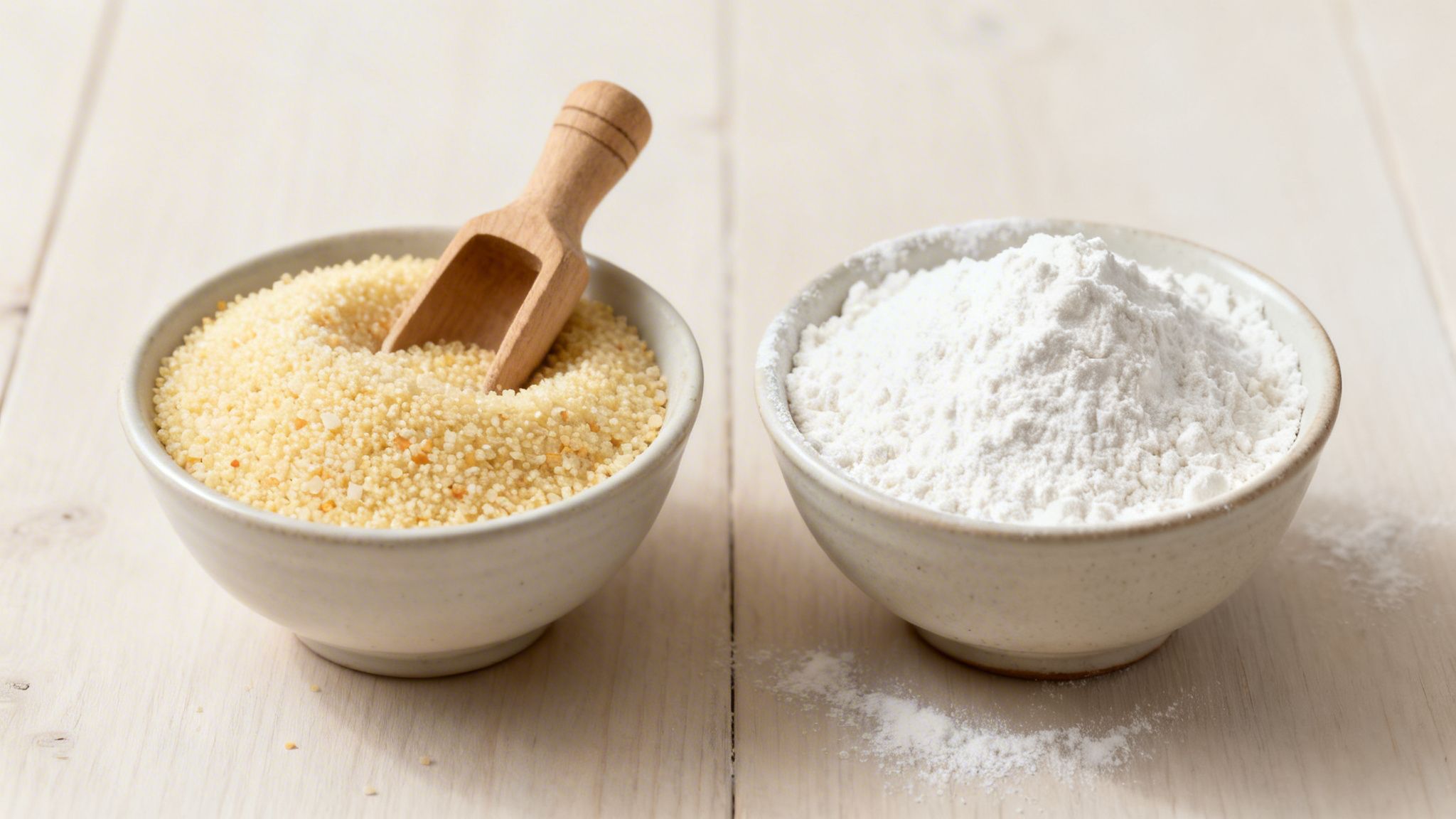
Think about the difference between fine, powdery beach sand and the coarser, grainier stuff you find elsewhere. That’s pretty much the difference between regular all-purpose flour and semolina. While most flours are milled into a fine powder, semolina keeps its distinctive granular texture.
This isn't by chance. It all comes down to its source: durum wheat. This wheat is incredibly hard and packed with protein, which gives semolina its signature golden hue and sturdy structure. It’s the perfect choice for dishes that need to be firm but still pliable.
To help you see the differences at a glance, here’s a quick comparison with other common flours.
Semolina at a Glance
| Characteristic | Semolina Flour | All-Purpose Flour | Cornflour |
|---|---|---|---|
| Source | Durum Wheat | Soft/Hard Wheat Blend | Maize (Corn) |
| Texture | Coarse, Granular | Fine, Powdery | Very Fine, Silky |
| Colour | Pale Yellow | White/Off-White | Bright White |
| Protein Content | High | Medium | Low (Starch) |
| Best For | Swallows, Pasta, Porridge | Baking, Sauces | Thickening, Frying |
As you can see, each flour has its own job in the kitchen, and semolina's high protein and unique texture make it a true specialist.
Fine Versus Coarse Semolina
When you’re shopping for semolina, you'll usually see two options: fine and coarse. They both come from durum wheat, but the size of the granules changes how they cook and what you should use them for.
- Fine Semolina: This version has smaller grains, so it cooks faster and feels softer. It’s the top choice for making smooth, stretchy swallows like Semo (Semolina Fufu). It absorbs water easily, giving you a tender, lump-free result every time.
- Coarse Semolina: With bigger, more noticeable grains, this type gives dishes more texture. It’s fantastic for certain kinds of pasta, gnocchi, or traditional porridges where you want a bit of a bite.
For the majority of African recipes, especially swallows, fine semolina is what you need. It creates that perfect smooth, elastic dough that’s ideal for scooping up rich stews and soups.
Why Protein Content Matters
The real secret to semolina’s magic is its high protein and gluten content. Durum wheat has a lot more protein than the softer wheat used for all-purpose flour. When you mix semolina with hot water and start stirring, these proteins form strong, elastic gluten strands.
Think of it like knitting a jumper. The gluten strands are your yarn. The more you stir and work the dough, the more those strands link up, creating a tight, stretchy fabric. In the kitchen, this 'fabric' is a perfectly smooth ball of Semo.
This is exactly why semolina holds its shape so well. It forms a firm, non-sticky dough that won’t fall apart when you use it to eat. If you tried this with a lower-protein flour, you’d just end up with a mushy, unworkable mess. This strength makes semolina an irreplaceable ingredient in so many African homes.
The Journey from Durum Wheat to Your Kitchen
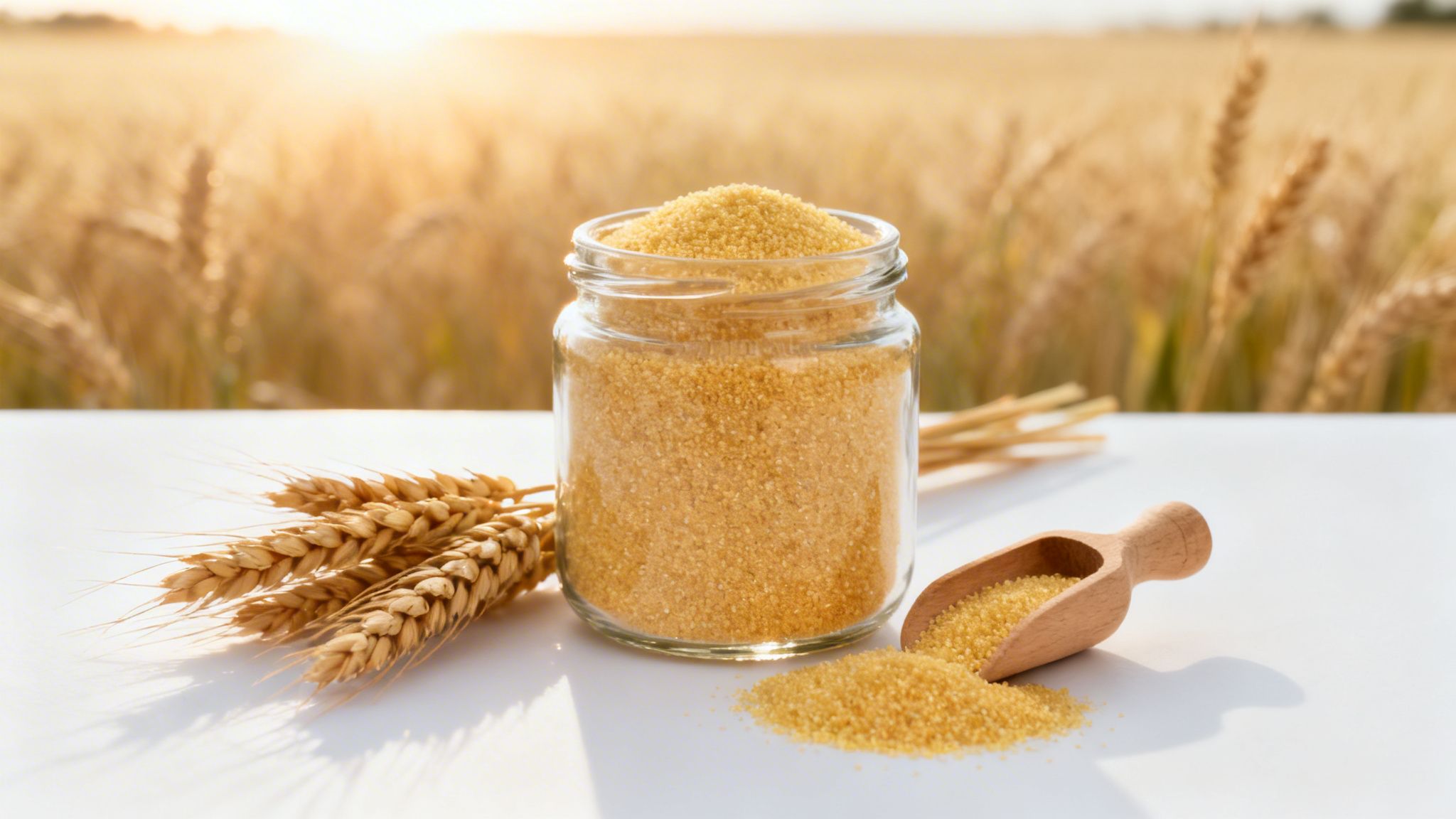
Every bag of golden semolina starts its story in a field of durum wheat. This isn't your average wheat; it's the hardest variety out there, chosen specifically for its high protein and beautiful golden colour. The journey from that humble grain to the staple in your pantry is a careful process designed to bring out its very best qualities.
Think of a single grain of durum wheat. It's made of three parts: the tough outer skin (bran), the tiny nutrient-packed germ, and the starchy heart, which we call the endosperm. While wholewheat flour uses all three, the secret to what makes semolina special lies in skilfully separating these parts.
The milling isn't about grinding it into a fine powder. It's more of a gentle cracking process. The whole point is to break open the grain and cleanly separate the coarse, golden endosperm from the other bits. This is exactly what gives semolina its signature gritty feel and sunny colour.
Unlocking the Golden Endosperm
So, how is it done? The durum wheat kernels are passed through a series of rollers. It’s a bit like using a set of sieves, each one getting finer and finer. The first pass cracks the wheat open. Then, purifiers use jets of air to blow away the lighter bran and germ, leaving the heavier bits of endosperm behind.
This is done again and again. With each pass, the endosperm is broken down into smaller pieces until it reaches just the right size for coarse or fine semolina. This careful technique is what makes all the difference.
- Texture Preservation: It creates that distinct granular texture, which is absolutely essential for dishes like a perfect Semo fufu or classic pasta.
- Protein Focus: It concentrates the protein from the endosperm. This is vital for the strong gluten needed to make stretchy, elastic doughs.
- Colour and Flavour: It makes sure that signature pale-yellow colour and subtle, nutty flavour shine through in your cooking.
This is a world away from how regular all-purpose flour is made. For that, the wheat is ground aggressively to create a fine, soft powder. With semolina, it's all about gentle separation and refinement.
The real quality of semolina comes from this special milling. It's not just about grinding wheat; it’s about carefully isolating the endosperm to capture the best of the durum grain—its strength, colour, and texture.
This careful method ensures you get a consistent, high-quality product every single time. It’s the reason semolina performs so well in our recipes, whether you’re making a perfectly smooth swallow or a hearty, warming porridge.
From Global Fields to UK Kitchens
While the process sounds technical, its impact is felt right here in our kitchens. Semolina is a massive ingredient in the UK food scene, especially for businesses serving diverse communities like our own vibrant African diaspora. The UK flour milling industry has around 51 mills run by 30 different companies, and the four biggest ones handle about 65% of all flour produced.
Because durum wheat needs a specific climate to grow well, a lot of it is brought in from countries like Germany, Canada, and France. This global supply, combined with efficient milling right here in the UK, means we always have a steady, reliable source for our homes and businesses. You can learn more about the industry by checking out the full UK Flour Milling Industry report.
This whole journey—from sunny fields of wheat, through a precise milling process, and into your hands—is what brings that bag of golden semolina to your kitchen. Understanding what goes into it helps you appreciate the quality and care behind this essential pantry staple.
How Semolina Shines in African Cuisine
While you might find semolina flour in Italian pasta or Turkish desserts, its role in African cooking is something special. It’s not just another ingredient—it’s the heart of the meal, the centrepiece of the table, and the perfect partner for the rich, bold flavours of the continent's most loved dishes.
For so many families, especially in Nigeria and across West Africa, semolina means one thing: ‘swallow’ food. These are the soft, pliable doughs you eat with your hands, tearing off a piece to scoop up hearty stews and soups. In Nigeria, it’s best known as Semo, a modern and hugely popular alternative to older, traditional swallows.
The Star of the Swallow World
So, what is it about semolina that makes it so perfect for this? It all comes down to its high protein and gluten. When you cook it with water, it transforms into a uniquely firm yet elastic dough that holds its shape beautifully.
This texture isn’t just for show; it’s completely practical. A good swallow has to be strong enough to carry a heavy, flavour-packed stew all the way from the bowl to your mouth without falling apart.
Just imagine trying to scoop up a thick, chunky Egusi soup with a weak, mushy dough. It would be a complete mess! Semolina’s sturdy structure makes sure every single bite gets to you, delivering that perfect combo of texture and flavour.
This is where semolina really proves its worth. While other staples like garri have a distinct, slightly sour taste and a grainier feel, semolina brings a neutral flavour and a uniquely smooth, stretchy consistency. It's an incredibly versatile base that lets the complex flavours of the stews do all the talking. If you're curious about other swallows, you can compare it with our guide on what is garri.
From a simple flour to the star of a hearty meal, semolina's journey is a cornerstone of African home cooking.
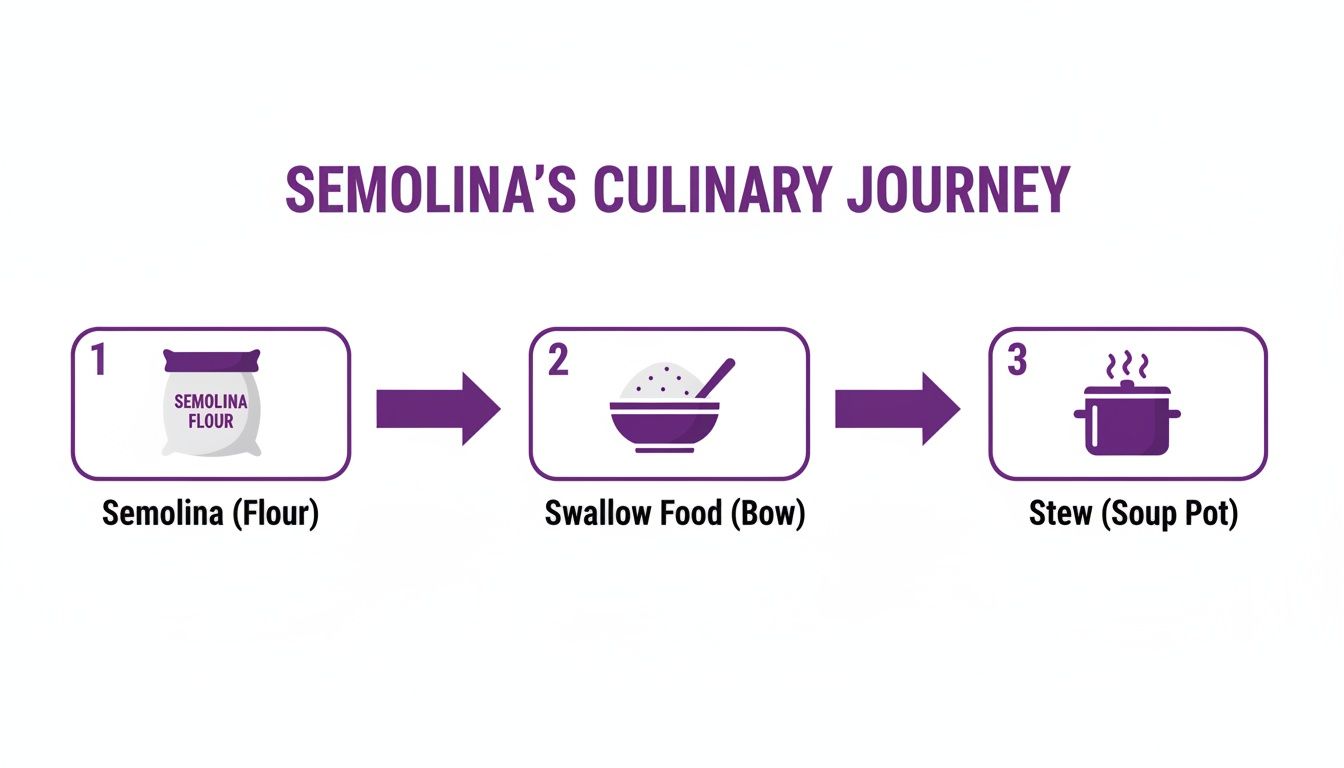
This process shows just how semolina acts as the bridge that turns a basic ingredient into a satisfying family feast.
Beyond the Perfect Swallow
Although it’s most famous as the main ingredient in Semo, semolina’s talents don’t stop there. Its versatility makes it a kitchen hero for all sorts of meals, from everyday breakfasts to special occasion dinners.
For starters, it makes a wonderfully comforting breakfast porridge. Just cook it with a bit of milk or water and some sugar, and it turns into a smooth, creamy meal. It’s a quick, filling, and nourishing way to start the day, often jazzed up with a dash of cinnamon or a splash of evaporated milk.
Its fine, granular texture also makes it a fantastic coating for fried foods. Honestly, move over, breadcrumbs.
- For Fried Chicken: A light dusting of semolina before frying gives you an unbelievably crispy, golden-brown skin that stays crunchy.
- For Fish: It sticks perfectly to fish fillets, creating a delicate, sandy crust that complements the flavour of the fish instead of hiding it.
- For Yams: Tossing boiled yam slices in seasoned semolina before frying gives them a beautifully crisp outside and a soft, fluffy centre.
In all these dishes, semolina adds a delightful crunch and a gorgeous golden colour that other coatings just can't seem to match.
A Modern Staple with Deep Roots
The rise of semolina in African cooking, particularly in cities, is all about convenience and quality. It’s quick to cook, delivers consistent results, and is easy to find, making it the perfect choice for busy families who still crave traditional meals. It perfectly bridges the gap between heritage and the demands of modern life.
Brands like Golden Penny Semovita and Honeywell Semolina have become household names because people trust their quality. They've made it easier than ever for those of us in the UK and beyond to recreate the authentic flavours we grew up with.
Whether it’s the foundation of a celebration feast with Ogbono soup or the crispy coating on a simple weeknight dinner, semolina has truly earned its place as an essential ingredient in the African kitchen.
How to Cook Perfect Semolina Fufu Every Time
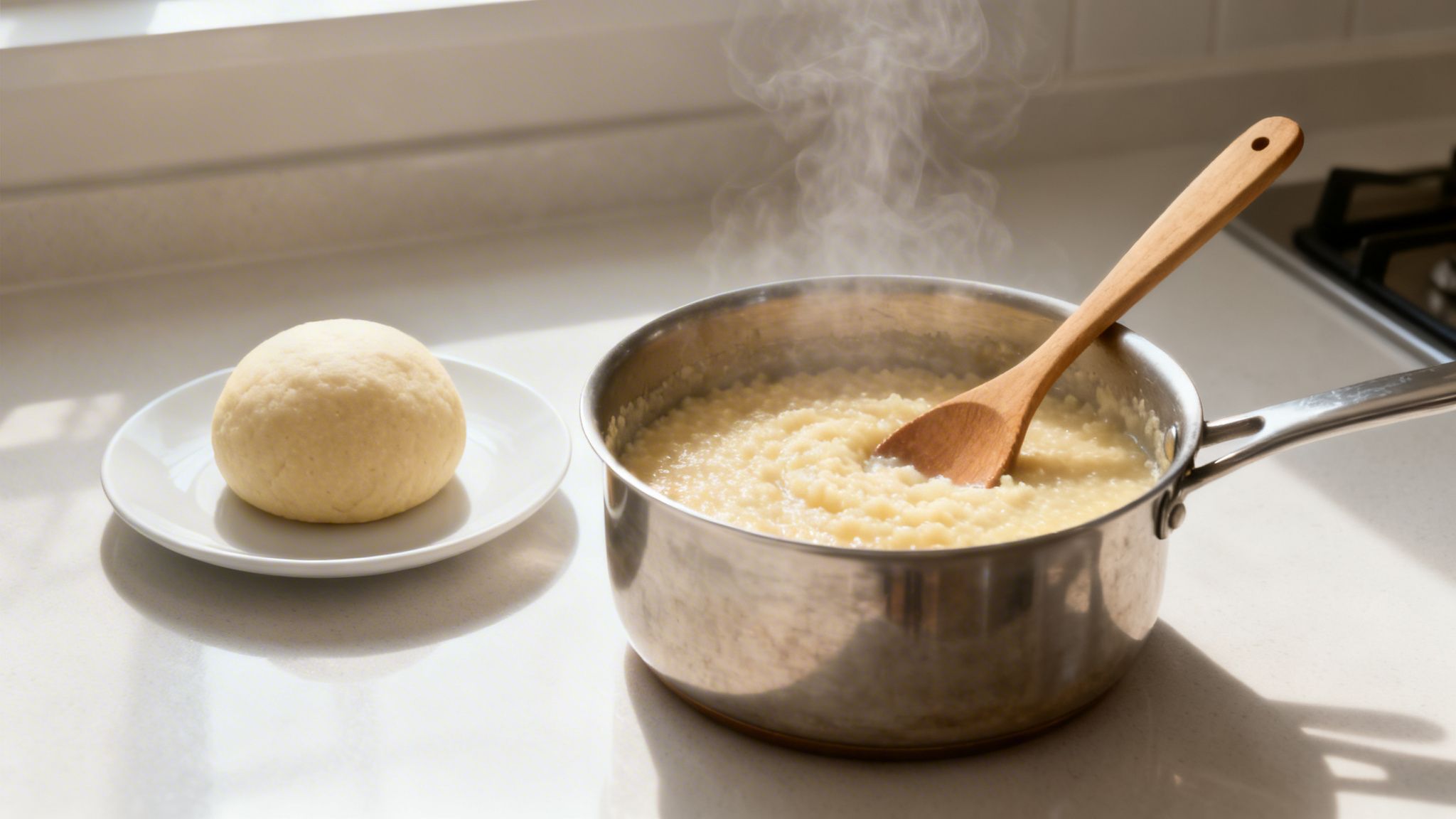
Ready to finally nail that perfectly smooth, lump-free semolina fufu (or Semo)? It’s honestly so much easier than you think. Once you get the technique down, you'll be serving up a delicious, elastic swallow that will have everyone at the table asking for your secret.
Forget lumpy, frustrating attempts. This guide will walk you through every single step, from getting the water-to-flour ratio just right to the stirring method that makes all the difference.
The Foundation: Your Ingredients and Tools
Before you even think about turning on the hob, getting your setup sorted is half the battle. Think of it like a chef’s mise en place. For perfect Semo, you really only need a few simple things.
First up, the star of the show: your fine semolina flour. Using a quality product like Golden Penny Semovita makes a huge difference, as its fine texture is specifically designed for silky smooth swallows. You’ll also need cold water, a sturdy non-stick pot, and a good wooden spoon or spatula for stirring. That’s it!
The Step-by-Step Guide to Smooth Semo
The biggest secret to lump-free Semo is starting with cold water. This simple trick lets the flour dissolve completely before the heat has a chance to create clumps. Follow these steps for foolproof results every time.
Create the Slurry: In your pot (off the heat!), mix one part semolina flour with two parts cold water. A good starting point is one cup of semolina to two cups of cold water. Whisk it until it looks like a smooth, milky liquid with no dry spots. This paste is your foundation for a flawless finish.
Apply Gentle Heat: Now, place the pot on the hob over a medium-low heat. Start stirring immediately and don't stop. The mixture will begin to thicken up surprisingly fast, so don’t walk away!
The Stirring Technique: This is where the real work begins. Stir constantly and vigorously, using a figure-eight motion. Make sure you scrape the bottom and sides of the pot to stop it from sticking and to ensure it cooks evenly. This is where the gluten develops, transforming the liquid into a soft dough.
Add More Flour: Once the mixture has thickened to a porridge-like consistency, it's time to build its structure. Gradually sprinkle in more semolina flour, just a little at a time, while you keep stirring and folding the dough over itself. This incorporates the flour and makes the dough stronger.
Cook It Through: Keep folding and pressing the dough against the side of the pot for about 3-5 minutes. You’re aiming for a smooth, thick, and elastic ball that pulls away cleanly from the pot. You'll notice it changes from a bright white to a slightly off-white colour as it cooks.
Shape and Serve: Once it's cooked, you can wet your hands or a small bowl with a little water to help shape the hot Semo into neat, smooth balls. Serve it straight away with your favourite rich soup, like Egusi or Ogbono.
The most critical stage is the continuous stirring as the slurry heats up. This action prevents the starch from forming lumps and activates the gluten, creating that signature smooth and stretchy texture we all love in a good swallow.
Common Mistakes and How to Fix Them
Even the most seasoned cooks can have an off day with Semo. Luckily, most issues are easy to avoid or fix on the fly. Here are the most common pitfalls and their solutions.
Mistake 1: Adding Flour to Hot Water
This is the number one cause of lumpy Semo. The hot water instantly cooks the outside of the flour, creating clumps before it has a chance to dissolve.- Solution: Always start with cold water. Mix your initial slurry before you even turn on the heat.
Mistake 2: Not Stirring Enough
If you get distracted and stop stirring, the Semo will cook unevenly, stick to the bottom, and form lumps.- Solution: Commit to stirring! From the moment the heat goes on until the dough is formed, keep that spoon moving.
Mistake 3: Incorrect Water Ratio
Too much water gives you a soft, sticky dough that won’t hold its shape. Too little, and it becomes hard and tough to swallow.- Solution: Stick to a 1:2 ratio of semolina to water for the slurry, then add more flour bit by bit to get the firmness you like. If it gets too stiff, add a tiny splash of hot water. If it’s too soft, just sprinkle in a little more flour.
How to Choose and Store Your Semolina
Walking down the flour aisle can feel a bit much, but picking the right semolina is easy once you know what you’re looking for. The choice you make will directly shape the texture of your meal, so it pays to get it right from the start.
First things first, let's talk about the grind. Semolina typically comes in two textures: fine and coarse. Each has its job in the kitchen, and using the right one is the secret to getting that authentic taste and feel.
Fine Semolina: This is your best friend for making classic Nigerian swallows like Semo. The smaller grains soak up water quickly and evenly, giving you that perfect smooth, stretchy, and lump-free dough. It’s also fantastic for a creamy breakfast porridge.
Coarse Semolina: With its bigger, more defined grains, this type adds a real bite to whatever you're cooking. Think certain Italian pastas, gnocchi, or hearty, rustic puddings where you want a bit of texture.
For most African recipes, especially when making a swallow, fine semolina is always the best choice. It creates a pliable dough that’s perfect for scooping up all those rich, delicious stews.
Choosing the Right Pack Size
Once you’ve picked your grind, the next thing to think about is what size bag you need. Here at My Africa Shop, we have options for everyone, whether you cook once in a while or you’re a busy caterer. A little thought here can save you money and make sure you’re never caught short.
For Home Cooks and Small Families:
A smaller bag, like a 1kg or 2kg pack, is usually the way to go. This makes sure your semolina stays fresh because you'll get through it before the quality drops. It's the perfect amount for weekly family meals without cluttering up your pantry.
For Large Households and Enthusiasts:
If Semo is a staple on your dinner table or you love cooking for a crowd, grabbing a 5kg bag is a smart move. It works out cheaper in the long run and means you won’t have that mid-week panic when you run out.
For Caterers and Bulk Buyers:
If you're cooking for events or selling food, you need a supply that’s both reliable and easy on the wallet. Our larger bulk sizes, like a 10kg bag, offer the best value. This is especially true in the UK, where data shows semolina is more popular than ever among African diaspora households and caterers. You can dig into the numbers on the global and UK semolina market to see the trends for yourself.
Products like Honeywell Semolina come in all these sizes, so we’ve got you covered no matter what you need.
How to Store Semolina for Maximum Freshness
Storing your semolina properly is key to keeping it safe from pests, moisture, and going off. It’s a natural wheat product, so it can go stale or even rancid if you don't look after it. Just follow these simple steps to keep it in top condition.
The golden rule for storing any flour, semolina included, is to keep it cool, dark, and dry. Heat, light, and moisture are its worst enemies—they speed up spoilage and invite unwanted pantry pests.
As soon as you open the bag, get the semolina into an airtight container. This is the most important step you can take. A good glass, metal, or food-safe plastic container with a solid lid is perfect. It will shield it from air and humidity, which lead to clumps and mould.
Keep the container somewhere cool and dark, like a pantry or a kitchen cupboard well away from the oven. If you've bought in bulk and need to store it for a long time, you can even pop it in the freezer. Just be sure it’s in a sealed, freezer-safe container to stop freezer burn from getting in.
Common Questions About Semolina Flour
As you start using semolina more in your kitchen, you're bound to have a few questions. Don't worry, it's completely normal! To help you cook with confidence, we’ve put together answers to some of the most common queries we hear.
Think of this as your go-to guide for all things semolina. Whether you're wondering how it compares to other staples or need to check if it fits a specific diet, you’ll find what you need right here.
Is Semolina Gluten-Free?
This is a big one, and the answer is a straightforward no. Semolina is not gluten-free. In fact, it's celebrated for its very high gluten content, which it gets from the durum wheat it's milled from.
This gluten is what gives semolina its magic. It’s the protein that creates those strong, elastic bonds when you add water, giving you the firm, pliable texture needed for a perfect swallow like Semo or traditional Italian pasta. Take away the gluten, and you lose the signature stretch and structure.
If you have coeliac disease or a gluten sensitivity, you absolutely must avoid semolina flour. For gluten-free swallows, you could look into yam flour (Amala) or certain cassava flours, but always double-check the packaging to make sure they are certified gluten-free.
What Is the Difference Between Semolina and Cornmeal?
At a quick glance, semolina and cornmeal might seem like twins with their granular feel and yellowish colour. But they come from completely different plants and behave very differently in the kitchen.
The Source: Semolina is milled from durum wheat. Cornmeal, on the other hand, is made from dried maize (corn). This is the main reason for all their other differences.
The Feel: Both are grainy, but semolina is usually finer and more consistent. Cornmeal’s texture can range from fine to coarse, but it typically has a harder, grittier feel that doesn't soften in the same way semolina does.
The Flavour: Semolina has a gentle, slightly nutty taste that makes a great neutral canvas for other ingredients. Cornmeal has a much more distinct sweet and earthy corn flavour that really makes its presence known.
How They Cook: Thanks to its high gluten content, semolina becomes smooth and elastic when cooked. Cornmeal has no gluten, so it creates a grainier, more crumbly texture. This is perfect for American-style cornbread or polenta, but not for a stretchy swallow.
Think of it this way: semolina creates a dough, while cornmeal creates a batter or a porridge. If you tried to make a swallow with cornmeal, you’d end up with a gritty, soupy mess that just falls apart.
Can I Use Semolina Instead of Garri?
While both semolina and garri are West African superstars for making swallows, you can't just swap one for the other. They give you completely different experiences in taste, texture, and even how you prepare them.
Garri is made from cassava tubers that have been fermented, grated, and roasted. This whole process gives it a signature tangy, slightly sour flavour and a much coarser texture. When you prepare it as eba, it has a grainy feel and a bold taste that many people absolutely adore.
Semolina, in contrast, has a very mild flavour and a much finer texture. When you cook it into a swallow (Semo), it becomes incredibly smooth, soft, and stretchy—a world away from the hearty texture of eba. Deciding between them is purely down to personal taste and what kind of soup or stew you’re serving.
What Else Can I Make with Semolina?
Semolina is far more than just a base for fufu! Its unique texture and high protein make it a brilliant ingredient in all sorts of sweet and savoury dishes from around the world.
Here are a few ideas to get your creativity flowing:
- A Super Crispy Pizza Base: Ditch the cornmeal! A light dusting of semolina on your pizza stone acts like tiny ball bearings, helping your dough slide right into the oven. It also gives the bottom of your crust a lovely, subtle crunch without the burnt, bitter taste cornmeal can sometimes leave.
- Hearty Puddings and Desserts: In Turkish and Mediterranean kitchens, semolina is the star of a gorgeous syrup-soaked cake called revani. You can also cook it with milk, sugar, and a bit of lemon or cinnamon to create a creamy, comforting pudding.
- Real Homemade Pasta: Semolina is the go-to flour for authentic Italian pasta. Its high protein content creates a sturdy dough that holds its shape beautifully when boiled, giving you that perfect al dente bite every time.
Ready to get cooking? At My Africa Shop, we offer authentic, high-quality semolina in sizes for every household and business. Explore our full range of African groceries and get everything you need delivered right to your door. Visit us at https://myafricanshop.co.uk today.