
Soon stocks will run out
Dont miss this opportunity while supplies last.


Soon stocks will run out
Dont miss this opportunity while supplies last.


Soursop Leaf Tea: Benefits, Brews, and Safe Use – soursop leaf tea 2026

When most people hear "soursop," they think of the sweet, tropical fruit with a flavour somewhere between a pineapple and a strawberry. But the soursop tree, Annona muricata, has another gift to offer—its leaves.
These leaves aren't for eating. Instead, they’re used to brew a mild, earthy tea that has been a cornerstone of traditional wellness in West Africa and the Caribbean for generations.
What Is Soursop Leaf Tea? A Cherished Tradition Explained
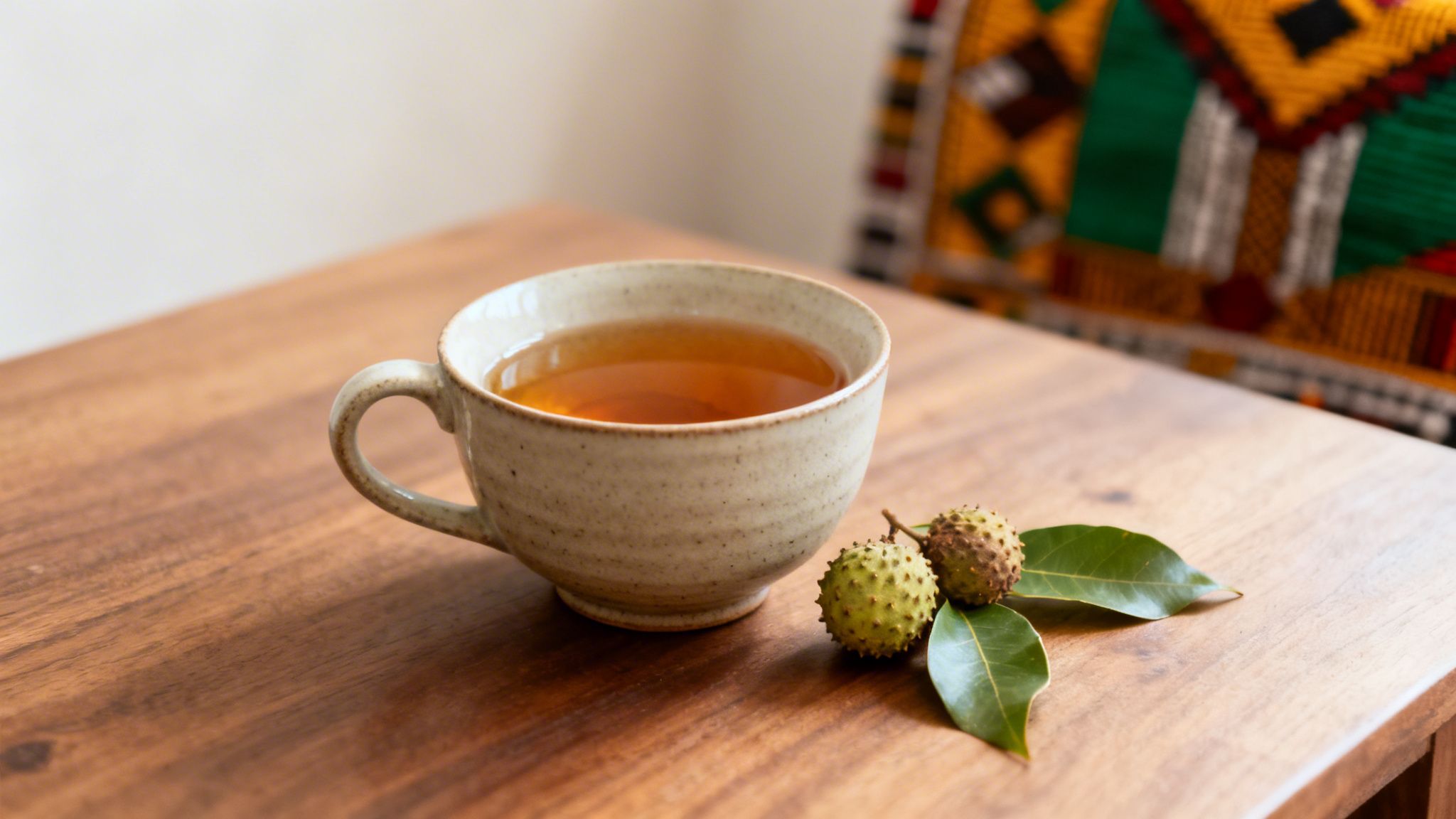
While the fruit is all about vibrant sweetness for juices and desserts, the leaves serve a completely different purpose. They create a soothing, comforting herbal infusion that’s all about wellness, not bold flavour.
This distinction is central to the tea’s cultural significance. In countless homes across West Africa and the Caribbean, brewing a pot of soursop leaf tea is a time-honoured ritual. It's the warm cup you offer a guest, the gentle drink sipped in the evening to unwind, and a staple remedy passed down through families.
To give you a quick overview, here’s a snapshot of what soursop leaf tea is all about.
Soursop Leaf Tea At a Glance
| Attribute | Description |
|---|---|
| Origin | Leaves from the Annona muricata tree, native to tropical regions. |
| Flavour Profile | Mild, earthy, and slightly musky. Not sweet or fruity. |
| Traditional Use | A wellness brew in West African and Caribbean cultures. |
| Caffeine | Naturally caffeine-free, making it ideal for any time of day. |
| Best For | Relaxation, unwinding, and connecting with cultural traditions. |
This table helps show why it's valued more for its comforting properties than for a strong taste.
A Bridge to Heritage in the UK
For the African diaspora here in the UK, soursop leaf tea is so much more than just a drink; it's a real, tangible connection to home. This has led to a huge surge in its popularity.
In fact, the demand for authentic African remedies is on the rise, with UK herbal tea imports growing by a massive 28% between 2020 and 2024. We see this trend every day at My Africa Shop, as more families look to bring these cherished traditions into their UK lives. You can read more about this cultural search for soursop over at Vittles Magazine.
Soursop leaf tea is a quiet tradition. It isn't about a bold flavour explosion but about a consistent, comforting presence that connects people to generations of cultural wellness practices.
Unlike a strong English breakfast tea or a fruity herbal blend, the flavour of soursop leaf tea is subtle and earthy. Its gentle, slightly musky notes are perfect for quiet moments of reflection. For many, it's a simple, powerful reminder of heritage—a taste of tradition that nourishes both body and soul.
Across West Africa and the Caribbean, soursop leaf tea is more than just a drink—it's a trusted part of wellness traditions passed down through generations. While modern science is still exploring all its secrets, a blend of early research and long-standing cultural wisdom points to why this brew is so cherished.
So, what’s the magic behind it? In a word: antioxidants. Think of antioxidants as your body's personal security detail, working around the clock to neutralise damaging molecules called free radicals. These troublemakers cause oxidative stress, a process linked to cell damage and ageing. Soursop leaves are packed with a unique group of antioxidants called acetogenins, which are found almost exclusively in the Annona family of plants.
A Focus on Traditional Wellness
For centuries, people have turned to soursop leaf tea to support the body in a number of ways. Its most common traditional uses are simple, practical, and still popular today:
- Supporting the Immune System: The high antioxidant content is believed to help reinforce the body’s natural defences, keeping your system feeling strong and resilient.
- Promoting Relaxation and Sleep: A warm cup in the evening is a go-to ritual for many looking to unwind. The tea is thought to have calming properties that help quiet the mind and prepare you for a good night's rest.
- Aiding Digestion: It's also a popular after-meal drink to help soothe the stomach and ease feelings of bloating or general discomfort.
This use for digestion is still incredibly common, especially within African communities here in the UK. A 2026 UK Food Standards Agency survey, for instance, noted that 17% of community members in Manchester and Birmingham drank soursop tea daily for digestive support. This coincided with a 14% rise in herbal imports after the pandemic, showing a growing interest in traditional remedies. You can dive deeper into the booming organic tea market with this full report.
A Balanced View on Cancer Claims
You've probably seen some bold claims online linking soursop to cancer treatment. It's really important to look at this topic with a clear and cautious eye. Some lab studies have investigated how soursop extracts—specifically those acetogenins—behave on cancer cells in a test tube. While interesting, these are very early findings and are a world away from proving the same effect in people.
It's crucial to understand that no scientific evidence from human clinical trials supports using soursop leaf tea to treat or cure cancer. Leading health bodies like Cancer Research UK are clear that soursop should not be used as a form of cancer treatment.
Relying on unproven remedies can be incredibly dangerous, as it might cause someone to delay or even stop using conventional medical treatments that are proven to work. Always, always talk to your doctor for medical advice.
While the sensational claims are unproven, the traditional uses for general wellness—like relaxation and digestive comfort—are well-established and celebrated. It's a wonderful herbal brew when enjoyed for what it is, much like other beneficial plants. If you're keen on exploring traditional herbal remedies, you might also like our guide on the benefits of bitter leaf.
By enjoying soursop leaf tea for its comforting and calming properties, you can safely connect with a rich cultural tradition.
How to Brew the Perfect Cup of Soursop Leaf Tea
Making a proper cup of soursop leaf tea is a joy. It’s not fussy like some other teas, but paying a little attention to a few details will make all the difference, helping you pull the best flavour and goodness from the leaves.
Whether you're using traditional whole dried leaves or the quick-and-easy tea bags, the process is wonderfully straightforward. The real magic happens when you get the leaf-to-water ratio, water temperature, and steeping time just right. This ensures you get a smooth, earthy brew that’s full of character but not overpowering. Think of it as a gentle art – you can always tweak it to find the perfect balance for your own taste.
Brewing With Whole Dried Leaves
This is the traditional way, and for good reason. It lets the leaves fully open up and release all their subtle flavours and aromas into the water. It’s the perfect method for anyone who wants the full, authentic experience.
- Get Your Ingredients Ready: For a standard cup of tea (about 240 ml), you'll want to start with 2-3 whole dried soursop leaves. If you know you like a stronger, more robust flavour, feel free to add another leaf.
- Heat Your Water: Bring your water to a boil, then turn off the heat and let it sit for a minute or two. You're aiming for a temperature around 85-90°C. If the water is scorching hot, it can draw out a bit of bitterness from the leaves.
- Steep the Leaves: Pop the leaves into your favourite mug or a teapot and pour the hot water over them. Pop a lid or a small plate on top to keep the heat in and let it steep for 5-10 minutes. A shorter steep gives a milder taste, while a longer one brings out a deeper, earthier flavour.
- Strain and Sip: Use a small strainer to remove the leaves, and your tea is ready to enjoy.
This simple visual shows some of the key wellness benefits that have long been associated with soursop leaf tea in traditional use.
It highlights how the tea’s antioxidant properties are traditionally linked to supporting the immune system and encouraging restful sleep.
Creative Twists for Your Tea
One of the best things about soursop leaf tea is its mild, earthy flavour. It’s a fantastic canvas for adding other ingredients because it plays so well with different tastes. Don’t be afraid to experiment!
Here are a few ideas to get you started:
- A Bit of Warmth: Add a thin slice of fresh ginger to your cup. It gives the tea a lovely, gentle spice that works beautifully with the earthy notes.
- A Touch of Sweetness: If you like your tea a little sweet, a spoonful of natural honey or a dash of maple syrup stirred in after steeping is perfect.
- A Citrus Zing: A good squeeze of fresh lime or lemon juice really brightens up the flavour, adding a refreshing kick.
Pro Tip: When you're adding extras, start small and taste as you go. The idea is to complement the soursop, not to drown it out. The subtle character of the tea is what makes it so special.
And for those days when you're short on time, pre-packaged soursop tea bags are a brilliant option. Just put one bag in a cup, pour over hot water (85-90°C), and let it steep for 5-7 minutes. It’s a wonderfully convenient way to get a perfect cup every single time.
Sourcing and Storing Your Soursop Leaves
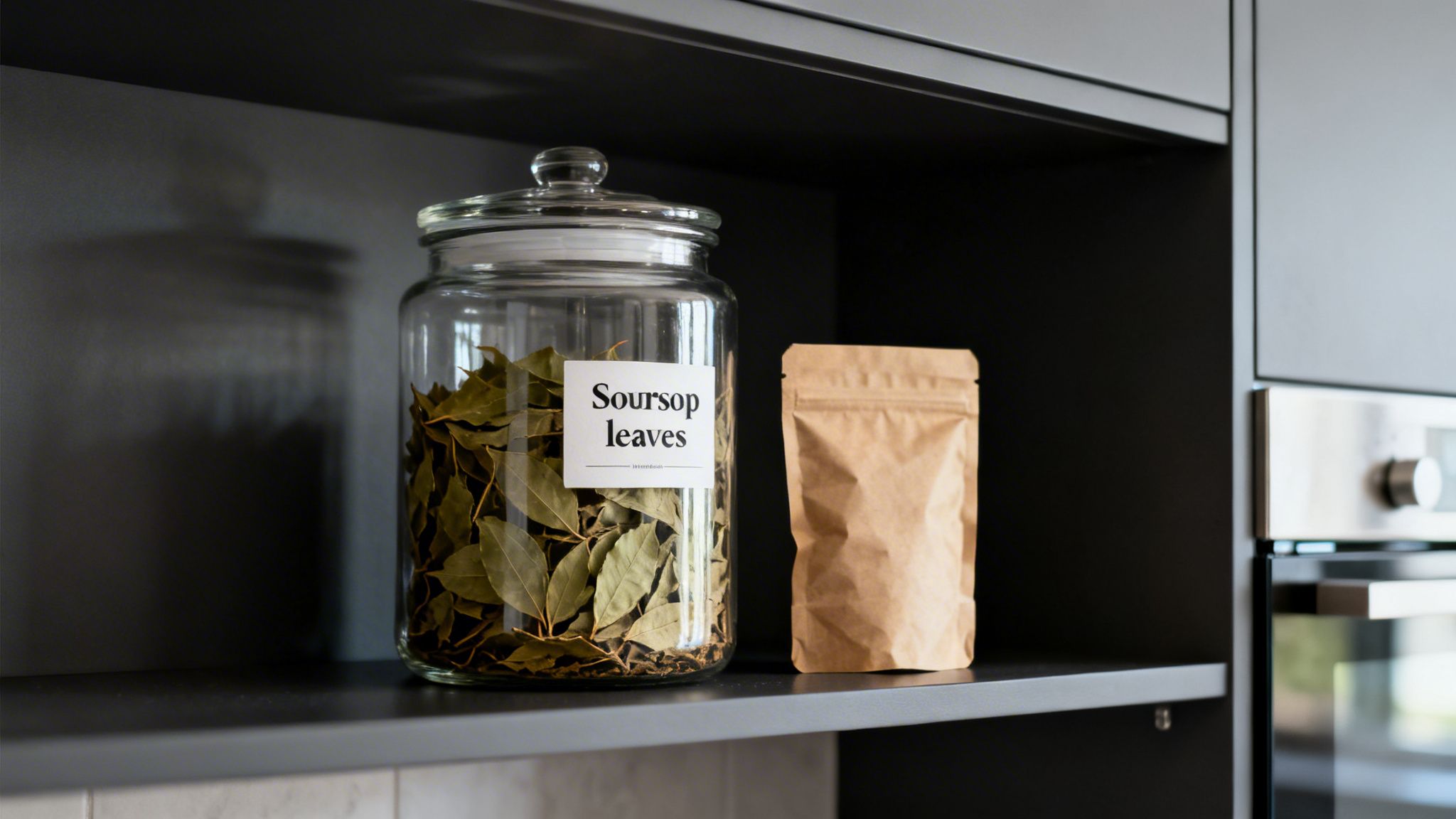
To get the most out of your soursop leaf tea, you need to start with high-quality leaves. It’s just like cooking—the better the ingredients, the better the final result. Sourcing good leaves and storing them properly makes all the difference, ensuring every single cup is packed with authentic flavour.
So, what should you look for? When you’re buying dried soursop leaves, you want to see whole, unbroken leaves. They should have a lovely, deep green colour, with no brown spots or signs of mould. If you see a bag full of broken, crumbly bits, it's often a sign of a lower-grade product that has lost much of its potency and aroma.
How to Choose Your Soursop Leaves
Finding authentic soursop leaves in the UK is easier than ever, thanks to online shops. You'll typically have two main choices: the traditional whole dried leaves or the more modern, convenient tea bags.
Not sure which is right for you? This quick comparison should help you decide.
Choosing Your Soursop Tea Format
| Feature | Whole Dried Leaves | Tea Bags |
|---|---|---|
| Authenticity | Gives you the most traditional brewing experience and a fuller, richer flavour. | Very convenient, but might contain smaller leaf fragments instead of whole leaves. |
| Flavour Control | You’re in complete control. Just add more or fewer leaves to get the strength you like. | Each bag comes pre-measured, giving you a consistent brew every time. |
| Preparation Time | You’ll need to strain the leaves after steeping, which adds a minute or two. | Super quick and completely mess-free, ideal for a busy morning. |
| Best For | Perfect for slow, mindful tea rituals and getting the most authentic flavour. | Great for a fast, reliable cup of soursop tea anytime, anywhere. |
Ultimately, it comes down to personal preference. Do you prefer the traditional ritual or the quick convenience? Either way, you'll be able to enjoy the unique taste of soursop leaf tea.
Finding a Trusted Supplier in the UK
As more people discover traditional wellness drinks, your options for buying them have grown. In the UK, online platforms have made getting your hands on soursop simple, with sales on sites like Etsy and specialist stores jumping 40% since 2023. If you're an independent shop owner or caterer buying in larger amounts, a reliable supplier is crucial. Retailers like My Africa Shop are perfect for this, offering fast 48-72 hour delivery and free shipping on orders over £300. You can see more about the growing demand for soursop leaf tea on Etsy.
The key to keeping your soursop leaves fresh is to protect them from their three biggest enemies: light, air, and moisture. Good storage locks in their delicate flavour and aroma for months.
To store your leaves properly, just pop them in an airtight container—a glass jar or a sealed tin works perfectly. Keep that container in a cool, dark spot like a kitchen cupboard or pantry, far away from sunlight. It’s a simple step that keeps your leaves fresh, ensuring every brew tastes as good as the first.
If you’re interested in exploring other traditional brews, have a look at our full range of herbal drinking options.
Safe Consumption Guidelines and Potential Risks
Soursop leaf tea is a wonderful traditional brew, but like any potent herbal remedy, it's best enjoyed with a bit of common sense. Knowing the guidelines helps you make this comforting tea a regular, worry-free part of your routine.
The conversation around soursop safety usually centres on a group of natural compounds found in the plant called annonaceous acetogenins. These are the very compounds linked to many of its traditional wellness uses, but some research has flagged concerns about their effects when taken in very high amounts over long periods.
The Importance of Moderation
When it comes to soursop, more isn't always better. Think of it like adding a powerful spice to your cooking—a little adds fantastic flavour and benefits, but too much can easily overwhelm the dish. The same idea applies here. Traditional wisdom has always favoured balance and moderation, not excessive use.
To enjoy soursop leaf tea safely, just follow these simple guidelines:
- Stick to Your Daily Limit: Aim for one or two cups per day. This is widely seen as a moderate amount that’s perfectly fine for most people.
- Take Regular Breaks: It’s a good habit to cycle your consumption. You might drink it daily for a few weeks, then take a week off. This is a common practice with many herbal remedies, giving your body a little rest.
Who Should Be Cautious
While soursop leaf tea is safe for most healthy adults when enjoyed in moderation, some people should be more careful or avoid it completely. It's always a good idea to chat with your doctor before adding any new herbal product to your routine, especially if you fit into one of these groups.
Important Safety Note: If you are pregnant, breastfeeding, or trying to conceive, it's recommended that you avoid soursop leaf tea. There isn't enough research to say for sure that it's safe during these crucial times.
You should also check with a healthcare professional before drinking the tea if you have:
- Low Blood Pressure (Hypotension): Soursop is known traditionally for its ability to lower blood pressure. If your pressure is already on the low side, the tea could make it drop even further.
- Liver or Kidney Conditions: Your liver and kidneys process everything you consume. If you have any issues with them, it's best to get a doctor's okay first.
- Parkinson's Disease: Some very early research has suggested a possible link between very high, long-term consumption of annonacin (one of the acetogenins) and a specific type of atypical Parkinsonism.
By keeping these simple guidelines in mind, you can confidently sit back and enjoy the warm, comforting experience of soursop leaf tea.
Soursop Leaf Tea in Cultural Celebrations

While many people drink soursop leaf tea for its wellness benefits, it’s so much more than that. In West African and Caribbean communities, it’s a cornerstone of community, celebration, and hospitality.
Offering a visitor a warm, welcoming cup of tea is one of the first things you do. It’s a comforting staple at family get-togethers and a simple way to connect. This isn't just about giving someone a drink; it's a genuine expression of care. For many of us in the UK, making a pot is a way to keep those traditions alive and make our guests feel right at home.
A Taste of Home for Community Events
Because it means so much to people, soursop leaf tea is a perfect addition to any community event. Think christenings, parties, or even just a casual get-together.
If you’re a caterer or event planner, putting it on the menu is a brilliant touch. It shows you understand the culture and adds a layer of authenticity that guests from African and Caribbean backgrounds will truly appreciate. It’s a caffeine-free choice that everyone, from the elders to the little ones, can enjoy.
Serving soursop leaf tea is an invitation to slow down and connect. It turns a simple beverage into a shared experience, strengthening bonds between family, friends, and the wider community.
Perfect Pairings for Any Occasion
The mild, earthy flavour of soursop leaf tea means it goes well with almost anything. It cleanses the palate, making all your favourite West African and Caribbean snacks taste even better.
Here are a few ideas:
- Savoury Snacks: Try it with flaky meat pies, spicy fish rolls, or some deliciously chewy puff puff. The tea’s subtle taste balances out all those rich, savoury flavours perfectly.
- Sweet Treats: It’s also fantastic with sweet bites like chin chin, coconut drops, or just a simple slice of cake. The tea provides a soothing contrast to the sweetness.
Bringing traditional drinks into our celebrations is a wonderful way to honour our heritage. To find out about other classic beverages, have a read of our guide on Ghana's famous drink, Alomo Bitters. By including soursop tea, we keep our rich culinary traditions thriving.
Your Soursop Leaf Tea Questions, Answered
Even after getting to know this amazing tea, you might still have a few things on your mind. We get it. Here are some quick, clear answers to the questions we hear most often from fellow soursop tea lovers.
Can I Drink Soursop Leaf Tea Every Day?
While a daily cup is a comforting ritual for many, it’s always smart to listen to your body and practise moderation. The main reason for this is a natural compound in the leaves called annonacin.
Most people who enjoy it regularly, and traditional wisdom, suggest sticking to one or two cups a day. It’s also a good idea to take breaks now and then. For example, you could drink it for a few weeks, then pause for a week to give your system a little rest. This simple cycle helps you enjoy the tea while being mindful of its long-term effects.
If you have any health conditions or are taking medication, it's always best to have a quick chat with your doctor before making soursop leaf tea a regular part of your routine.
What Does Soursop Leaf Tea Taste Like?
If you're expecting the sweet, tropical flavour of the soursop fruit, you’re in for a surprise! The tea has a completely different personality.
Soursop leaf tea has a very gentle, earthy taste with a smooth and slightly musky finish. It's not sweet or acidic at all, which is what makes it so soothing to drink.
Some people also pick up on subtle herbal or even nutty notes. Its mild character makes it the perfect canvas for a bit of creativity—a spoonful of honey adds a touch of sweetness, a squeeze of lime brightens it up, and a slice of ginger gives it a lovely, warming kick.
Where Can I Buy Authentic Soursop Leaves in the UK?
For the real deal, you absolutely need to get high-quality leaves from a supplier you can trust. Here in the UK, your best bet is a specialist shop that focuses on genuine African and Caribbean products.
Online stores like My Africa Shop are a fantastic choice because we make sure you’re getting authentic, well-preserved products delivered right to your home. When you’re buying, always look for whole, deep-green dried leaves or tea bags from a brand you recognise. This is your guarantee that you’re getting a pure product with the best possible flavour.
Ready to brew a truly authentic cup? Take a look at our premium selection of soursop leaves and other traditional herbal teas at My Africa Shop. Find your perfect brew today!