
Soon stocks will run out
Dont miss this opportunity while supplies last.


Soon stocks will run out
Dont miss this opportunity while supplies last.
Ultimate Recipe for Chin Chin: Crunchy or Soft West African Snack
When it comes to chin chin, everyone has their favourite. Some love it shatteringly crunchy, others prefer a softer, more biscuit-like bite. The magic of this classic snack is that it can be both! The secret isn't in a complicated recipe, but in understanding how simple tweaks to your ingredients and frying method can completely transform the texture.
Getting That Perfect Chin Chin Crunch
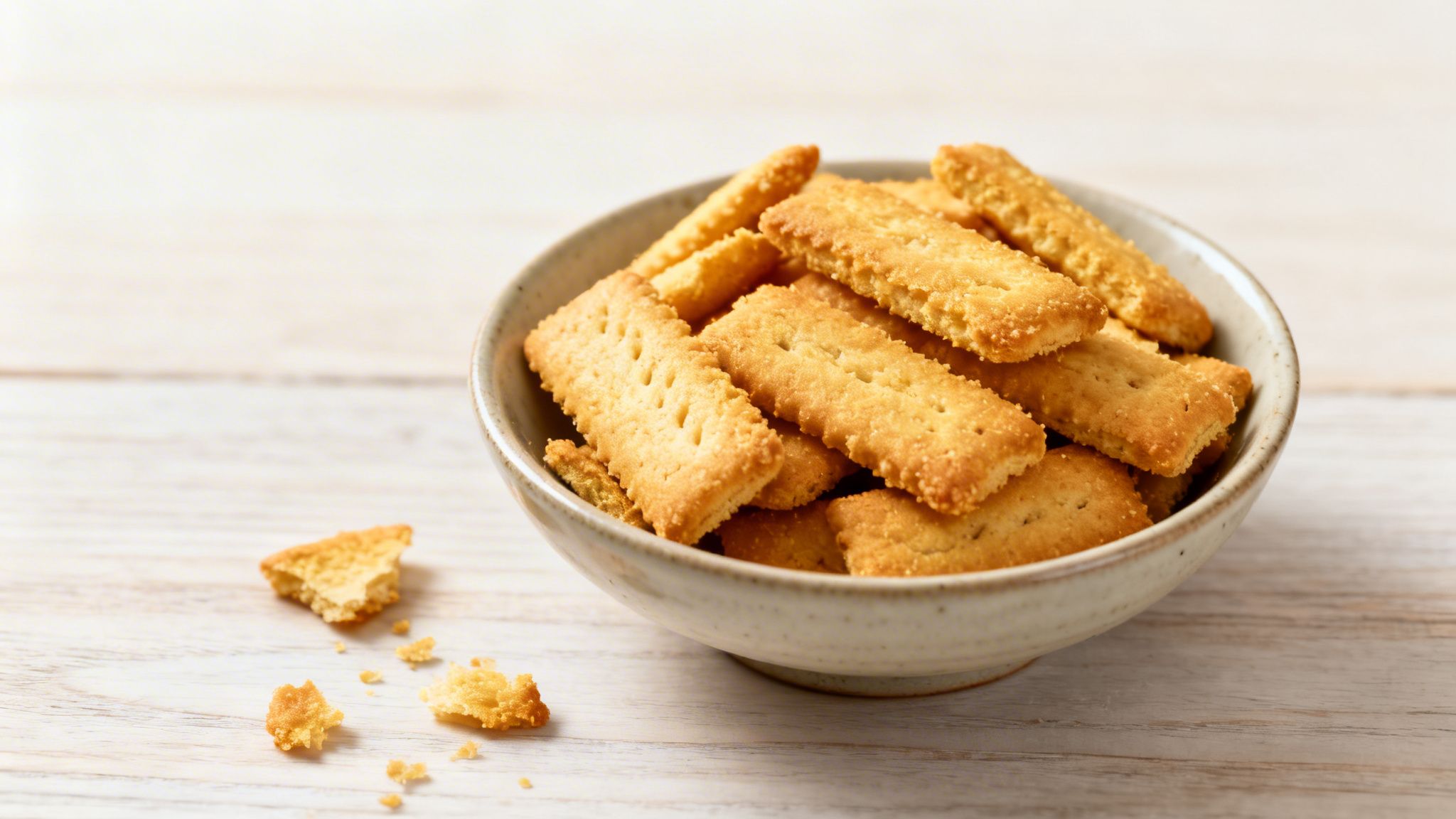
Let’s get straight to what matters: achieving that irresistible, nostalgic crunch every single time. Whether you're trying to recreate a beloved family recipe or introducing friends to this iconic West African treat for the first time, we've got you covered.
Think of this less as a rigid recipe and more as a blueprint for perfection. We’re sharing a tried-and-tested foundational guide that’s been perfected for the UK home kitchen. Of course, getting the flavour right means using the right ingredients. We’ll show you how to source high-quality staples from My Africa Shop to ensure your chin chin tastes just as it should—golden, delicious, and utterly moreish.
Your Chin Chin Texture Guide Crunchy vs Soft
The wonderful thing about chin chin is just how customisable it is. Are you on Team Crunchy or Team Soft? The texture you end up with is a choice you make right at the start, when you’re mixing your dough.
Here’s a quick guide to help you steer your chin chin in the right direction.
| Factor | For Crunchy Chin Chin | For Soft Chin Chin |
|---|---|---|
| Fat Content | Use less butter for a drier, harder dough. | Be more generous with butter for a richer, softer crumb. |
| Leavening | Reduce or skip the baking powder completely. | Use baking powder to get a lighter, puffier, more cake-like texture. |
| Dough Thickness | Roll the dough very thin (1-2mm) for that classic cracker-like snap. | Roll it a bit thicker (4-5mm) for a chewier, more substantial centre. |
| Liquid | Use just enough water or milk to form a stiff, firm dough. | Add a splash of extra milk to create a more tender, pliable dough. |
It’s all about small adjustments that lead to big differences in the final product. So, which will you try first?
The love for snacks like chin chin is growing, and it's easy to see why. The UK's ethnic food market has seen incredible growth, expanding from USD 1,898.17 million in 2018 to a projected USD 6,233.22 million by 2032. This boom is largely thanks to the African diaspora in England, particularly in vibrant, multicultural areas like London and the West Midlands. You can dive into the full report on the growing UK ethnic food market to learn more.
Gathering Your Authentic Chin Chin Ingredients
Let's be honest, the secret to truly incredible chin chin isn't just in the method—it all starts with what you put in the bowl. Getting the ingredients right is what takes this snack from simply good to absolutely unforgettable.
Before you roll up your sleeves and start mixing, we need to talk about the foundational elements. These aren't just lines on a shopping list; they are the building blocks of authentic flavour and that perfect crunch.
Choosing Your Core Ingredients
The kind of flour, fat, and milk you choose has the biggest impact on your final product. Each one plays a crucial role in whether you end up with a shatteringly crisp chin chin or one with a softer, more biscuit-like bite.
All-Purpose Flour: This is your most reliable choice. It has just the right amount of protein to create a dough that holds its shape while staying tender enough for that satisfying crunch. A good-quality, fine-milled flour will give you a smooth, even dough every time.
Butter vs. Margarine: For that rich, deep flavour that takes you right back home, nothing beats real butter. It gives the chin chin a classic, creamy taste that’s pure nostalgia. That said, margarine works perfectly well and often produces a chin chin that's a touch crisper and lighter.
Full-Fat Powdered Milk: This is non-negotiable for authentic flavour. Unlike liquid milk, a quality full-fat powdered milk from a place like My Africa Shop adds a concentrated creaminess without watering down your dough. Too much liquid is the enemy of a perfectly crunchy chin chin.
If there’s one secret I can share, it’s this: use fresh nutmeg. Please, step away from the pre-ground jar! Grating a whole nutmeg right before you mix it in releases all its fragrant oils. It adds a warmth and aroma that is absolutely essential for a proper batch of chin chin.
Sourcing Your Supplies in the UK
Finding all your authentic ingredients in the UK has never been easier. You can get everything you need for the perfect recipe for chin chin delivered right from one spot. High-quality flour, rich powdered milk, and even those big containers of vegetable oil perfect for deep-frying are all available at My Africa Shop.
Getting these essentials sent straight to your door means you can skip the searching and get straight to the fun part—making and sharing this delicious snack. With your pantry stocked and ready, you’re all set for the most important stage: crafting the dough.
Creating the Perfect Chin Chin Dough
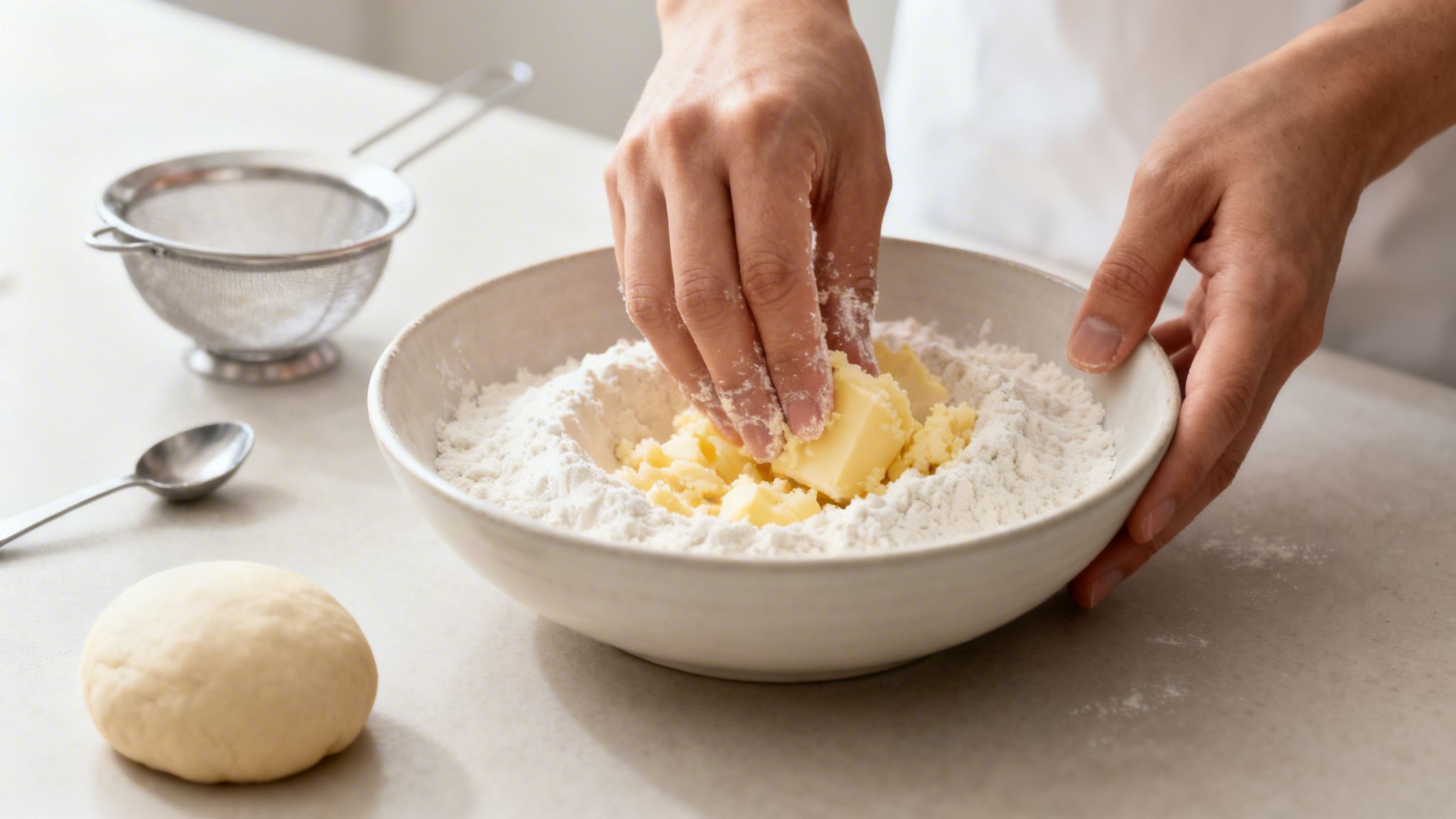
With all your ingredients ready to go, it’s time for the best part—getting your hands dirty and making the dough. This is where the magic really happens. Getting the texture right is what separates good chin chin from great chin chin, and I'll walk you through the simple techniques to nail it every single time.
Each step is straightforward but crucial for building that signature crunchy, yet tender, foundation we all love.
Start With a Light Foundation
First things first, always sift your dry ingredients. Grab a large bowl and sift in your flour, sugar, baking powder, salt, and that lovely freshly grated nutmeg. Sifting isn't just an old-fashioned step your grandmother insisted on; it aerates the flour, breaks up any stubborn lumps, and makes sure everything is perfectly mixed.
Taking a minute to do this prevents dense, tough spots in your finished chin chin. It’s all about creating a smooth, even groundwork for the flavour to build upon.
The Secret to Flakiness: The Rubbing-In Method
Now for the fat. This single technique is what gives chin chin its signature flaky crunch. The trick is to work the butter into the flour without it melting, creating tiny, pea-sized pockets of cold fat throughout the mix.
Make sure your butter is chilled and cut into small cubes before you add it to the flour. Then, using just your fingertips, begin rubbing the butter and flour together. I find it helps to lift the mixture as you rub, which keeps it light and airy. Keep going until it looks like coarse breadcrumbs.
Whatever you do, avoid using the palms of your hands. They're too warm and will melt the butter, turning your mix into a greasy paste instead of a crumbly one. Those little flecks of butter are what create steam during frying, puffing up the dough to make it delightfully flaky.
Bringing the Dough Together
Once the fat is properly rubbed in, it's time to add the wet ingredients. In a separate, smaller bowl, give your eggs and milk (or condensed milk) a good whisk until they're completely combined. This is also your chance to make sure the sugar is fully dissolved, which prevents a grainy texture later on.
Make a well in the centre of your flour mixture and pour the liquid right in. Use a spatula or your hands to gently fold everything together until a shaggy, pliable dough begins to form. The key here is not to over-mix!
There’s a real demand for classic snacks like these. Projections show the UK ethnic food market is set for strong growth, building on a 9% compound annual growth rate in the coming years. It’s no surprise, as the rising popularity of Nigerian snacks shows just how much a simple, delicious recipe for chin chin is loved.
The Art of Kneading and Resting
Tip the dough out onto a lightly floured surface. Now, you only need to knead it gently for about 2–3 minutes—just long enough to bring it together into a smooth, uniform ball. If you knead it for too long, you’ll develop too much gluten, and your chin chin will be tough instead of crispy.
Wrap the dough snugly in cling film and pop it in the fridge to rest for at least 30 minutes. This step is non-negotiable! It lets the gluten relax, making the dough much easier to roll out, and it also gives the flavours a chance to mingle and deepen. If you're experimenting with different flours, you might find our guide on semolina flour useful.
Mastering The Cut And Fry For Ultimate Crunch
Alright, your dough has had its rest, and now we're onto the fun part – the final steps that turn that simple dough into the crunchy snack we all love. How you cut and fry your chin chin is everything. This is where you lock in that perfect texture and golden colour.
First things first, let's talk thickness. Lightly flour your work surface, grab a piece of the rested dough, and roll it out evenly with a rolling pin. The thickness you choose completely changes the final product.
- For a super-crisp, almost cracker-like crunch, you'll want to roll the dough paper-thin, about 1-2mm thick.
- If you prefer a bit more bite and a slightly softer centre, aim for a thicker sheet, around 4-5mm.
Achieving Fast And Uniform Cuts
My secret weapon for getting through this stage quickly? A pizza cutter. It just glides through the dough, giving you clean, even lines without any pulling or stretching.
You can go for the classic diamond shape by cutting long, parallel strips first, then slicing diagonally across them. Or, stick with small squares – they're just as traditional and every bit as delicious. The most important thing here is consistency. Try to get all your pieces roughly the same size so they cook evenly. This little bit of effort stops the small bits from burning before the bigger pieces are even done.
As you cut, gently separate the pieces and spread them out on a floured tray, ready for the hot oil.
This chart really breaks down the three make-or-break factors for getting your chin chin just right.
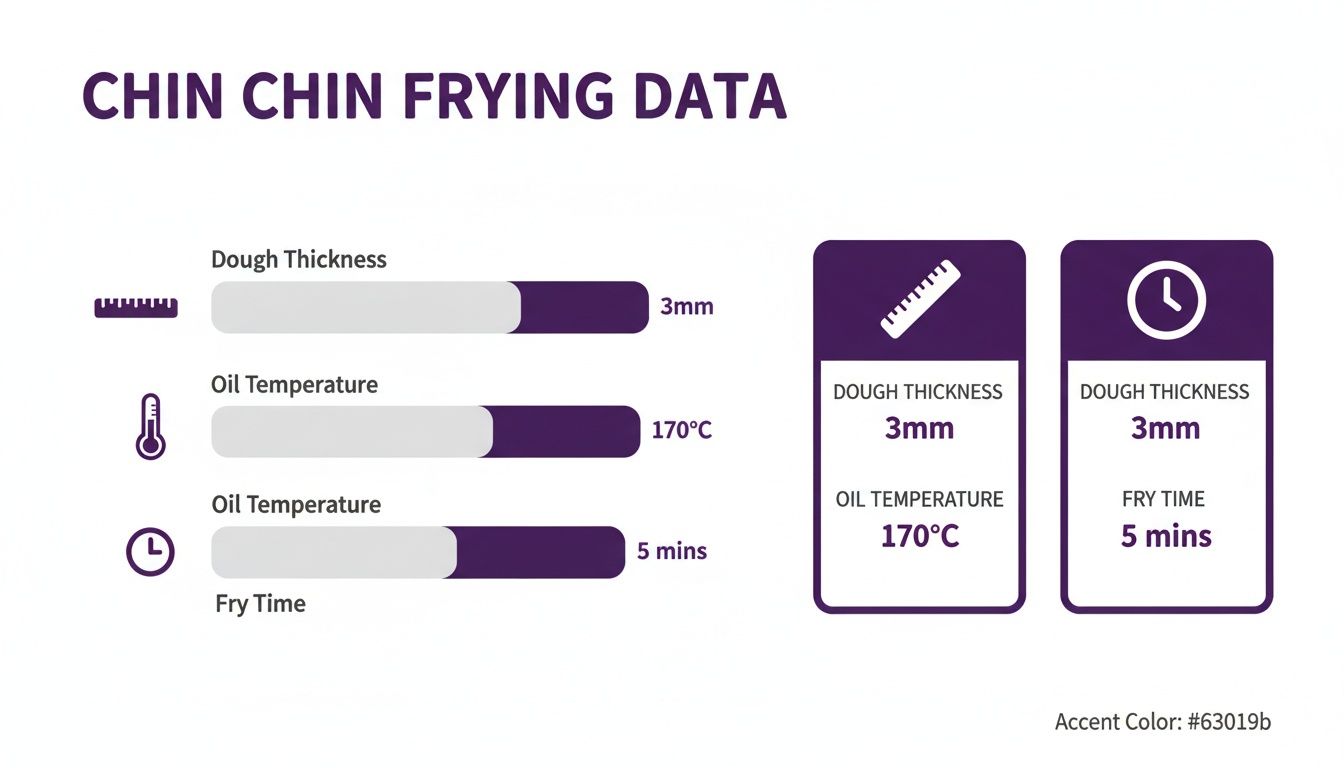
As you can see, keeping a close eye on the dough thickness, oil temperature, and how long you fry is the key to getting that signature crunch without any greasiness.
The Art Of Frying To Golden Perfection
Now for the main event: frying. The single most important part of this whole process is getting the oil temperature spot on. Pour a neutral-flavoured oil, like vegetable or sunflower oil, into a deep, heavy-bottomed pot until it’s about 2-3 inches deep. If you're making a big batch for a party, a 5-litre bottle of vegetable oil is a life-saver.
Heat your oil over a medium flame until it reaches a steady 170-180°C (340-355°F). No thermometer? No problem. Just drop in one piece of chin chin. If it sizzles right away and floats to the top at a steady pace, you’re good to go. If it sinks, the oil is too cold; if it sizzles violently and darkens instantly, it's too hot.
Never overcrowd the pot. This is the cardinal sin of frying. Tipping in too many pieces at once makes the oil temperature plummet, leading to soggy, oil-logged chin chin instead of light, crispy ones. Always fry in small batches.
Use a slotted spoon to keep the pieces moving in the oil so they brown evenly all over. Once they reach a beautiful, deep golden-brown, they're done.
Scoop them out with your slotted spoon, letting any extra oil drip back into the pot. Transfer them to a tray lined with kitchen roll to soak up any remaining oil. Then, move them to a cooling rack to cool down completely. Don't skip this last step! Chin chin gets even crunchier as it cools. Once they're cool, they're ready to be stored and enjoyed for weeks to come.
Flavour Variations and Scaling Your Recipe for Events
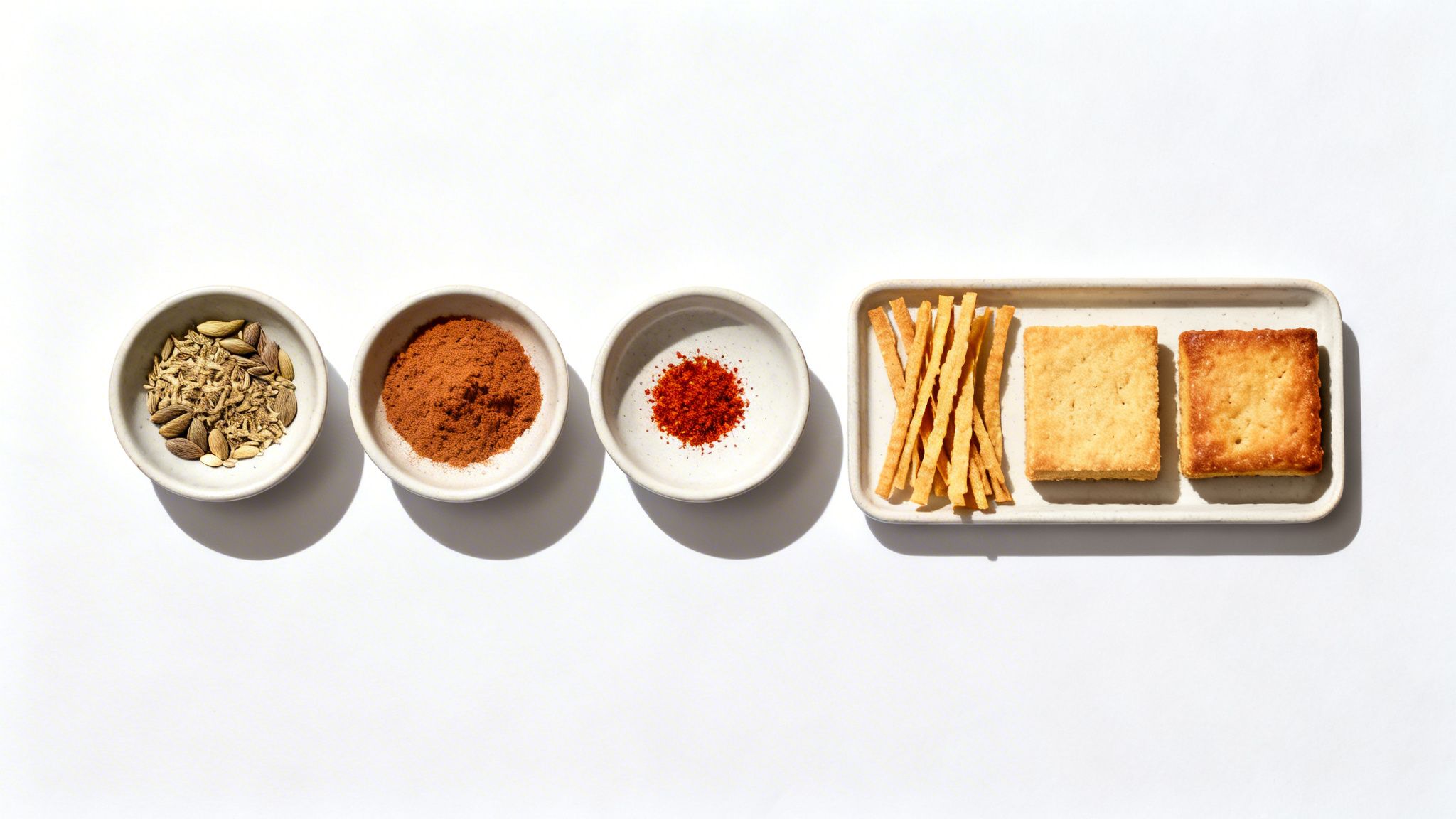
Once you’ve got the hang of the classic chin chin recipe, you can really start having some fun. Think of the original as your blank canvas—it’s brilliant on its own, but it’s also the perfect base for you to add your own signature twist.
It's surprisingly easy to experiment with different flavours. A simple pinch or sprinkle can completely transform this snack into something new and exciting. You could start with warm, familiar spices. Just a teaspoon of ground cinnamon or ginger mixed into your dry ingredients will add a fragrant warmth that complements the buttery flavour beautifully.
Feeling a bit more adventurous? A tiny pinch of cayenne pepper or chilli powder is all it takes to create a sweet-and-spicy version that is dangerously moreish.
Exploring New Flavour Profiles
Don’t feel like you have to stick to the usual spices. Here are a few ideas I've tried that always go down a treat:
- Citrus Zest: The zest of one orange or lemon adds a bright, fresh note that really cuts through the richness of the fried dough.
- Coconut Delight: Mix in a few tablespoons of desiccated coconut for a subtle sweetness and a lovely chewy texture in every bite.
- Vanilla Essence: A teaspoon of good vanilla extract, added with your wet ingredients, gives the chin chin a comforting, aromatic background flavour.
If you’re looking for a healthier take on classic chin chin, baking is a fantastic alternative to frying. Just preheat your oven to 180°C (160°C Fan), spread the cut dough pieces in a single layer on a baking tray, and bake for 15-20 minutes until they’re golden and crisp. You'll get a crunch that's just as satisfying, but with less oil.
Scaling Your Recipe for Parties and Catering
Making chin chin for a party, wedding, or big family gathering just means you need to do a bit of planning. Getting the ingredient ratios right when you scale up is key to keeping that perfect taste and texture, just in a much larger quantity.
This is where buying your ingredients in bulk can be a real game-changer. For caterers and event planners, sourcing essentials like flour and oil from a single source can save you a fair bit of money. If you’re a business, you might want to check out our guide for wholesale African food suppliers in the UK to get the best value on your orders.
To help you get started, here’s a simple table to scale the recipe for any size crowd.
Scaling Your Chin Chin Recipe for Parties
| Ingredient | Standard Batch (Serves 10-15) | Party Batch (Serves 50) | Catering Batch (Serves 100+) |
|---|---|---|---|
| All-Purpose Flour | 500g | 2kg | 4kg |
| Butter | 125g | 500g | 1kg |
| Sugar | 150g | 600g | 1.2kg |
| Eggs | 2 medium | 8 medium | 16 medium |
| Powdered Milk | 50g | 200g | 400g |
| Vegetable Oil | 1 litre | 3-4 litres | 5-8 litres |
These measurements are a great starting point. Just remember, even when you're making a massive quantity, always fry the chin chin in manageable batches. This is the secret to keeping the quality consistent and getting that all-important crunch in every single piece.
Common Chin Chin Questions, Answered
Even the best cooks run into a little trouble now and then. Making chin chin is an art, and sometimes the dough has a mind of its own! Don't worry, we've been there.
Here are answers to the most common questions that pop up, turning you from a good chin chin maker into a great one.
Why Is My Chin Chin Too Hard or Too Soft?
Texture is everything with chin chin. If you find yours is rock-hard instead of perfectly crunchy, the culprit is usually an overworked or overly stiff dough. Kneading too much builds up gluten, which is great for bread but makes for a tough, dense snack.
On the other side of things, a chin chin that’s too soft and cake-like often points to too much butter or baking powder. The thickness you roll it to also matters a lot – a thicker cut will always give you a softer centre.
Here’s how to get the texture you want:
- For a super crunchy finish: Try using a little less butter, go easy on the baking powder (or leave it out!), and roll your dough incredibly thin—about 1-2mm.
- For a softer, chewier bite: Stick with the full amount of butter and baking powder in the recipe and roll the dough a bit thicker, somewhere around 4-5mm.
How Do I Store Chin Chin to Keep It Crunchy?
Moisture is the sworn enemy of a crispy chin chin. The real secret to that long-lasting crunch is all about cooling and storing it properly. You absolutely must let the chin chin cool down completely on a wire rack after frying.
If you store it while it's even the slightest bit warm, you'll trap steam in the container, and that leads to soft, sad chin chin. Once it’s totally cool, pop it into an airtight container. A glass jar with a good, tight lid is perfect for the job.
Stored the right way at room temperature, your chin chin will stay beautifully crisp for an amazing 4 to 6 weeks. Just keep it out of the fridge—the cool, damp air will make it go soft.
Can I Make Chin Chin Without a Deep Fryer?
Of course! You don't need fancy gear to get fantastic results. A good, deep, heavy-bottomed pot or even a wok is all you need to fry up a brilliant batch.
The trick is to use enough oil—about 2-3 inches deep—so the pieces can float freely and cook evenly without gluing themselves to the bottom of the pot. Keeping a steady oil temperature of around 170–180°C is what gives you that gorgeous golden colour without any greasiness.
No thermometer? No problem. Just drop a single test piece of dough into the oil. If it starts sizzling gently and floats to the top at a steady pace, your oil is ready. And remember, always fry in small batches! Overcrowding the pot will cause the oil temperature to drop, giving you oily chin chin.
Ready to start frying? You can find everything you need, from fine-milled flour to high-quality vegetable oil, right here at My Africa Shop. Explore our wide selection today at https://myafricanshop.co.uk and bring the authentic taste of home to your kitchen.