
Soon stocks will run out
Dont miss this opportunity while supplies last.


Soon stocks will run out
Dont miss this opportunity while supplies last.
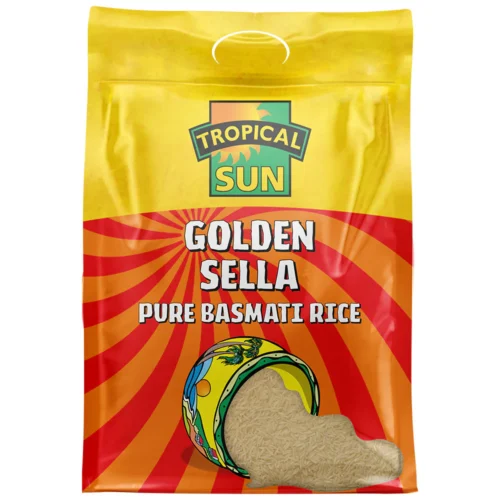


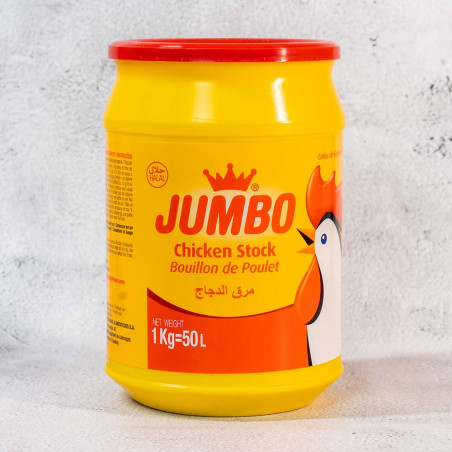
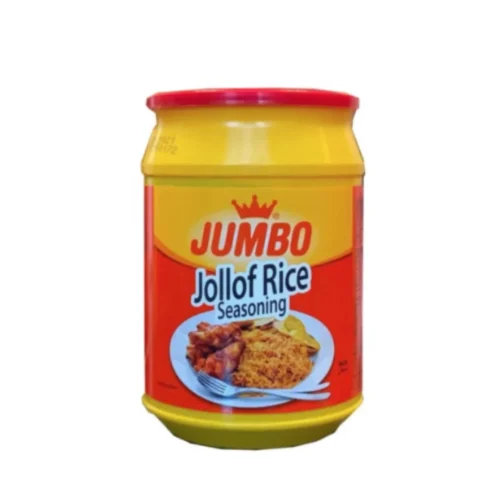

How to Cook Nigerian Stew A Perfect Guide for UK Kitchens

If you've ever stepped into a Nigerian home on a Sunday afternoon, you know that unforgettable aroma. It's the rich, layered scent of tomatoes, peppers, and spices bubbling away on the stove. That's the smell of Nigerian stew, and for many, it's the smell of home.
This isn't just any sauce. It's a cornerstone of our cuisine, a vibrant red stew that forms the base for countless meals. Learning to cook it is about more than following a recipe; it's about mastering a process passed down through generations.
The Unforgettable Taste of Nigerian Stew
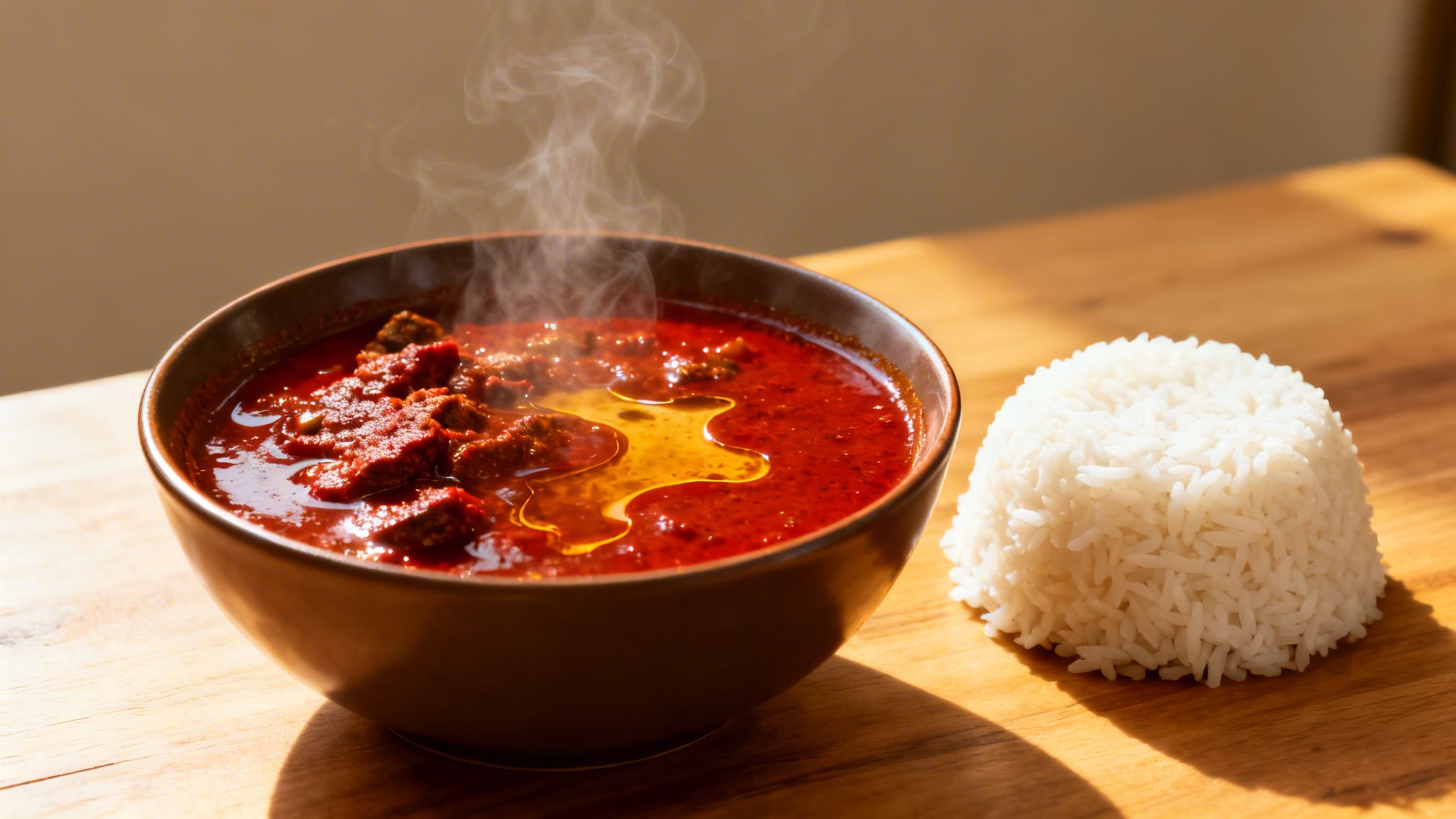
Nigerian stew is more than a meal; it’s the heart of our gatherings, from casual family dinners to big celebrations. For the huge Nigerian diaspora across the UK, that familiar smell is a powerful connection to our culture, our memories, and our identity.
And it seems the secret is out! The popularity of Nigerian food has exploded recently. Food trend reports show a massive 45% surge in Nigerian food outlets in the UK between 2020 and 2026. This classic stew is a star player, appearing on 68% of menus at Afro-fusion spots in London and Manchester. This growth is thanks in no small part to the vibrant, 1.2 million-strong Nigerian community in the UK, whose craving for authentic flavours drives the whole market. You can dive deeper into these Nigerian food trends and their impact on the UK food scene.
A Taste of Home in Every Pot
This guide is here to take the mystery out of making a perfect pot of stew. Whether you're a total novice or you've been cooking for years and just want to perfect your technique, we'll break it all down.
This isn't about strict rules. It's about understanding the heart and soul of the dish. You'll learn:
- The Pepper Base: How to get that silky-smooth, vibrant red base without any sharp, acidic taste.
- The Simmer: The patient magic that makes your protein fall-apart tender and infuses the entire stew with deep flavour.
- The Seasoning: How to layer your spices to build that signature, complex umami taste that makes Nigerian stew so addictive.
For me, Nigerian stew is a weekend ritual. It’s the dish that connects my family back to our roots in Lagos, no matter how far away we are. Mastering it means you’re not just learning a recipe; you’re embracing a piece of cultural heritage.
Our goal is to give you the confidence to create a stew that is rich, aromatic, and authentically yours. We’ll even point you to where you can find the best ingredients, like those from My Africa Shop, to make your cooking journey as smooth as possible. Get ready to fill your kitchen with the incredible aroma of Nigeria.
Sourcing Your Authentic Stew Ingredients in the UK
Every great Nigerian stew starts with the shopping. Get the ingredients right, and you're halfway to that authentic, flavour-packed taste of home. Let's walk through exactly what you need, so you can walk into any shop with the confidence of a seasoned pro.
The heart of any good stew is the pepper base. This isn't just about heat; it's a blend of three key players: fresh tomatoes, tatashe (long red peppers), and rodo (fiery scotch bonnets). The tomatoes give it body and a gentle sweetness, the tatashe brings that iconic deep red colour, and the rodo provides the unforgettable kick.
Your UK Shopping Guide
Finding these ingredients in the UK used to be a mission, but it's getting easier. Most large supermarkets now have scotch bonnets, and of course, tomatoes are everywhere. The main hunt is usually for proper tatashe.
If you can't find tatashe, don't panic. Romano peppers are your best friend here. They have a similar sweet flavour and give the stew that lovely rich red colour. In a pinch, regular red bell peppers will also do the job, adding sweetness and colour without any extra heat.
For a one-stop-shop, African food stores are your best bet. Online specialists like My Africa Shop are a game-changer, delivering essentials like palm oil, ground crayfish, and the right peppers straight to your door.
Expert Tip: When you're picking out your peppers, look for firm ones with shiny skin and no bruises. For tomatoes, I always go for ripe plum tomatoes. They have more flesh and less water, which helps create a thick, rich stew base without it being watery.
The Great Oil Debate: Palm vs. Vegetable Oil
Now, let's talk about oil. This is a big topic in Nigerian cooking! Your main options are red palm oil or a neutral vegetable oil like sunflower or groundnut oil.
Red palm oil is what gives the stew its traditional flavour and an even deeper, more vibrant colour. It has a unique savoury taste that many, including me, feel is essential for "proper" stew. On the other hand, vegetable oil gives you a 'cleaner' taste where the peppers and spices really sing. A lot of us just use a mix of both to get the best of both worlds!
Essential Nigerian Stew Ingredients and UK Substitutions
Here’s a quick table to help you build your shopping list, whether you're at a UK supermarket or your local African food store.
| Ingredient | Nigerian Name | Role in Stew | UK Substitution Tip |
|---|---|---|---|
| Long Red Peppers | Tatashe | Colour & Sweetness | Romano peppers are a near-perfect match. |
| Scotch Bonnets | Rodo | Pungent Heat | Widely available in UK supermarkets now. |
| Plum Tomatoes | Body & Acidity | Tinned plum tomatoes are a reliable alternative. | |
| Red Palm Oil | Traditional Flavour | No true substitute, but vegetable oil is the alternative. | |
| Onions | Aromatic Base | Used in the blend and fried for sweetness. | |
| Seasoning Cubes | Maggi / Knorr | Savoury Depth | Staple item found in most world food aisles. |
| Ground Crayfish | Umami Flavour | The secret ingredient for authentic depth. |
This table covers the absolute must-haves. With these in your basket, you're ready to cook something truly special.
Aromatics and Seasonings
Beyond the base, you need aromatics to build up those layers of flavour. Onions are completely non-negotiable. You'll use them in the pepper blend and also fry some separately to create a sweet, fragrant foundation. I also love adding a bit of fresh ginger and garlic for extra warmth.
Finally, the seasonings that pull it all together:
- Bouillon Cubes: Brands like Maggi or Knorr are the backbone of flavour in most Nigerian kitchens.
- Curry Powder and Thyme: These are the classic dry spices that give the stew its signature aromatic scent.
- Ground Crayfish: This is the magic dust. It adds a deep, savoury umami flavour that you just can't get from anything else.
Keeping a well-stocked pantry is key, but we all know costs are rising. The price of making a pot of stew in the UK has jumped significantly. A 2026 Stew Index, adapted for UK prices, found that beef stew ingredients shot up 35% between 2023 and 2026, with an average pot costing £28. Tomatoes alone went up 52%, and goat meat increased by 41%.
Thankfully, shopping smart at places like My Africa Shop can make a big difference. Their wholesale pricing on staples like ground crayfish and plantain can help you make a large, family-sized pot for under £20. You can discover more insights into the rising costs of Nigerian cooking staples.
If you’re a caterer or just cooking for a big family get-together, buying in bulk is the way to go. You’ll save a lot on large tins of tomatoes, big bags of onions, and multi-litre bottles of oil. For those planning a major cook-up, you might find our guide to sourcing wholesale African food in the UK really helpful.
Crafting Your Stew from Prep to Simmer
Right, you've got your ingredients ready to go. Now it’s time to roll up your sleeves and get to the heart of what makes a Nigerian stew truly special. This is where the magic happens, turning simple ingredients into a rich, fragrant pot of pure comfort. Forget about rigid, numbered steps; we're going to cook by sense, feel, and aroma.
The whole process boils down to a few key stages. First, we'll build a deep, flavourful stock by boiling our protein. Next, we’ll create the soul of the stew—the fried pepper base. And finally, we'll bring it all together for a slow, patient simmer.
Building Your Flavour Foundation: The Stock
The secret to a truly unforgettable stew isn't just the final sauce; it's the liquid gold you build it on. A deeply flavourful stock is the unsung hero, and it all starts with preparing your protein. Whether you're using beef, chicken, or goat meat, this first boil is absolutely crucial.
Get your chosen protein into a pot. Add a roughly chopped onion, a generous sprinkle of thyme, a bay leaf, and your favourite seasoning cubes. Don't be shy with the seasoning at this stage—you're flavouring both the meat and the water that will become your incredible stock.
Cover the meat with just enough water and bring it to a boil. Let it cook until the protein is tender. For beef, this could take 30-40 minutes, while chicken is often ready in about 20. The goal is a concentrated, savoury broth. Once cooked, lift the meat out and set both the meat and the stock aside. You've now got tender meat and a powerhouse of flavour, ready for the main event.
The All-Important Pepper Base
Now for the 'Obe Ata'—the pepper base. This is what gives Nigerian stew its iconic vibrant red colour and signature taste. Getting this part right is the difference between a good stew and a great one. The main objective here is to blend and then fry the peppers to cook off their raw, tangy flavour, unlocking a much deeper, sweeter profile.
Take your fresh tomatoes, red bell peppers (tatashe or Romano), and scotch bonnets (rodo) and give them a good rinse. Roughly chop them up along with an onion and a clove or two of garlic. Pop everything into a blender and blitz until you have a smooth, consistent purée.
This visual guide shows the core components that form the foundation of your stew's flavour.
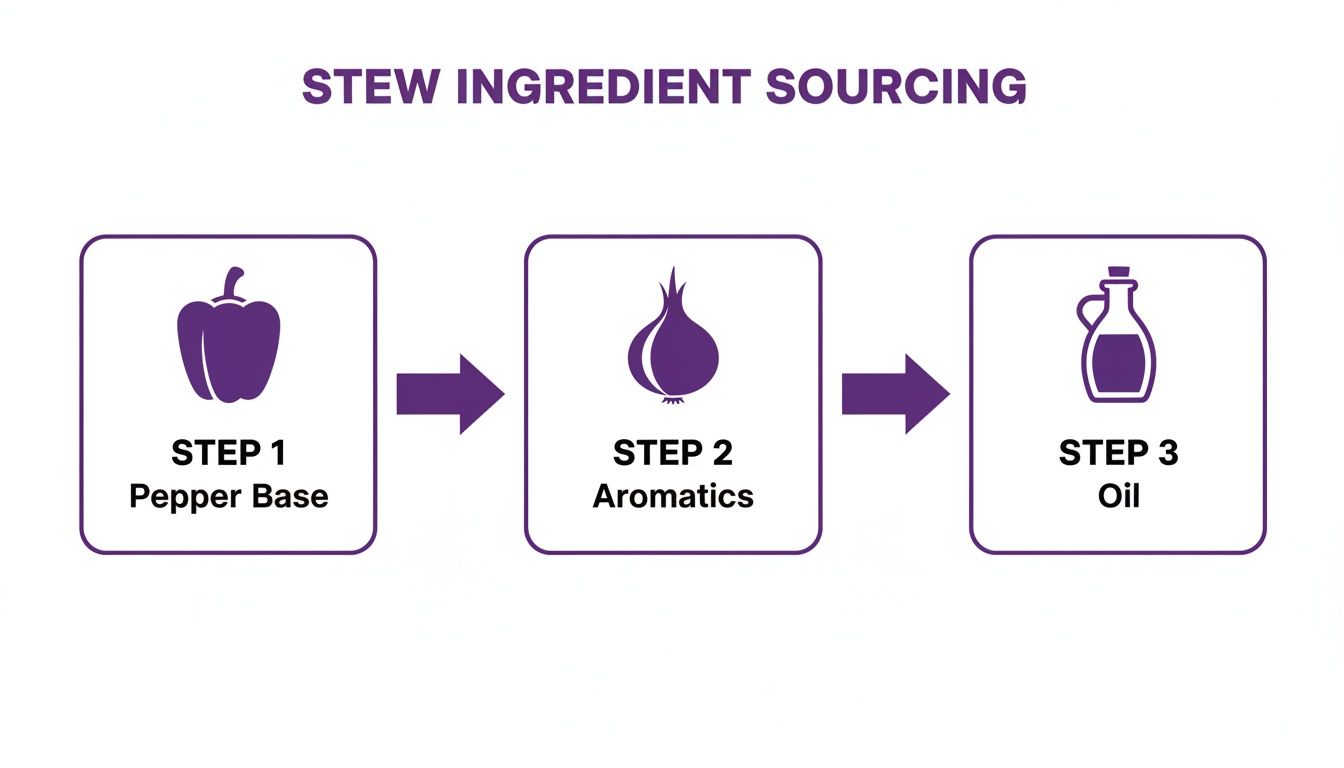
The flow from the pepper base to the aromatics and finally the oil shows how layers of flavour are built systematically.
Traditionally, some cooks boil this blended mix first to reduce the water content, a process we call 'reducing'. This definitely cuts down on frying time later on. However, you can also go straight to frying; just be prepared for it to take a little longer as the water evaporates in the pot.
Frying the Base to Perfection
Frying the pepper base is a non-negotiable step. This process transforms the flavour from sharp and acidic to rich, deep, and slightly sweet. It's the most time-consuming part, but trust me, your patience will be rewarded tenfold.
Pour a generous amount of oil into a heavy-bottomed pot. For that truly traditional taste, many of us swear by red palm oil or a mix of palm and vegetable oil. If you're curious, you can learn more about the unique benefits and flavour profile of red palm oil in our detailed guide.
Heat the oil over a medium flame, then add some sliced onions and fry until they're soft and fragrant. This adds another gorgeous layer of sweetness. Now, carefully pour in your blended pepper mix. Be ready for it to sizzle and spatter!
The Visual Cue: The single most important sign that your pepper base is perfectly fried is when the oil separates from the pepper mix and rises to the top, creating a distinct, shimmering red layer. You'll also notice the colour has deepened, and the raw pepper smell is replaced by a rich, cooked aroma.
Stir the mixture every so often to stop it from burning at the bottom. This frying stage can take anywhere from 20 to 40 minutes, depending on the water content of your blend. Don't rush it. This is where all that depth of flavour is developed.
Bringing It All Together
Once your pepper base is perfectly fried and the oil has separated, you're on the home stretch. It’s time to unite all your carefully prepared components into one glorious pot.
Pour your reserved meat or chicken stock into the pot with the fried pepper base. Stir everything together until it's well combined. The mixture will thin out at first, but it will thicken up again as it simmers.
Now, add your boiled protein back into the pot. Make sure every piece gets coated in that beautiful red sauce. This is also the time to add your final layers of seasoning.
- A sprinkle of curry powder for its distinctive aroma.
- A pinch of dried thyme for that herby note.
- The magic ingredient: ground crayfish. Add a tablespoon or two for an incredible depth of umami flavour that is quintessentially Nigerian.
Give everything one last, gentle stir.
The Final Simmer
With all the ingredients combined, turn the heat down to low, cover the pot, and let the stew simmer away. This final stage is all about allowing the flavours to marry and infuse deeply into the protein.
Let it bubble away gently for at least 15-20 minutes. During this time, the stew will thicken slightly, and the meat will become even more tender, soaking up all the deliciousness of the sauce.
Taste the stew one last time and adjust for salt or seasoning if needed. The final consistency should be glossy and substantial—not watery, but not a thick paste either. It should be perfect for ladling over a mountain of fluffy white rice. Once it reaches that perfect state, your authentic Nigerian stew is ready to be served and enjoyed. You've just learned how to cook Nigerian stew from scratch
Exploring Delicious Stew Variations
So, you’ve mastered the classic beef stew? Fantastic! But don't stop there. Once you’ve got that rich, fried pepper base down, you’ve basically unlocked a whole world of incredible Nigerian dishes.
Think of that base recipe as your blueprint. By just switching out the protein, you can whip up a fragrant chicken stew, a delicate fish stew, or even a hearty vegan version. Learning how to adapt the core recipe is what will take you from a good cook to a seasoned pro who knows their way around a Nigerian kitchen.
Fragrant Chicken Stew
Chicken stew gives the beef version a real run for its money in many Nigerian households. It’s a bit lighter but brings its own incredible flavour to the table. The main thing to watch out for is the cooking time – you have to treat the chicken differently to avoid it turning to mush.
I always prefer using hard chicken, which you might find labelled as 'old layers' or 'Pluvera' chicken in the UK. This type has a much firmer texture and a deeper, almost gamey flavour that really holds its own in a rich stew. It needs a longer boiling time, much like beef, which gives you a beautifully intense chicken stock as a bonus.
Here's how I get my chicken stew perfectly tender every time:
- Boil the Chicken First: Pop your chicken in a pot with onion, thyme, and some seasoning cubes, and boil until it's tender. A standard broiler chicken will only need about 20-25 minutes. If you're using hard chicken, give it 40-50 minutes.
- Brown for Extra Flavour: This step is a game-changer. After boiling, you need to brown the chicken. You can either pan-fry it to get that irresistible crispy skin or roast it in the oven for a healthier, golden-brown finish. This adds a depth of flavour that boiling alone just can't match.
- Simmer Gently: Now, add your browned chicken and that flavourful stock to the fried pepper base. Let it all simmer on a low heat for about 10-15 minutes. That’s all it needs to soak up the sauce without getting dry and stringy.
My personal tip for an next-level chicken stew is to roast the peppers instead of blending them raw. Just spread your bell peppers, tomatoes, and onions on a baking tray and roast until they're slightly charred. It brings out an amazing smoky sweetness and even cuts down your frying time. You'll love the complexity it adds!
Delicate and Flavourful Fish Stew
For a lighter, quicker meal, a fish stew is absolutely sublime. But be warned: you need a completely different approach. Fish is incredibly delicate, and the biggest mistake people make is adding it too early. Do that, and you’ll end up with a pot of fish-flavoured sauce with no actual fish to be found.
The type of fish you choose is crucial. You're looking for a firm, white fish that won't fall apart.
These are my go-to choices:
- Tilapia: A popular, mild-flavoured fish that’s very reliable.
- Cod: Its large, chunky flakes hold up brilliantly.
- Hake: A firm and widely available option.
- Kingfish Steaks: These are incredibly sturdy and perfect for stew.
To get it right, cook your pepper base completely. Taste it, adjust the seasoning, and only when you're happy with the flavour should the fish make an appearance. Gently place the fish fillets or steaks into the simmering sauce, making sure they’re covered. Turn the heat right down, cover the pot, and let it poach for just 7-10 minutes. It’s ready when the fish turns opaque and flakes easily. Whatever you do, don't stir the pot after adding the fish!
Rich and Satisfying Vegan Stew
Who says Nigerian stew needs meat? A fully plant-based version can be every bit as rich and satisfying. The secret lies in building deep, savoury, umami flavours with the right combination of vegetables and legumes. My favourite duo is earthy mushrooms and chickpeas.
Start by making your pepper base just like you normally would. For the "protein," I love using a mix of firm chestnut mushrooms and tinned chickpeas.
Sauté the sliced mushrooms in a separate pan with a little oil until they're nicely browned and have released all their moisture—this really concentrates their flavour. Add the browned mushrooms and rinsed chickpeas to your finished pepper base. Instead of meat stock, use a good-quality vegetable stock. Let it all simmer together for around 15 minutes for the flavours to marry. The depth you can achieve is truly amazing.
Scaling Your Stew for Parties and Events
Cooking stew for a big crowd can feel intimidating, but it’s really just a matter of simple multiplication. The ratio of your pepper base to your protein stays the same. As a solid rule of thumb, I plan for about 200-250g of protein per person.
So, for a party of 20 people, you'd be looking at roughly 4-5kg of meat. That means you'll need to scale up your pepper blend accordingly. A simple ratio I stick to is for every 1kg of protein, I make a base with about 4-5 large bell peppers, 8-10 plum tomatoes, and 1-2 scotch bonnets (or to taste!).
When cooking for a crowd, buying in bulk is a huge money and time saver. For caterers or big family celebrations, using a service like My Africa Shop is perfect. You can get huge tins of plum tomatoes, large bottles of palm oil, and bulk bags of seasonings, which makes so much more sense economically.
Troubleshooting Common Stew Mistakes
Look, it happens to the best of us. You've spent hours crafting what should be a perfect pot of Nigerian stew, and something's just… off. A pot of stew gone wrong can feel truly heartbreaking, but don't you dare throw it out!
Most of the time, a simple kitchen trick is all you need to save your dinner. Let's walk through some of the most common issues and how to fix them, turning a potential disaster into a delicious success. Learning these fixes is what separates a good cook from a great one.
My Stew Is Too Tangy or Sour
This is probably the number one complaint I hear. If your stew has a sharp, almost metallic tang, the culprit is almost always the same: you didn't fry your pepper base for long enough. That frying step is crucial for cooking down the raw, acidic flavour of the tomatoes.
But don't panic, I've got a fix that has saved my pot more times than I can count. Add a tiny pinch of baking soda—and I mean tiny, no more than 1/4 teaspoon for a medium-sized pot. Stir it in, and you'll see it fizz a little as it neutralises the acid. Let it simmer for another five minutes, and that sour taste should be a distant memory. Just be careful not to overdo it, or your stew will taste of baking soda.
The Stew Is Too Watery
A watery, soupy stew is a sign that you either didn't boil down your pepper mix enough before frying, or you got a bit too happy with the meat stock. A proper Nigerian stew should be rich and glossy, not thin.
The solution is simple: patience. Just take the lid off the pot, turn the heat up a little, and let it simmer away. This allows all that extra water to evaporate. Give it a stir every now and then to make sure it doesn't catch and burn at the bottom. Keep a close eye on it until it thickens to the consistency you love.
To avoid this problem from the get-go, always boil your blended pepper mix on its own for about 10-15 minutes before you even think about frying it. This gets rid of a huge amount of water and cuts down your overall cooking time, setting you up for a thick, rich stew right from the start.
There's Too Much Oil on Top
A beautiful layer of red oil separating and rising to the top is the hallmark of a well-cooked stew. But sometimes, you can have too much of a good thing, especially if you were a bit generous with the oil at the beginning.
No stress, this is an easy fix. Just let the stew cool down for a few minutes. As it cools, the oil will naturally separate and pool on the surface. Grab a large spoon or a ladle and carefully skim the excess right off the top. You can either get rid of it or, even better, save it for frying some plantain later!
I've Burnt the Bottom of the Pot
That unmistakable smell of a burnt stew can make your heart sink, but all may not be lost if you act quickly. There is one golden rule here: do not stir! If you stir the pot, you'll mix that awful, bitter burnt taste through everything, and the whole batch will be ruined.
Instead, turn off the heat immediately. Grab a clean pot. Now, very carefully, use a ladle to transfer the good, unburnt stew from the top into the new pot. Leave the burnt layer at the bottom behind. Seriously, don't be tempted to scrape the bottom to get every last bit.
Once you’ve rescued the good stew, give it a taste. If there’s a faint smoky flavour, you can often balance it out by adding a splash more stock or a little extra seasoning.
We’ve all been there. To make things even easier, here's a quick guide to diagnose and fix your stew troubles on the fly.
Nigerian Stew Troubleshooting Quick Fix Guide
Identify common stew-making issues and apply these simple, effective solutions to save your dish.
| Problem | Common Cause | Quick Fix Solution |
|---|---|---|
| Too Tangy or Sour | The tomato and pepper base wasn't fried long enough to cook out the raw acidity. | Stir in a tiny pinch (max 1/4 tsp) of baking soda and simmer for 5 more minutes. |
| Too Watery | Too much stock was added, or the pepper base wasn't reduced enough before frying. | Remove the lid, increase the heat slightly, and let the stew simmer until the excess liquid evaporates. |
| Too Much Oil | Too much oil was used at the start of cooking. | Let the stew cool slightly, then use a large spoon or ladle to skim the excess oil from the surface. |
| Burnt Bottom | The heat was too high, or the stew wasn't stirred enough, causing it to stick and burn. | DO NOT STIR. Immediately transfer the unburnt stew from the top into a clean pot, leaving the burnt layer behind. |
With these tips in your back pocket, you can face any stew challenge with confidence. Happy cooking
How to Serve, Store, and Reheat Your Stew
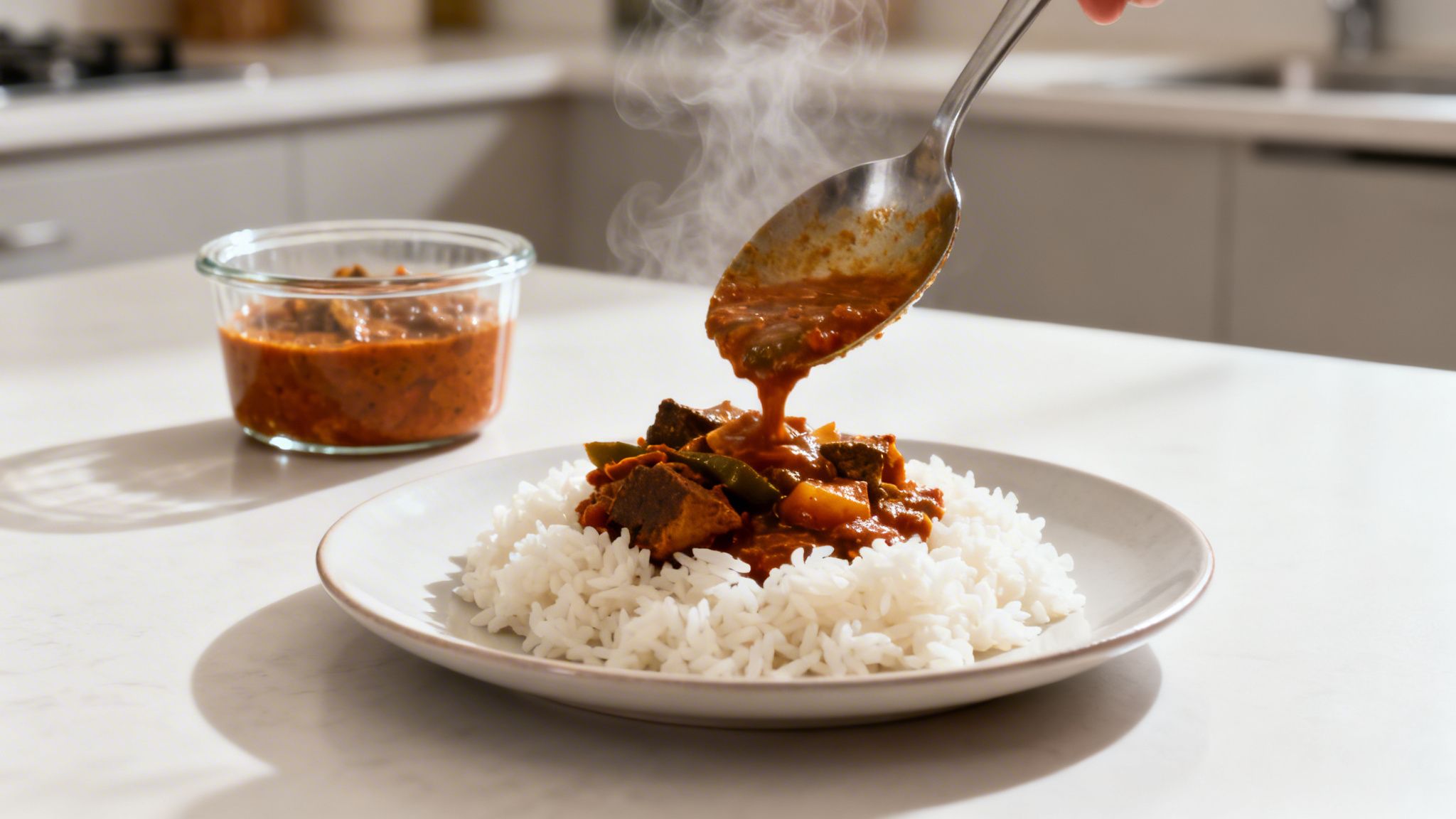
You've done the hard work, and your kitchen smells amazing. The final step in mastering Nigerian stew is knowing how to serve and save it. This is where the magic really happens, as this stew goes with almost anything.
The most iconic pairing, without a doubt, is a generous portion of fluffy white rice. It’s the perfect base for soaking up every drop of that rich, peppery sauce. Another favourite is fried plantain, or dodo, which adds a sweet, caramelised flavour that beautifully cuts through the savoury stew.
Classic and Modern Pairings
Beyond rice, Nigerian stew is incredible with all sorts of traditional starches and "swallows." Each one brings something different to the table.
- Pounded Yam: The smooth, stretchy texture of pounded yam is perfect for dipping and scooping up plenty of stew. If you're new to making it, our guide on how to cook yams will get you started.
- Eba or Garri: Made from fermented cassava, eba adds a slightly sour tang that balances the richness of the stew perfectly.
- Boiled Yams or Potatoes: Simple, hearty, and comforting. You can't go wrong with these for a truly satisfying meal.
- Agege Bread: For a more modern and casual meal, grab a loaf of soft, dense Agege bread. It's fantastic for mopping the plate clean.
It's an unspoken rule in many Nigerian homes: stew always tastes better the next day. Giving the flavours time to mingle and deepen overnight creates a richer, more complex taste. This makes it a meal prepper's dream.
Storing Your Stew for Later
Proper storage is crucial for keeping your stew delicious for days or even months. The most important rule? Let the stew cool down to room temperature completely before you store it. Putting hot food in the fridge can create a breeding ground for bacteria.
In the Fridge:
Once it’s cool, pop the stew into an airtight container. It will keep well in the fridge for up to five days, making it perfect for easy lunches or dinners during the week.
In the Freezer:
Nigerian stew is fantastic for freezing. I always cook a massive pot and portion it into freezer-safe containers or bags. That way, a delicious, home-cooked meal is always on hand. It will stay fresh and flavourful in the freezer for up to three months.
Reheating to Perfection
When you're ready for leftovers, you want your stew to taste just as good as it did on day one.
On the Hob:
This is my go-to method. Just pour the stew into a pot and warm it up slowly over a low-to-medium heat. Give it a stir every now and then until it's heated all the way through. If it’s thickened up in the fridge, a splash of water or stock will bring it back to the perfect consistency.
In the Microwave:
For a quick fix, put a portion in a microwave-safe bowl. Cover it to avoid splatters and heat it in one-minute bursts, stirring in between to make sure it heats evenly.
Follow these simple tips, and you'll enjoy every last bit of your delicious stew.
Ready for your next big stew session? From fragrant red palm oil to fresh plantain and authentic ground crayfish, My Africa Shop has everything you need to create the perfect Nigerian stew. Find all your essentials conveniently at https://myafricanshop.co.uk.