
Soon stocks will run out
Dont miss this opportunity while supplies last.


Soon stocks will run out
Dont miss this opportunity while supplies last.






How to Defrost Prawns Quickly a Simple UK Guide

We’ve all been there. That moment of pure dinner-time panic when you realise the prawns for tonight's meal are still a solid block of ice in the freezer. It’s a classic kitchen dilemma.
Luckily, there's a quick fix. The best way to defrost prawns quickly is using the cold-water method. This simple trick can safely thaw them in just 15-20 minutes, keeping them from getting waterlogged and making sure they have the perfect texture for your meal.
Your Guide to Defrosting Prawns Quickly and Safely
Finding frozen prawns when you're short on time can feel like a disaster, but it doesn't have to be. With the right approach, you can get them ready for the pan faster than you might think. This guide is all about practical, safe methods that work for busy UK households where getting a delicious meal on the table without fuss is the main goal.
We’ll skip the common mistakes, like using hot water or leaving prawns on the counter—those are sure-fire ways to get rubbery results and risk food safety issues. Instead, let's focus on the techniques that actually work and preserve that delicate flavour and firm bite we all love.
Prawn Defrosting Method Comparison
To help you decide which route to take, here’s a quick look at the most reliable ways to defrost prawns. Each one has its place, whether you're in a last-minute rush or planning ahead for a weekend feast.
| Method | Estimated Time | Best For | Our Rating |
|---|---|---|---|
| Cold Water Submersion | 15-30 minutes | Last-minute meals and preserving the best texture | ★★★★★ |
| Refrigerator Thawing | 8-12 hours | Planning ahead; the safest method for quality | ★★★★☆ |
| Microwave Defrosting | 3-5 minutes | Extreme emergencies only; high risk of cooking | ★★☆☆☆ |
The cold-water method is the absolute gold standard when you need prawns defrosted in a hurry. It's the perfect sweet spot between speed and quality, guaranteeing your prawns stay succulent and full of flavour.
By mastering this fast and reliable solution, you can get your meal prep back on track in minutes. Once you've got this basic skill down, you'll be ready to explore all sorts of quick and impressive seafood dishes. For more inspiration, check out our guide to authentic African cooking.
The Cold Water Method for a Perfect Thaw
When you need to defrost prawns quickly, the cold water method is your best friend. It’s the technique professional chefs rely on because it perfectly balances speed with quality, ensuring your prawns thaw safely without turning rubbery or losing their delicate flavour. Forget leaving them on the counter or using risky hot water; this is the definitive way to get it right.
First things first: pop your frozen prawns into a high-quality, leak-proof bag. I can't stress this enough – a flimsy sandwich bag won't do. If water gets in, your prawns will end up waterlogged and bland. Once they're sealed up tight, submerge the bag in a large bowl filled with cold tap water.
This simple diagram shows the quick journey from frozen to ready-to-cook.
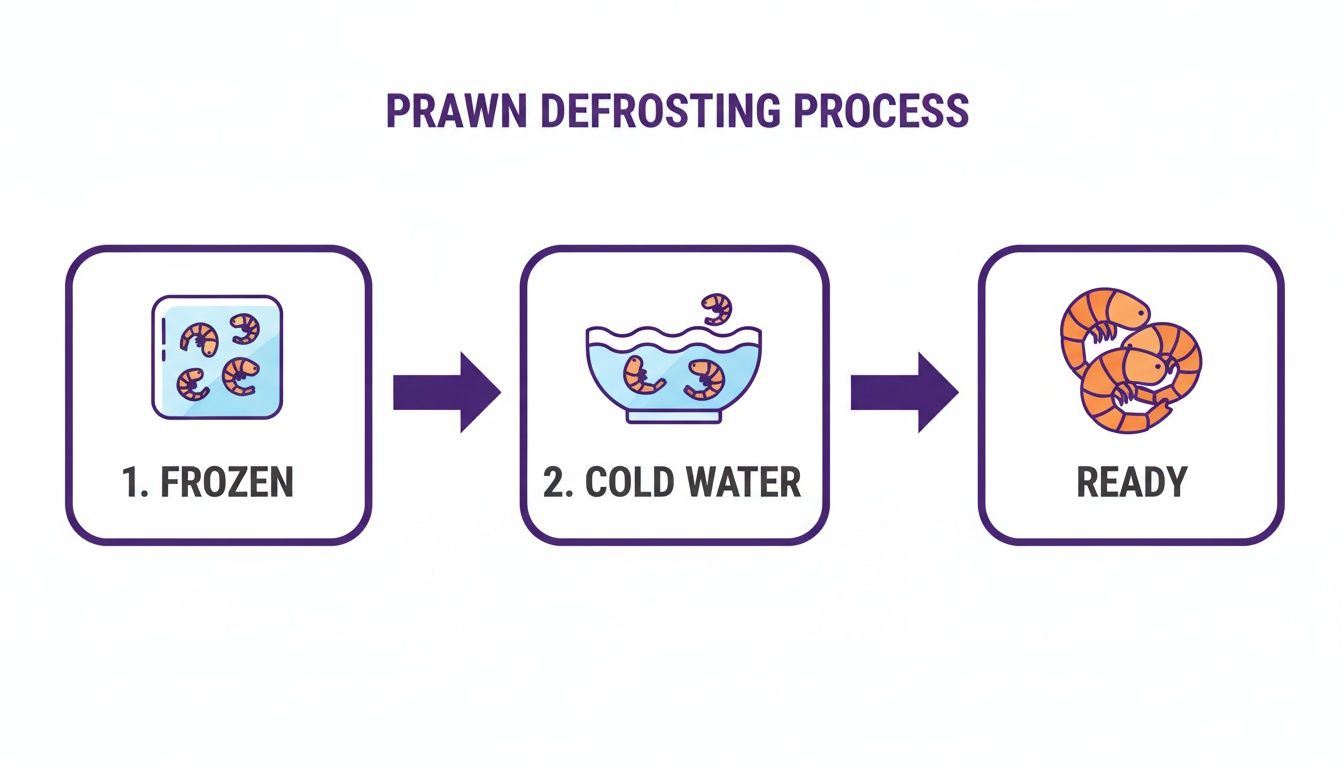
As you can see, this process is incredibly straightforward, turning a solid block into perfectly thawed prawns in minimal time.
Maximising Speed and Safety
You might be wondering, why cold water? It seems counterintuitive, but warm or hot water is a recipe for disaster. It’ll start cooking the outside of the prawn while the inside is still frozen solid. More importantly, it pushes the prawns into the temperature "danger zone" (4°C to 60°C), where bacteria can multiply like mad. Cold water is the sweet spot—fast enough to thaw efficiently while keeping everything safe.
For the best results, you'll need to change the water every 20-30 minutes. The frozen prawns will quickly chill the water around them, slowing the whole process down. A quick swap for fresh cold water keeps things moving. A standard one-pound bag of prawns should be good to go in about 15-20 minutes.
Pro Tip: Does your bag of prawns keep floating to the top? Just place a small plate or a saucer on it to keep it fully submerged. This makes sure all the prawns thaw at the same rate, so you don't end up with some ready and others still icy in the middle.
This simple trick is my secret to getting a consistent result every single time.
Handling Different Types of Prawns
This method is brilliant for any kind of prawn you've got in the freezer, but the timing can change slightly.
- Peeled Prawns: With no shell to get in the way, these will thaw the fastest. Keep an eye on them, as they can be ready in as little as 10-15 minutes.
- Shell-On Prawns: The shells act as a bit of an insulator, so they'll need a little longer, usually closer to 20-30 minutes. The upside is that the shells also protect the delicate flesh, often giving you a more flavourful prawn at the end.
Once they're thawed, give them a quick rinse under the tap and pat them dry with a paper towel. Getting rid of that extra moisture is key if you’re planning to pan-fry them and want to get a perfect sear.
Other Ways to Thaw Prawns When Time Is on Your Side
While the cold water method is my go-to for defrosting prawns quickly, it’s not the only way. If you’ve got the luxury of planning ahead, there are a couple of other options.
The absolute safest and most foolproof method is to let them thaw in the fridge overnight. This slow-and-steady approach is what food safety experts always recommend because it keeps your prawns at a consistent, cold temperature, far away from the bacterial "danger zone."
You just need to be organised. A standard bag of frozen prawns will need about 8-12 hours to thaw completely, so it's a job for the night before.
To get it right, a little prep goes a long way:
- First, get the prawns out of their bag.
- Lay them in a single layer on a plate or in a shallow dish.
- Cover the dish with some cling film or a lid to keep them fresh.
- And here’s the crucial bit: pop them on the bottom shelf of your fridge. This simple step prevents any drips from landing on other food, avoiding any cross-contamination.
The Microwave Emergency Button
Then, there's the microwave. Let's be honest, this is the one we all approach with a bit of trepidation. Using a microwave to defrost prawns really is a last resort, something for a proper culinary emergency when you need them thawed in minutes, not hours.
The risk is huge – it's incredibly easy to turn them from frozen solid to rubbery and half-cooked in just a few seconds.
If you absolutely must go down this route, dig out your microwave’s manual and look for a specific ‘fish’ or ‘seafood’ defrost setting.
Use the defrost function in extremely short bursts—think 30-45 seconds at a time. Check on the prawns between each blast, pulling them apart as they start to loosen. The second they feel pliable but are still icy cold, stop.
Prawns are a massive favourite here in the UK, and getting the prep right is the first step to a brilliant meal. The UK shrimp market is booming, with some estimates suggesting it could hit USD 7,710.2 million by 2035, thanks to our growing love for warm-water prawns. You can read more about these UK shrimp market trends if you're curious. Properly thawed prawns mean you’re getting the best possible flavour and texture from every single one.
Crucial Mistakes to Avoid When Defrosting Prawns
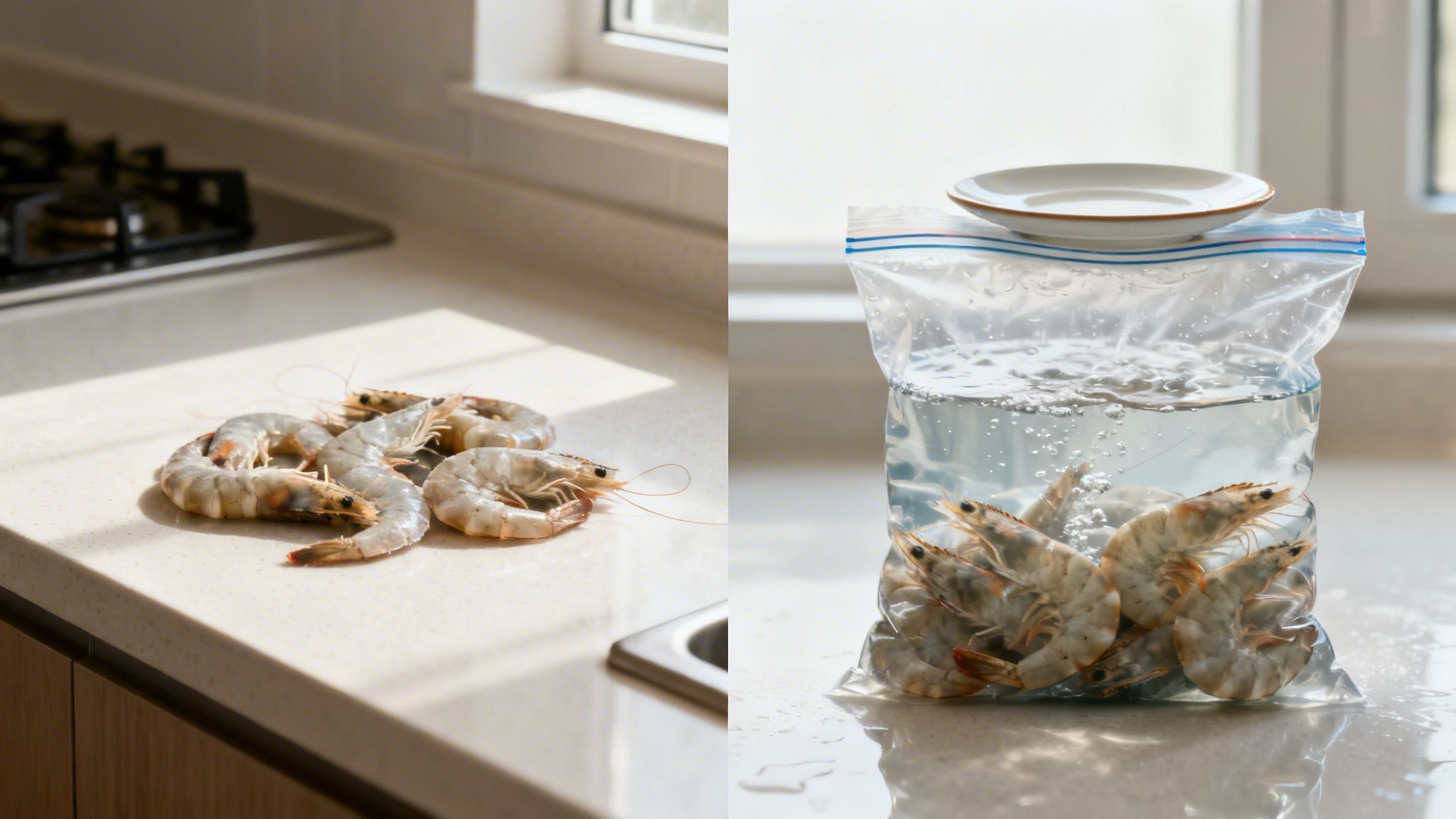
Knowing how to defrost prawns quickly is a great start, but it’s only half the story. To get that perfect, juicy bite every time, you also need to know what not to do. Trust me, a few common slip-ups can easily ruin your prawns, turning them from a treat into a rubbery, disappointing mess.
The biggest mistake I see people make is reaching for the hot tap. It feels like a smart shortcut, but it’s a one-way ticket to rubbery prawns. The warm water starts cooking the delicate outside while the inside is still a block of ice. The result? An unevenly cooked, tough texture.
Even worse, warm water is a playground for bacteria. Food safety experts call the temperature range between 4°C and 60°C the "danger zone" for a reason. Using warm water puts your prawns squarely in that zone, risking your health. For the sake of flavour and safety, stick to cold water. It’s a non-negotiable.
Thawing At Room Temperature
Another common pitfall is leaving that bag of frozen prawns on the kitchen counter to thaw. It might seem harmless, but the surface of the prawns will reach room temperature long before the middle has defrosted, giving nasty bacteria plenty of time to multiply.
Your best bet is to always use the fridge or the cold water method we talked about earlier.
The rule is simple: never let prawns sit at room temperature for more than two hours. Honestly, when it comes to defrosting, just avoid the counter altogether to keep your food safe.
Finally, whatever you do, don't refreeze thawed raw prawns. Once they’ve defrosted, their cell structure has changed. Freezing them again creates large, sharp ice crystals that will completely shred the flesh, leaving you with mushy, watery prawns when you eventually cook them.
For the best texture and flavour, only thaw what you plan to cook and eat straight away.
How to Use Your Perfectly Thawed Prawns
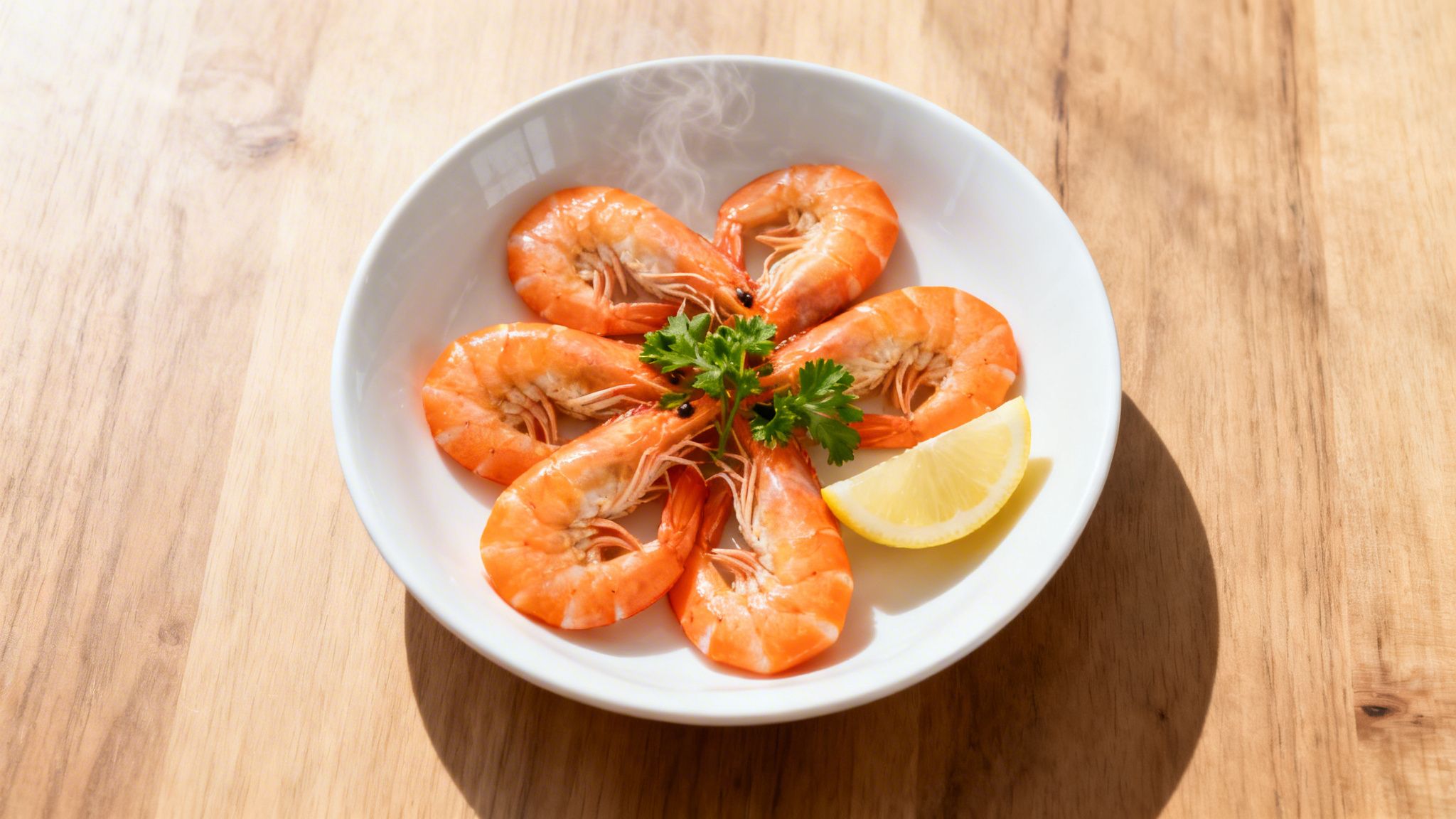
Right, now for the fun bit—turning those perfectly thawed prawns into a fantastic meal. Once you know how to defrost prawns quickly, you open up a world of speedy, flavourful dishes that are perfect for almost any occasion. Prawns cook in minutes, making them a lifesaver on a busy weeknight.
Their real superpower is just how versatile they are. You could toss them into a simple garlic and chilli stir-fry for a quick win, or make them the star of a classic seafood Okra soup. Another brilliant idea is to pop them into a prawn and plantain frittata for a vibrant, satisfying brunch.
The UK's love for prawns is huge, especially for the cooked and peeled cold-water types. In fact, an incredible 98 million servings were sold in a single year, which just goes to show how much we enjoy them. You can check out more details about the prawn market in the UK on fishfocus.co.uk. It's no surprise when you realise how easy they are to prepare.
Quick and Flavourful Ideas
Don't be afraid to get creative! Prawns have a delicate flavour that works just as well with bold spices as it does with simple ingredients.
- Hearty Jollof Rice: Give a classic Jollof rice an upgrade by stirring in your thawed prawns during the last few minutes of cooking. They'll soak up that rich, spicy tomato flavour without becoming tough.
- Aromatic Curries: For a speedy, protein-packed meal, add your prawns to a creamy coconut curry right at the very end.
- Simple Pasta: Sauté them with garlic, a squeeze of lemon, and a good pinch of chilli flakes. Toss it all through your favourite pasta for a dish that tastes like it came from a restaurant, ready in under 15 minutes.
The secret to amazing prawn dishes is all in the timing. They cook so quickly, so always add them at the very end. This is how you keep them tender and juicy every time.
To really make your prawns sing, a sprinkle of a quality seasoning blend can work wonders. For an easy flavour boost, have a look at our favourite all-purpose seasoning.
Your Prawn Defrosting Questions Answered
Even when you think you've got the hang of it, a few questions always pop up when defrosting prawns. Let's clear up some of the most common ones so you can get it right every single time.
Can I Cook Prawns Directly From Frozen?
You can, but I’d only recommend it for smaller prawns destined for a saucy dish like a soup or a curry. The liquid helps them cook through evenly without turning to rubber.
For anything else, like a stir-fry or chucking them on the grill, you absolutely need to thaw them first. Cooking from frozen just dumps a load of water into your pan, which steams the prawns instead of searing them. The result? A soggy, chewy texture. Not what you want.
How Can I Tell If Thawed Prawns Are Bad?
Your nose knows best. Trust your senses. Properly thawed raw prawns should have a clean, slightly salty smell, a bit like the sea.
If you get a whiff of anything sharp or ammonia-like, or if they feel slimy and sticky to the touch, they’re past their prime. Any unusual discolouration, like black spots that weren't there before, is another bad sign. When in doubt, chuck them out. It’s never worth the risk.
How Long Do Thawed Prawns Last in The Fridge?
This really comes down to how you defrosted them. If you took the slow and steady route by thawing them in the fridge overnight, you’ve got a bit of wiggle room. Plan to cook them within 1 to 2 days.
However, if you used the quick cold-water method, the clock is ticking. You really should cook them straight away. This is non-negotiable for getting the best flavour, texture, and staying on the safe side. Using them immediately keeps that firm, juicy quality, which is perfect for dishes where the prawn is the star, or when mixed into a rich base flavoured with ingredients like ground crayfish.