
Soon stocks will run out
Dont miss this opportunity while supplies last.


Soon stocks will run out
Dont miss this opportunity while supplies last.





Can You Defrost Prawns in the Microwave? The 2026 Guide

So, you're in a hurry and wondering if you can defrost prawns in the microwave. The short answer is yes, but it's a bit of a gamble. While it’s the fastest method by a long shot, it can easily ruin your delicate prawns or, worse, create food safety issues.
The Honest Answer About Microwaving Prawns
We’ve all been there – staring at a block of frozen prawns, needing to get a quick meal on the table. Whether it’s for a last-minute prawn curry or a speedy stir-fry, the microwave seems like the perfect solution.
But you have to be careful. The rapid, uneven heating is notorious for turning prawns rubbery and dry. In fact, a UK consumer survey found that 28% of people who regularly defrost this way end up with serious texture problems.
This guide will walk you through how to use the microwave if you absolutely have to. More importantly, we'll cover safer alternatives that keep the flavour and firm texture you paid for, ensuring every dish is a success. You can read more about recent UK seafood trends and learn how top suppliers maintain quality from delivery to your kitchen.
How to Safely Defrost Prawns in the Microwave
Look, we’ve all been there. You need to get dinner on the table, and those prawns are still frozen solid. If the microwave is your last resort, you have to be careful. Doing it wrong can turn your beautiful prawns into rubbery, half-cooked disappointments.
First things first, get them out of the bag. Arrange the prawns in a single layer on a microwave-safe plate. Don't even think about piling them up—that’s a surefire way to get uneven heating, with some parts cooking while others are still icy.
Now, for the settings. Use your microwave’s ‘defrost’ setting if it has one. If not, knock the power down to about 30%. The trick is to defrost in short, sharp bursts of 30-45 seconds. After every blast, take the plate out, carefully separate any prawns that are clumping together, and give the plate a good turn.
This infographic lays out the trade-offs between speed, safety, and the better alternatives.
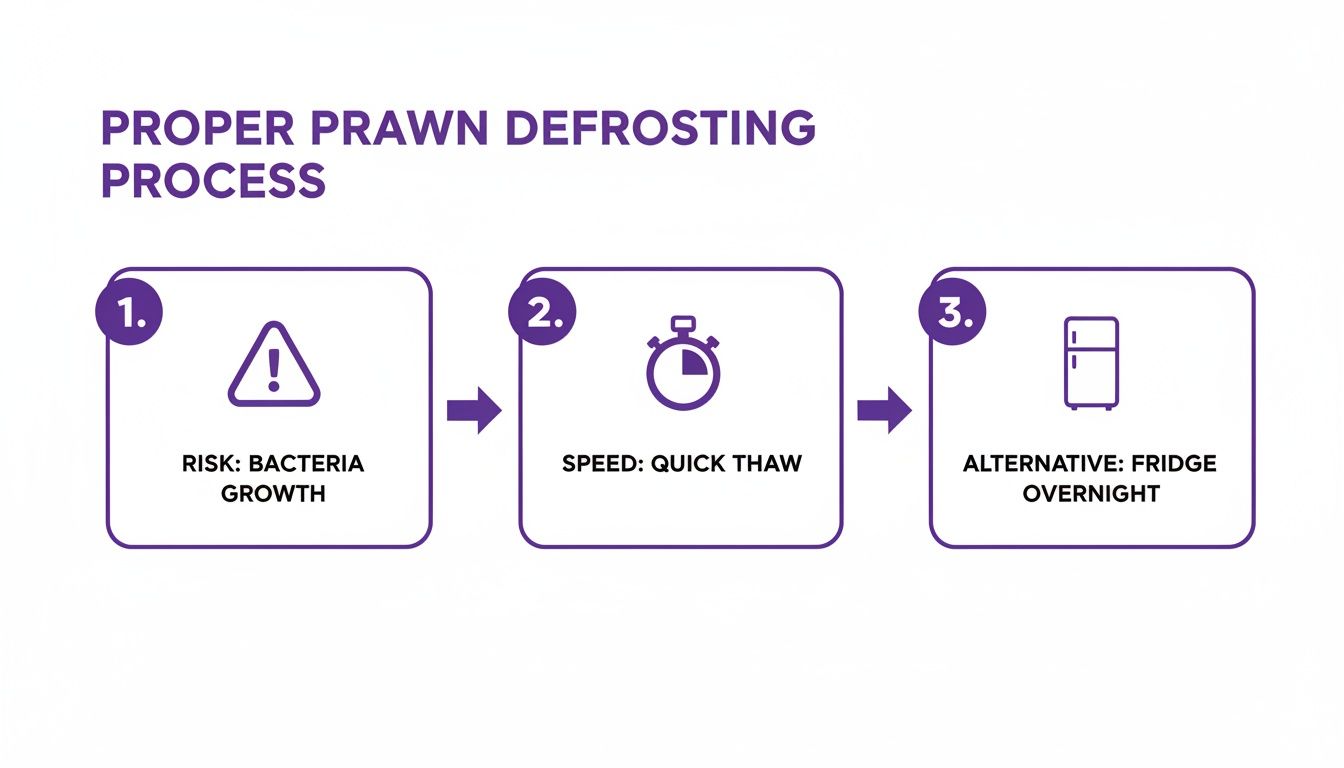
As you can see, the microwave is all about speed, but it comes with risks. Slower methods like defrosting in the fridge are always a safer bet. For a full breakdown of all the options, have a look at our complete guide on how to defrost frozen prawns.
The "stop, separate, and rotate" method is your best line of defence. It stops the edges from cooking before the centres have even thawed. Uneven heating isn't just a texture issue; it's a food safety one. An NHS report found it created hot spots where bacteria thrived in 18% of prawns tested. You can read more about these food safety findings in the full report.
Understanding the Risks of Microwave Defrosting
So, you might wonder why chefs and food safety pros are so wary about using a microwave for prawns. It really comes down to two big problems: some parts starting to cook while others are still frozen, and the risk of bacteria having a field day.
Microwaves are notorious for heating things unevenly. You get hot spots that begin to cook the delicate prawn flesh, even as other parts of the prawn are still solid ice. This patchy heating is exactly what you want to avoid.
That temperature danger zone is a perfect breeding ground for nasty bacteria. If you’re making a big pot of seafood pepper soup for the family, the last thing you want is for unevenly thawed prawns to put anyone at risk. You've got to know the warning signs.
A rubbery texture, a few opaque white spots (which means it's started cooking), or even a faint "off" smell are all major red flags. Prawns defrosted in the microwave need to be cooked immediately. No exceptions.
This isn't just a friendly suggestion; it's a critical food safety rule. To learn more, have a look at our essential tips on food safety for your kitchen.
Better Alternatives for Perfectly Textured Prawns
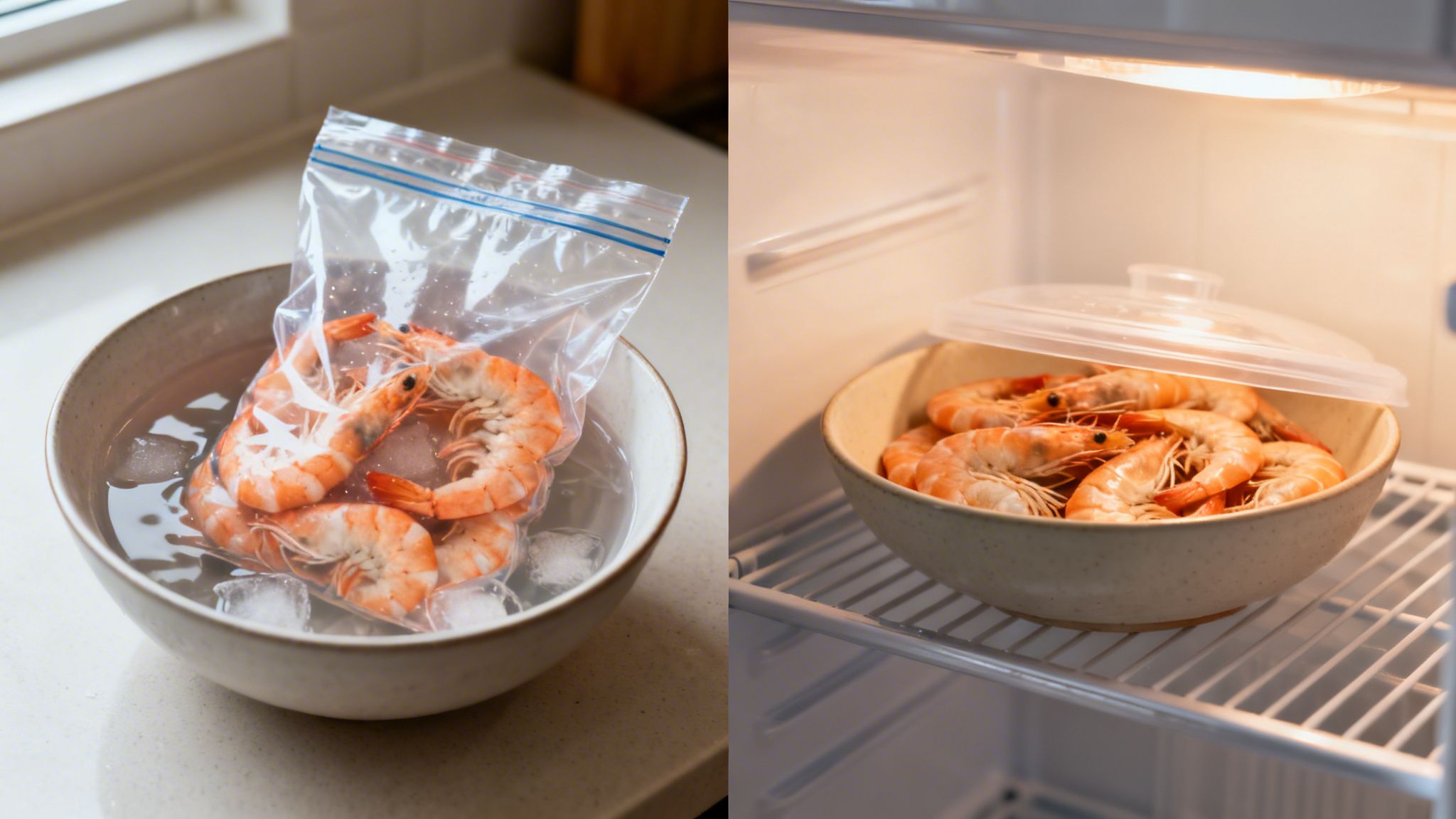
For prawns that are consistently firm, juicy, and perfectly safe to eat, there are two methods that beat the microwave hands down. When you have the luxury of time, nothing is better than defrosting them in the fridge.
Just pop your frozen prawns in a covered bowl and leave them in the fridge overnight. This slow, gentle thaw is the gold standard for preserving their delicate texture, ensuring they're ready to cook by morning.
The Cold Water Method
If you're in a bit of a rush, the cold water method is your next best friend. Seal the prawns tightly in a leak-proof bag and submerge them in a large bowl of cold tap water.
The most important step here is to change the water every 30 minutes. This keeps the water temperature safely cold, stopping any bacteria from growing while still thawing the prawns much faster than the fridge method.
Both of these techniques are trusted by professional chefs and home cooks for a reason. They deliver the best possible results, giving you that perfect bite whether you're making a spicy prawn Jollof rice or a flavour-packed Egusi soup.
Cooking Inspiration for Your Defrosted Prawns
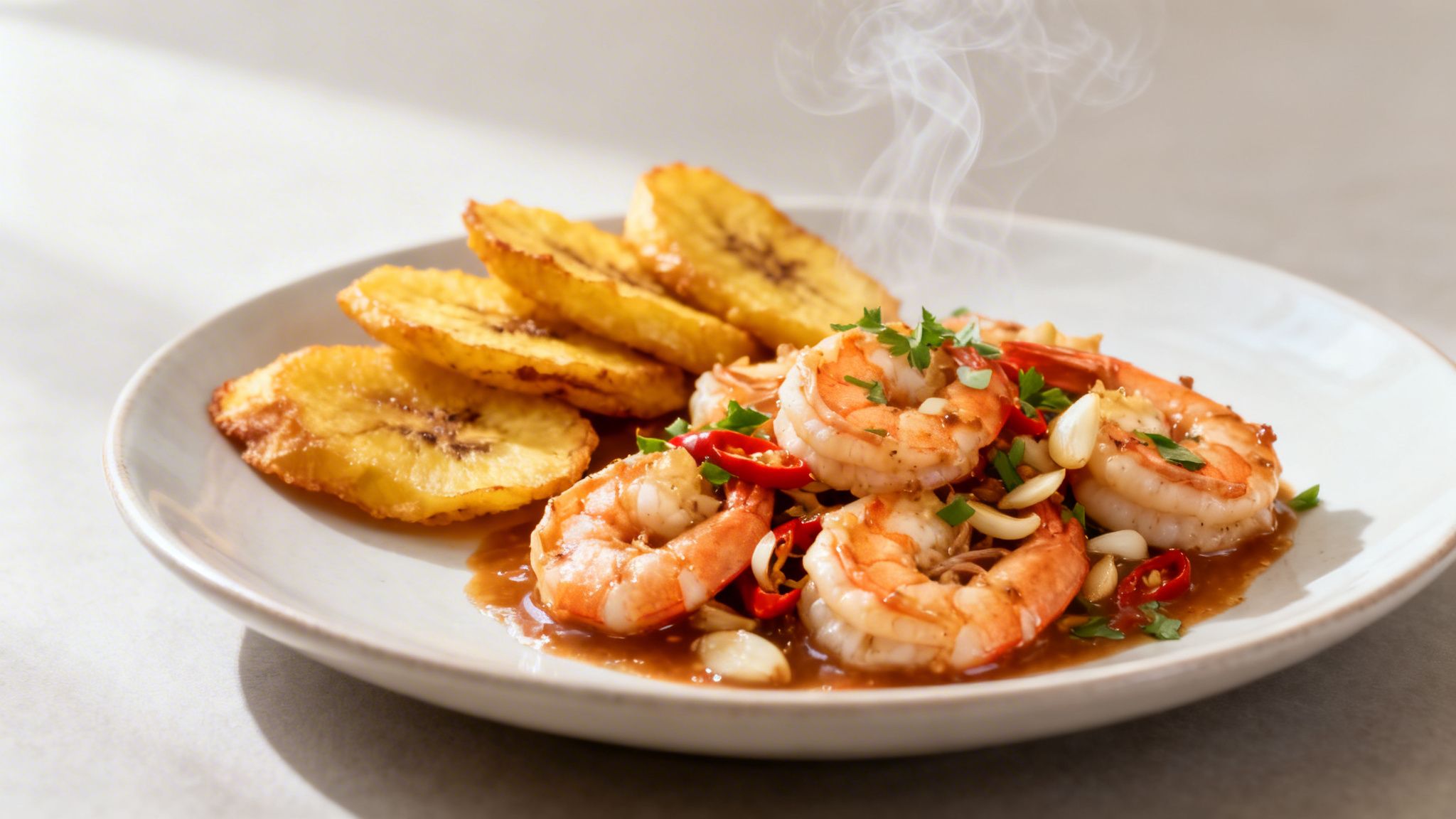
Now that your prawns are perfectly defrosted, the fun part begins. The golden rule for delicious, succulent prawns is quick cooking. You only need to cook them until they turn pink and opaque. Any longer, and you're heading into tough, chewy territory.
Think about dropping them into a fragrant Egusi soup during the final few minutes of simmering. Or imagine a quick stir-fry with garlic and chilli, served up next to some sweet, golden fried plantain. Simple and delicious.
For a classic West African flavour, try adding them to your Jollof rice just before it's finished steaming. This lets them cook through gently while soaking up all those rich, savoury flavours.
Want to really dial up that seafood taste? A sprinkle of ground crayfish is my secret weapon. It adds a fantastic depth of flavour that’s hard to beat.
For even more ideas, check out our recipe for Nigerian fried rice – prawns make a brilliant addition to that, too.
Your Prawn Defrosting Questions, Answered
When you're working with frozen prawns, a few questions always seem to pop up. Let's get right into the most common ones so you can handle your seafood with total confidence, making sure every dish is safe and delicious.
Can I Refreeze Prawns After Defrosting Them?
Honestly, it’s best not to. Refreezing prawns, especially after you’ve thawed them quickly in the microwave or cold water, really does a number on their texture. They can turn mushy and lose that lovely firm bite.
The only time you might get away with it is if they were thawed slowly and safely in the fridge and never went above 4°C. Even then, you'll notice a drop in quality.
Our advice? It’s always better to defrost only the amount of prawns you’re sure you’ll cook. This guarantees the best flavour and keeps everything safe.
How Do I Know if My Defrosted Prawns Have Gone Bad?
Your senses are your best friend here. Fresh, properly defrosted prawns shouldn't have much of a smell. If you get a sharp, ammonia-like scent or a very strong "fishy" odour, that's a major warning sign.
Also, pay attention to the texture. They should feel firm, not slimy or mushy. Any weird discolouration or dark spots that weren't there before are also bad news. If you have any doubt at all, it’s always safest to throw them out.