
Soon stocks will run out
Dont miss this opportunity while supplies last.


Soon stocks will run out
Dont miss this opportunity while supplies last.
A Guide to 5 Litres Vegetable Oil for African Cooking
If you’ve ever stepped into a kitchen where proper African or Caribbean food is being made, you’ve probably seen it: the big 5 litres vegetable oil jug. It’s a true kitchen workhorse, the unsung hero behind a perfect batch of golden-fried plantain or the flavourful base of a show-stopping Jollof rice. For anyone cooking our food regularly, this size just makes sense—it’s the perfect middle ground between practicality and saving a bit of money.
Why 5 Litres Vegetable Oil Is a Kitchen Staple
In African and Caribbean cooking, oil isn't just for frying. It's a core ingredient that builds layers of flavour from the ground up. Think about our most-loved dishes—hearty stews, rich soups, and those irresistible fried snacks like puff puff or chin chin. They all call for a generous hand with the oil. Trying to keep up with smaller, supermarket-sized bottles is a recipe for frustration and ends up costing a lot more in the long run.
That's where the 5 litres vegetable oil jug comes in. It solves the problem instantly. You get a much better price per litre compared to the smaller bottles, which is a big deal for families keeping an eye on their budget. It also means fewer trips to the shop and, most importantly, no more panicking when you realise you're out of oil halfway through cooking a big meal.
Balancing Cost and Convenience
For households that cook daily, caterers, and even small takeaway businesses, this size is the sweet spot. It’s big enough to keep you going through plenty of cooking sessions and even large family gatherings, but it’s still easy enough to store in a kitchen pantry or stockroom. You can think of it as a smart move for your kitchen workflow.
This balance of cost and convenience is exactly why the 5-litre jug is so popular. It gives home cooks and food entrepreneurs the freedom to create authentic, delicious food without constantly stressing about running out of a key ingredient or spending too much on it.
The Economic Bigger Picture
Buying in bulk isn't just a personal choice; it's also a smart response to how the market works. The UK's vegetable oil industry is huge, with massive production scales that directly influence the prices you see on the shelf. The industry's projected revenue is around €112.4 billion over the five years leading up to 2026, which shows just how big these operations are.
This large-scale production is what makes bulk sizes like 5 litres vegetable oil more affordable for us. So, when you choose the bigger jug, you’re not just being practical—you’re making a savvy economic decision. You can get a better sense of these dynamics by looking into the UK oil production market trends.
Matching the Right Oil to Your Favourite African Dishes
Ask any great cook, and they'll tell you the secret to a knockout dish isn't just the spices—it's the oil. When you're buying a big 5 litres vegetable oil jug, picking the right one can mean the difference between perfectly crispy fried fish and a soggy, greasy mess. You wouldn't use the same seasoning for every meal, so why use the same oil for everything you cook?
Different oils react to heat in different ways. The single most important thing to get your head around is the smoke point. Think of it as the temperature where an oil stops cooking your food and starts burning, releasing a nasty taste and smell that can ruin a dish. High-heat cooking needs an oil that can take the heat, while gentler methods are more forgiving.
High-Heat Heroes for Frying
For deep-frying your favourites like puff puff, chin chin, or that unbelievably crispy fried chicken, you need an oil that won't smoke and burn under pressure. These dishes need the oil to hit around 180°C to get that perfect golden-brown finish on the outside while staying fluffy and cooked on the inside.
- Groundnut (Peanut) Oil: This is a top-tier choice for deep-frying. It has a high smoke point (around 230°C) and a lovely mild, nutty flavour that works beautifully with savoury foods.
- Sunflower Oil: Another fantastic high-heat option. Sunflower oil has a very neutral flavour and a smoke point of about 230°C, which makes it a super versatile player in the kitchen.
- Rapeseed Oil: Often just called 'vegetable oil' here in the UK, rapeseed oil is a brilliant, budget-friendly workhorse with a solid smoke point of around 200°C.
This simple chart breaks down how to think about your next oil purchase.
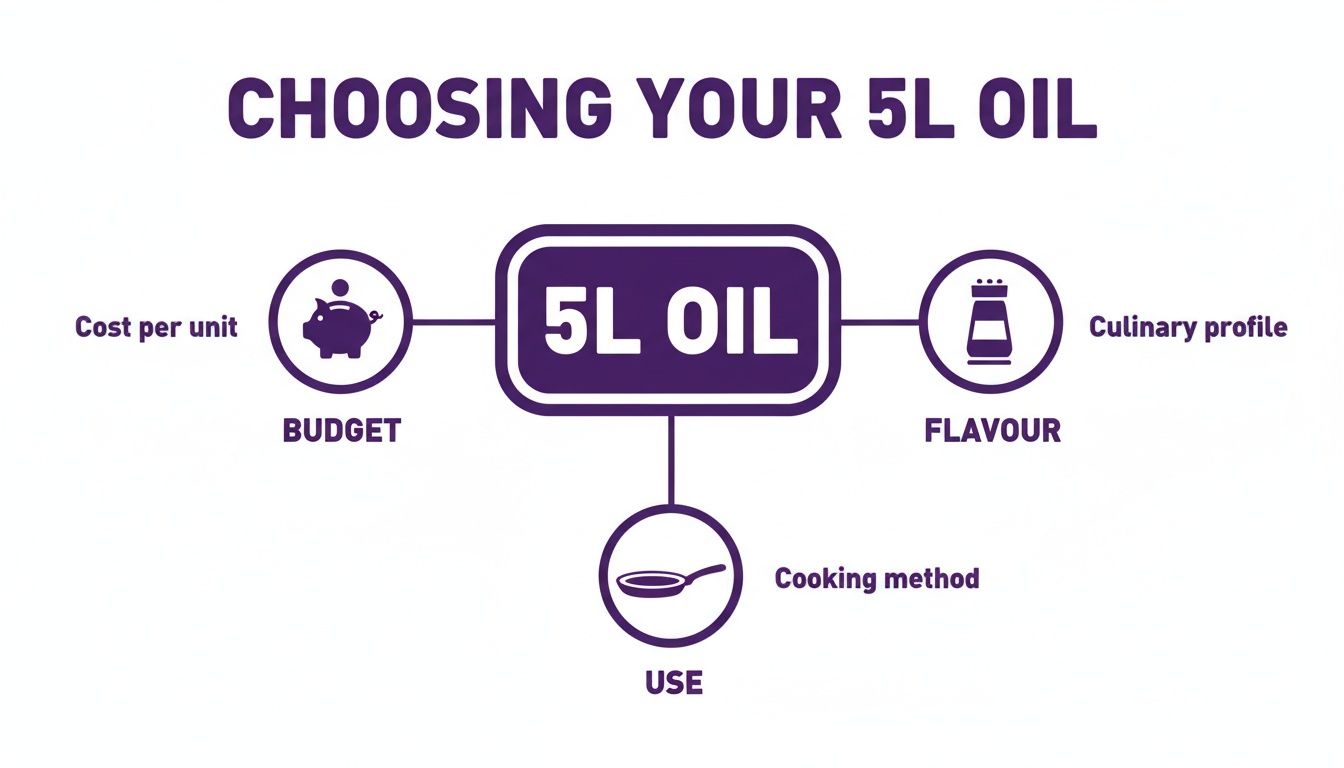
It really comes down to balancing your budget, what you're cooking, and the kind of flavour you're after.
Perfect Pairings for Stews and Sauces
When you're building the flavour base for legendary dishes like Jollof rice or Egusi soup, the game changes. Here, the oil’s job is to gently coax the flavours out of your onions, peppers, and aromatics without stealing the show.
For these kinds of dishes, a neutral-tasting oil is your best friend. It acts as a blank canvas, letting the rich flavours of your tomatoes, spices, and crayfish shine.
A standard vegetable oil blend or sunflower oil is absolutely perfect for this. They do their job quietly in the background, which is exactly what you want.
Of course, while most vegetable oils are great all-rounders, some classic recipes just aren't the same without a specific oil. For example, though it's not usually sold in 5 litres vegetable oil containers, some dishes scream out for a more distinctive taste. If that sounds interesting, you should check out our article on the red palm oil benefits to see its unique place in African cooking. Getting the right match is what takes your cooking from good to truly authentic and delicious.
A Practical Guide to Oil Usage for Households and Caterers
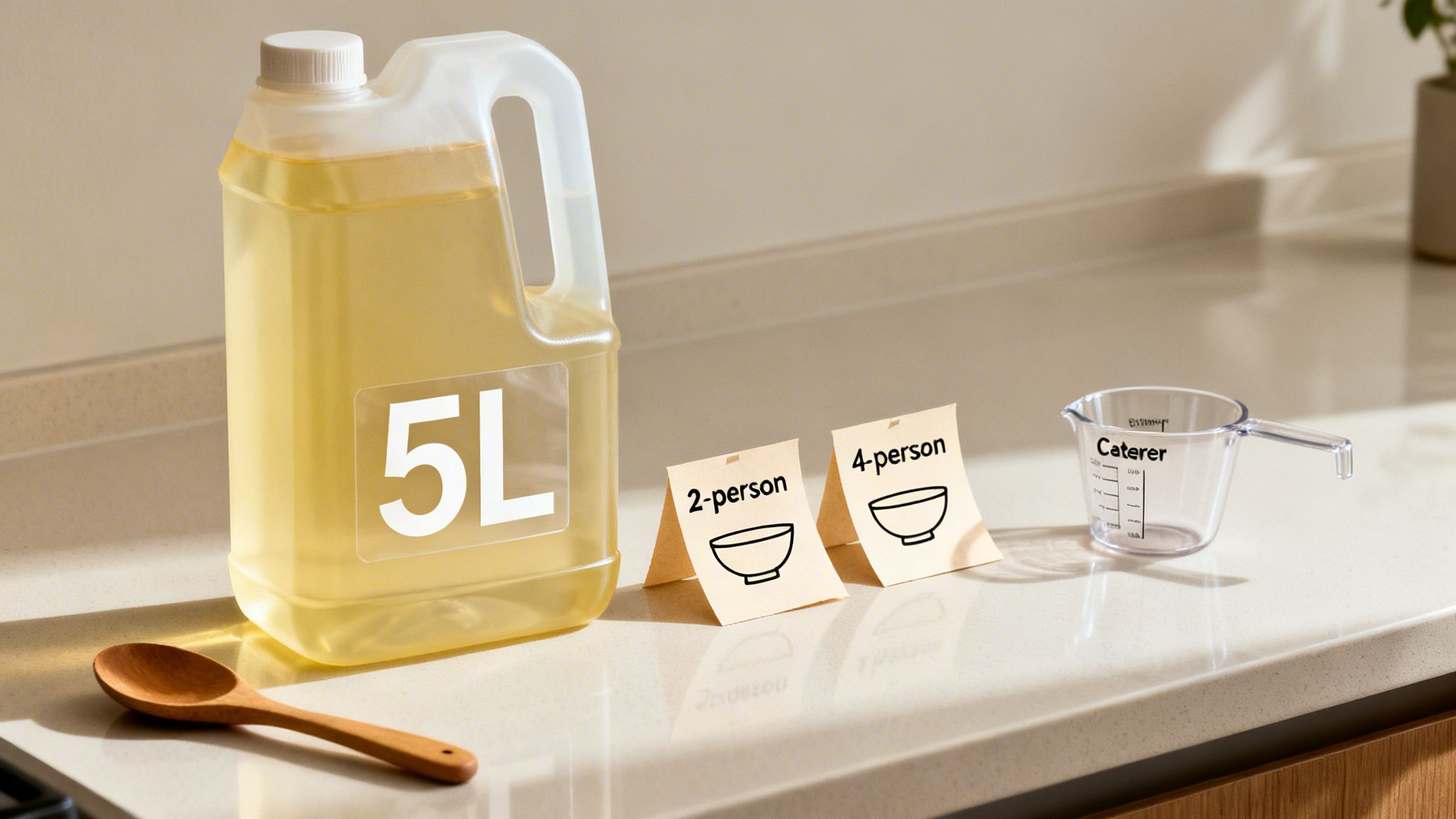
So, you’ve just picked up a big jug of 5 litres vegetable oil. It’s a smart way to shop, but the big question is always, "How long will this actually last me?" It’s a real balancing act—you want to save money by buying in bulk, but nobody wants to overbuy or, even worse, run out of oil mid-fry.
This guide takes the guesswork out of it. Whether you’re cooking for your family or catering a big owambe, we'll break down the numbers so you can plan your oil usage with total confidence and never get caught short again.
Household Oil Planning
For most households, how long a 5-litre container lasts comes down to two simple things: how many people you're feeding and how you cook. Are you a family that loves fried plantain several times a week, or do you stick to stews and sauces?
Here's a rough idea to help you plan:
- Small Household (1-2 people): If you cook regularly but aren't deep-frying all the time, a 5-litre jug can easily last 2 to 3 months. This is perfect for sautéing your onions, making stew bases, and the odd fried treat.
- Family Household (3-5 people): With more mouths to feed, you’re likely cooking more often. A 5-litre jug will probably last around 4 to 6 weeks. This covers daily cooking and more regular frying of favourites like yam, chicken, or dodo.
Of course, if your family can’t get enough of fried snacks, you'll go through it much quicker. If you're looking for some inspiration, check out our simple plantain chips recipe and see if you need to adjust your shopping list!
Catering and Event Planning
For any caterer, running out of cooking oil is a disaster waiting to happen. Good planning is everything when you're managing a budget and need service to run smoothly.
A solid rule of thumb for events is to plan for roughly 1 litre of vegetable oil for every 20-25 guests, especially if your menu is heavy on fried items like small chops, fried fish, or puff puff. So, for a party of 100 people, you'll need at least one 5 litres vegetable oil jug just for the frying.
Think about it this way: frying small chops for 50 people will use a lot more oil than making a massive pot of Jollof rice for the same crowd. The Jollof might only need about 500ml for the base, but the deep-frying could easily get through 2-3 litres or more.
Always break down your menu by cooking style:
- Deep-Frying (Puff Puff, Chin Chin, Fish): High oil usage.
- Shallow-Frying (Plantain, Yam): Moderate oil usage.
- Stew & Soup Bases (Jollof, Egusi): Low oil usage.
By thinking about each dish, you can figure out a reliable total for any event. This simple approach helps you buy smart, keep your stock in check, and lets you focus on what really matters—making delicious food.
Smart Storage to Keep Your Bulk Oil Fresh
Getting that big 5-litre jug of vegetable oil feels like a smart move, doesn't it? It's a fantastic investment for your kitchen, but only if you can keep it as fresh as the day you bought it. Just like milk goes sour or bread gets stale, cooking oil has a shelf life.
To protect your oil, you need to shield it from its three biggest enemies: light, heat, and air. When oil is exposed to these, it starts to oxidise, which is just a fancy way of saying it goes rancid. A bottle of rancid oil can completely ruin a dish. Imagine your perfectly seasoned Jollof rice suddenly tasting faintly of old crayons or stale nuts—that’s what spoiled oil does.
The Best Places to Store Your Oil
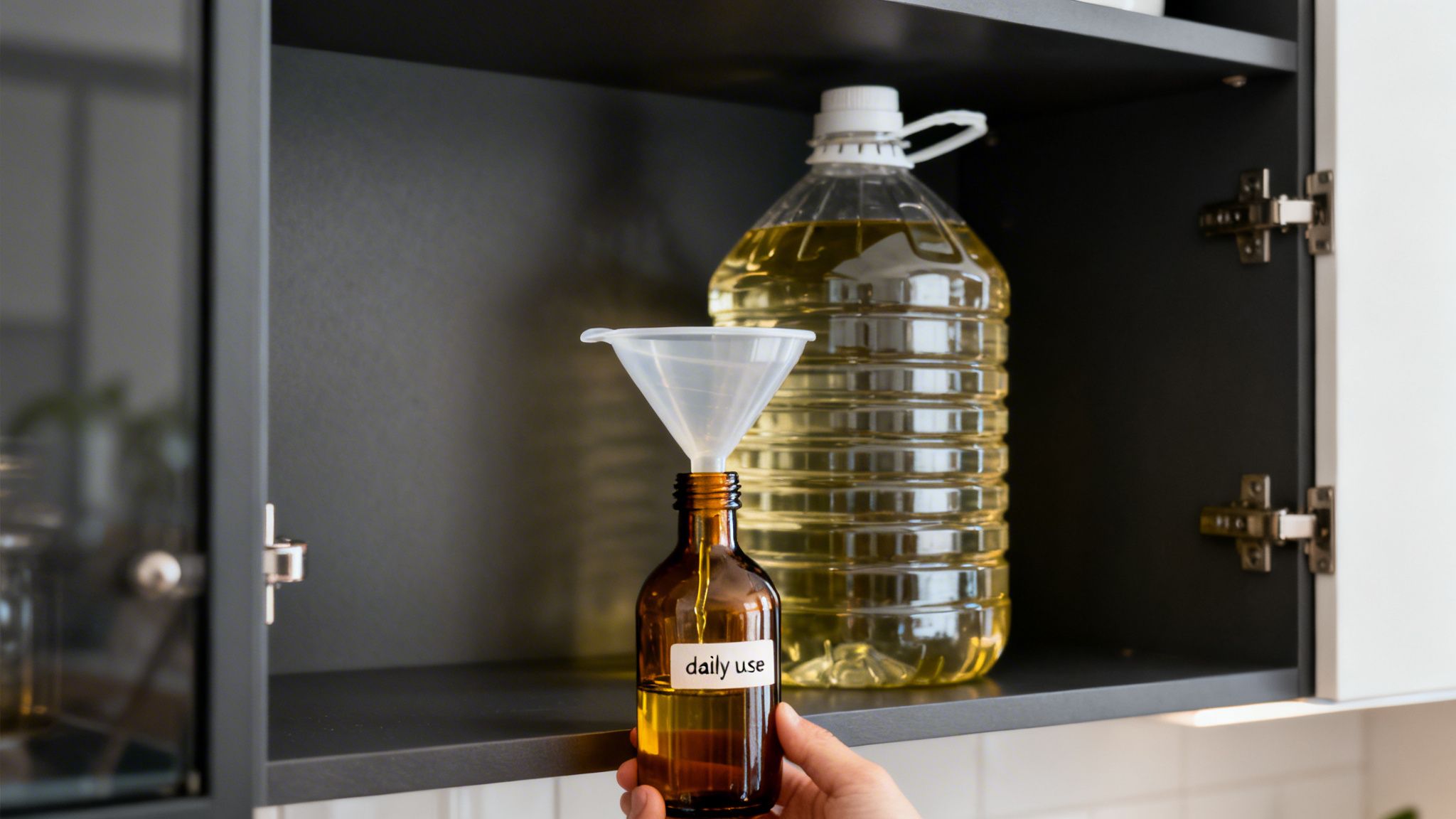
The number one rule is simple: store your oil in a cool, dark place. A kitchen cupboard or pantry works perfectly, as long as it's not right next to your oven or hob. The heat from cooking can slowly warm up the bottle, making the oil go bad much faster, even when it’s sealed.
Another major culprit is air. Every single time you open that big jug, you let in fresh oxygen, which speeds up the spoilage.
Here’s a brilliant little trick to get around this: pour a week’s worth of oil from your 5-litre container into a smaller, airtight bottle. Keep this smaller bottle handy for daily cooking, and your main supply stays sealed and protected for longer.
This simple habit helps you get the most out of your bulk purchase. With the UK vegetable oil market hitting a massive USD 9.26 billion in 2024, buying in bulk is becoming an even smarter choice. Storing it right means every drop of that good value goes into your cooking, not the bin. You can learn more about the expanding UK vegetable oil market and what it means for shoppers.
How to Know When Oil Has Gone Bad
Your own senses are the best tools for this job. Good, fresh vegetable oil should smell clean and neutral. If it has turned, you'll definitely notice.
Here’s what to look out for:
- Smell: This is the most obvious giveaway. If the oil smells stale, a bit like old paint, or has a metallic scent, it's gone off.
- Taste: If you're still not sure after a sniff, taste a tiny drop. Any bitter, sour, or just "off" flavour is a clear sign to throw it away.
- Appearance: Less common, but you might also see the oil's colour has become much darker, or it looks cloudy and thick.
Follow these simple storage tips, and your 5 litres of vegetable oil will stay fresh and flavourful from the first meal to the very last.
Unlocking Cost Savings for Resellers and Caterers
If you run a food business—whether it's a market stall, a catering gig, or a small takeaway—you know that every penny counts. The difference between a good week and a great one often comes down to buying smart. This is where buying 5 litres vegetable oil in bulk isn't just a convenience, it’s a game-changer for your bottom line.
The most obvious win is the lower price per litre. When you stack up the cost of a big 5-litre jug against what you'd pay for several smaller bottles from the supermarket, the savings pile up fast. It's a simple volume discount: suppliers give you a better price for buying more, and that money goes straight back into your pocket.
How Much Can You Actually Save?
Let's break it down with a simple example. Imagine your busy takeaway gets through two 5-litre containers of vegetable oil each week for frying plantain, chicken, and building those all-important stew bases. Over a year, that's a whole lot of oil.
The price difference between bulk jugs and small retail bottles can easily add up to hundreds of pounds saved annually. For a business that leans heavily on staple ingredients, that’s not just pocket change; it’s serious cash.
Cost Comparison: Buying Small vs. Bulk (5 Litres)
Here’s an illustrative look at how those savings can stack up over a year for a small food business.
| Purchase Method | Unit Price (Per Litre) | Weekly Cost (Example) | Annual Savings |
|---|---|---|---|
| Small Bottles (1L) | £3.50 | £35.00 (for 10L) | £0 |
| Bulk Jugs (5L) | £2.20 | £22.00 (for 10L) | £676 |
As you can see, a simple switch in how you buy a core ingredient can free up significant funds. This extra money can help you offer sharper pricing to your customers or be reinvested into growing your business. It's exactly why so many businesses partner with dedicated suppliers. If you’re ready to buy smarter, our guide on wholesale African food suppliers in the UK is a great place to start.
It's About More Than Just Money
Beyond the cash savings, buying 5 litres vegetable oil at a time brings massive practical benefits. Fewer shopping trips mean you save precious time and money on fuel. Instead of that weekly dash to the cash and carry, a single bulk order can keep you stocked for weeks, letting you focus on what really matters: cooking and serving your customers.
Consistent stock is the bedrock of a reliable food business. Running out of cooking oil in the middle of a busy service is a nightmare you don't need. Buying in bulk means you always have what you need, making your operations smoother and getting rid of those last-minute panics.
This approach also helps you ride out market bumps. For example, some forecasts suggest UK rapeseed oil production might dip below 750 thousand metric tons by 2026. This could push prices up as we rely more on imported oils. Having a steady supply from a bulk partner helps protect your business from some of that price chaos. By planning ahead, you turn a simple pantry item into a smart, strategic move for your business.
Your Questions About 5 Litres Vegetable Oil, Answered
Got questions about that big 5-litre jug of vegetable oil? You're not alone. Buying in bulk is smart, but it helps to know the ins and outs.
Let's clear up a few common queries so you can buy and cook with total confidence.
What Is the Best Oil for Making Jollof Rice?
For a truly authentic Jollof, the oil shouldn't be the star of the show. You want something neutral that can handle the heat, like a standard vegetable oil or sunflower oil.
The goal is to fry your aromatic base of onions, peppers, and tomatoes without the oil adding its own personality. This lets those rich, smoky Jollof flavours shine through, just as they should.
Can I Reuse Frying Oil?
Yes, you absolutely can, and it's a great way to cut down on waste! But you have to do it right. After frying, let the oil cool down completely.
Once it's cool, strain it through a fine sieve or some cheesecloth to get rid of any food bits. Store it in a sealed, dark container away from the stove. You can usually get another one or two uses out of it, but if it looks dark, smells funny, or gets foamy when you heat it, it's time to let it go.
Reusing oil saves money, but your food's flavour comes first. If the oil smells stale or looks murky even after straining, it’s past its best and needs to be tossed out.
Is Rapeseed Oil the Same as Vegetable Oil in the UK?
This is a classic point of confusion, and the answer is often "yes." In the UK, many bottles simply labelled 'vegetable oil' are, in fact, 100% rapeseed oil. It’s a popular, locally grown choice.
However, the term 'vegetable oil' can also be used for a blend of different oils, like rapeseed, sunflower, or soybean. The only way to be certain is to flip the 5 litres vegetable oil jug over and check the ingredients list on the back.
How Long Does Bulk Oil Last Once Opened?
As long as you store it properly, an opened 5-litre jug will last you a good while. Keep it tightly sealed in a cool, dark cupboard, and it will stay fresh for 6 to 12 months.
The biggest enemies are air and light, which cause the oil to go rancid. Keep the lid on tight and store it away from the cooker to ensure it tastes great from the first drop to the last.
Ready to stock your pantry with high-quality, authentic ingredients? Find the perfect 5 litres vegetable oil and all your other African grocery essentials at My Africa Shop. Explore our wide selection and enjoy fast, reliable delivery across the UK. Visit us today at https://myafricanshop.co.uk.